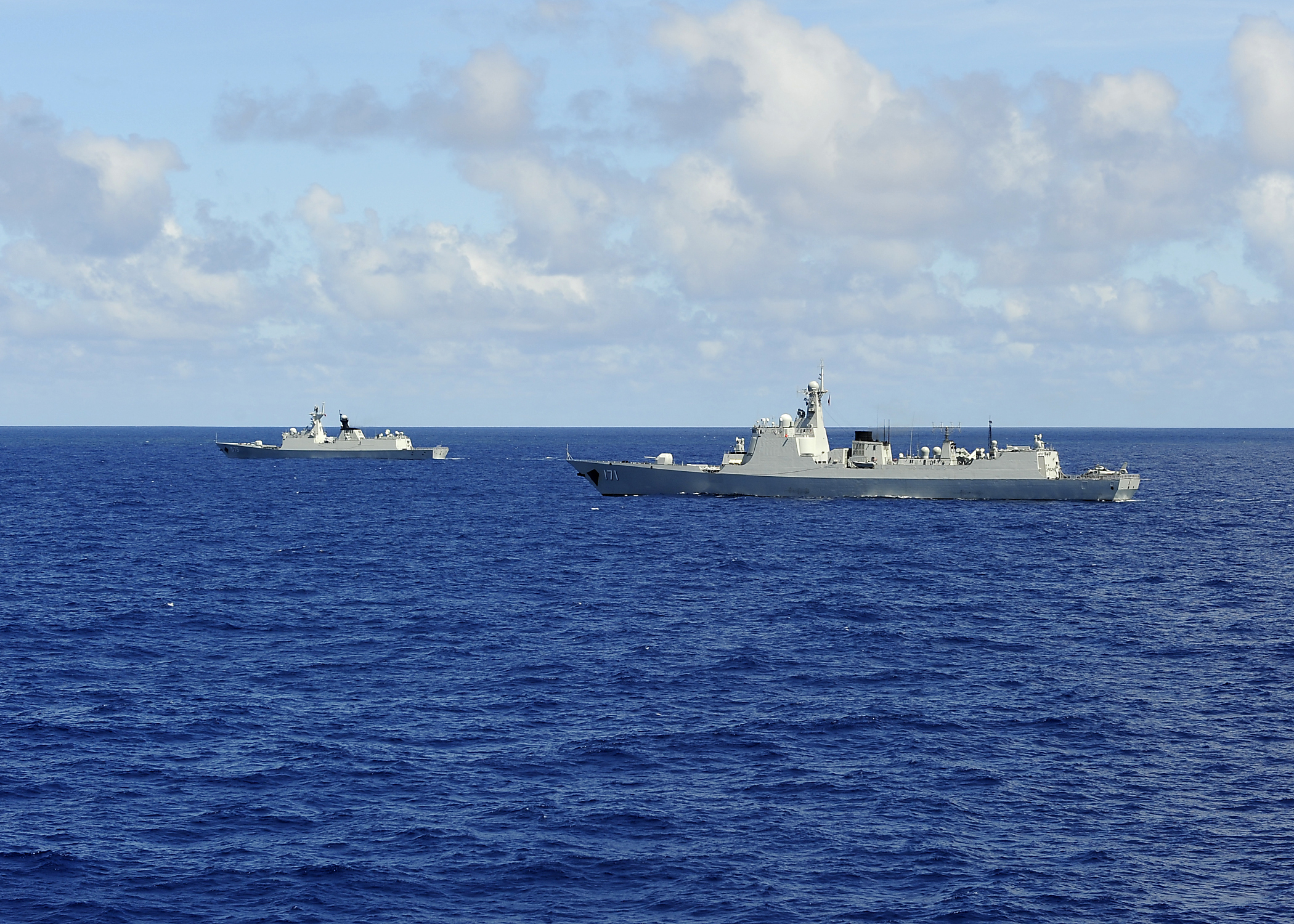
China has started dredging the Antelope Reef, which is situated in the Paracel Islands within the distance of 216 miles from Da Nang of Vietnam. To note, it is “the first significant artificial island building Beijing has undertaken since 2017” and is expected to be the largest artificial island China has so far constructed in the South China Sea according to the US think tank CSIS.
It is expected to reinforce Chinese assets including runway and coast guard vessels/personnel. China already has expanded military facilities across the South China Sea, and Antelope Reef does not appear to add much strategic depth for China. It may be part of China’s efforts to build a more reinforced logistical capability in the South China Sea to allow for more enduring Chinese sea activities.
Background of China-US Competition
Despite these technical benefits, it is not an opportune time to take such actions when China seeks to project an image of a reliable and stable power compared to the US “unilateralism” and “hegemonic acts” due to the high tariffs (including threats to impose further tariffs even after trade agreements) and its rampant military actions against Venezuela and Iran. The Chinese government has held “the Central Conference on Work Relating to the Periphery” in April 2025 and emphasised the importance of good neighbour relations in the face of great-power competition with the US. An opinion piece in People’s Daily indicated that the relationship with neighbours is vital when the US is seeking to contain China with its Asian allies. Chinese President Xi Jingpin visited Vietnam, Malaysia and Cambodia in April 2025 and insisted upon mutually beneficial bilateral relationships with the countries amidst the US tariffs imposed on Southeast Asian countries.
Then, what could China’s decision to develop the Antelope Reef imply about China’s intentions?
Stable and Solid China-Vietnam Relations
Firstly, China may be signalling that it has confidence in a stable solid relationship with Vietnam despite the territorial dispute. If not, China would not take actions which could lead Vietnam to consider strengthened security cooperation with other countries such as the US or the Philippines. China does not desire it and frequently criticises the security cooperation between the US and the Philippines. A spokesperson for the Chinese military’s Southern Theater Command has criticised the security cooperation between the US and the Philippines as inviting external forces in the South China Sea issues and destabilising the region.
The risk of antagonising Vietnam is high due to the active security outreach the US and its allies are undertaking in the region, such as strengthening security cooperation with the Philippines. The US gained access to four additional bases from the existing five bases in the Philippines in 2023. The US conducted the launching of missiles such as Tomahawk missiles and has already deployed missile launcher systems such as the Navy Marine Expeditionary Ship Interdiction System and Typhoon System in the Philippines. The 2026 Philippines-US bilateral military exercise “Balikatan” saw Japan and Australia participate. The Philippines, the US, Japan and Australia now regularly hold Defence Ministers’ Meeting where they denounce coercive actions in the South China Sea and affirm their intentions to strengthen cooperation to increase deterrence jointly.
The US has also strengthened its outreach to Vietnam as well. The US and Vietnam have elevated bilateral ties to “Comprehensive Strategic Partnership” in 2023. Vietnam has accepted port visits by US assault ship and aircraft carrier in Da Nang, as well as participating in a Pacific Rim exercise in 2018. Vietnam has further expressed its intentions to boost defence ties with the Philippines when Vietnamese Defence Minister visited Manilla in 2024. Despite President Trump’s silence about the South China Sea, the 2025 US National Security Strategy emphasises the importance of deterrence in the South China Sea. US Secretary of War Pete Hegseth visited Vietnam in November 2025, discussing deepening defence cooperation such as defence trade and information sharing with Vietnamese Defence Minister.
Despite the closer relationship between the US and Vietnam, Vietnam has succeeded in building a solid and stable relationship with China through its diplomacy characterised by its strategic autonomy. Vietnam understands the necessity of stable bilateral relations for security and development. Vietnam has learnt from wars with China in the 1970s that taking sides in great-power competition does not serve Vietnam’s interests. Vietnam regularly assures that it is committed to the so-called “Four Nos” foreign policy, whereby “(1) Vietnam will not join any miliary alliances, (2) not side with one country against another, (3) not allow foreign military bases on its soil, (4) and not use force or threaten to use force in international relations”. Indeed, Vietnam has paid caution consideration toward China by avoiding the impression of balancing against China with third countries. Whie Vietnam and the US hold bilateral exercises, it is rare. Vietnam has held Naval Engagement Activity (non-combatant exercise) recently in 2017. This is in stark contrast to the intensity of bilateral exercises between the US and the Philippines. Both countries are expected to hold more than 500 exercises in 2026. The US has sought to expand multilateral efforts to counter China through the so-called “SQUAD”. It is composed of the US, the Philippines, Japan and Australia. The SQUAD regularly holds Defence Ministers’ Meeting and joint exercises in the South China Sea. Vietnam stays distant from these multilateral groupings which could be considered as balancing against China.
Non-Differentiated Attitude
Secondly, China may be signalling that it does not intend to treat the South China Sea issues as a tool to court regional states by differentiating its attitudes. China could adopt an appeasing attitude toward Vietnam while taking a confrontation approach toward the Philippines. The tactic may have worked for non-claimant states such as Cambodia when it blocked the joint statement on the South China Sea issue in the ASEAN meeting. China has differentiated intensity of coercion between Vietnam and the Philippines. China has directed military-grade laser or water-cannon at Filipino vessels and regularly disrupts resupply missions around the Second Thomas Shoal. China has refrained from these acts toward Vietnam. Despite this difference of attitude, Vietnam is resolved not to concede on its territorial claims. Indeed, Vietnam continues to insist upon its territorial sovereignty and continue to undertake island-building activities comparable to China, Thus, China has learnt that courting regional states in the South China Sea issues with claimant states is very difficult. China has also increased the frequency of entrance of its survey ships in the waters of Vietnam.
This case has implications for regional states. It implies that China has vital interests in the South China Sea and does not intend to concede despite a solid relationship. It also implies that China may not reward regional states even if they avoid strengthening relationship with partners such as the US. Vietnam has paid consideration for China by avoiding impression of balancing with partners such as the US. Yet, the cases implies that China does not appease Vietnam on the South China Sea issue regardless of external relationship.
Daiki Tsuboi has a Master degree from the Australian National University and has a keen interest in the Indo-Pacific affairs.
This article is published under a Creative Commons License and may be republished with attribution.