Indian state elections are mammoth affairs. Many states have populations larger than most countries, with distinct linguistic and cultural identities, as well as economic interests that the federal government must constantly balance. Because power is largely decentralised, states wield enormous influence – not just domestically, but over foreign policy too.
In results released in early May, the Bharatiya Janata Party (BJP) of Prime Minister Narendra Modi scored a resounding victory in West Bengal – a state of over 100 million people and traditionally unreceptive to the party. The party has steadily built its presence over the past decade, and has successfully defeated the long-incumbent Trinamool Congress Party. With a cooperative government now in Kolkata, the state capital, New Delhi may finally be able to resolve one of its most prominent bilateral disputes with Bangladesh – over South Asia’s most important resource: water.
This has the potential to advance greater cooperation on the broader shared water arrangements within a region that has no robust integrated water resource management. As well as build a more cooperative bilateral relationship between India and Bangladesh that can potentially breathe some life into other regional cooperative initiatives.
The Teesta River
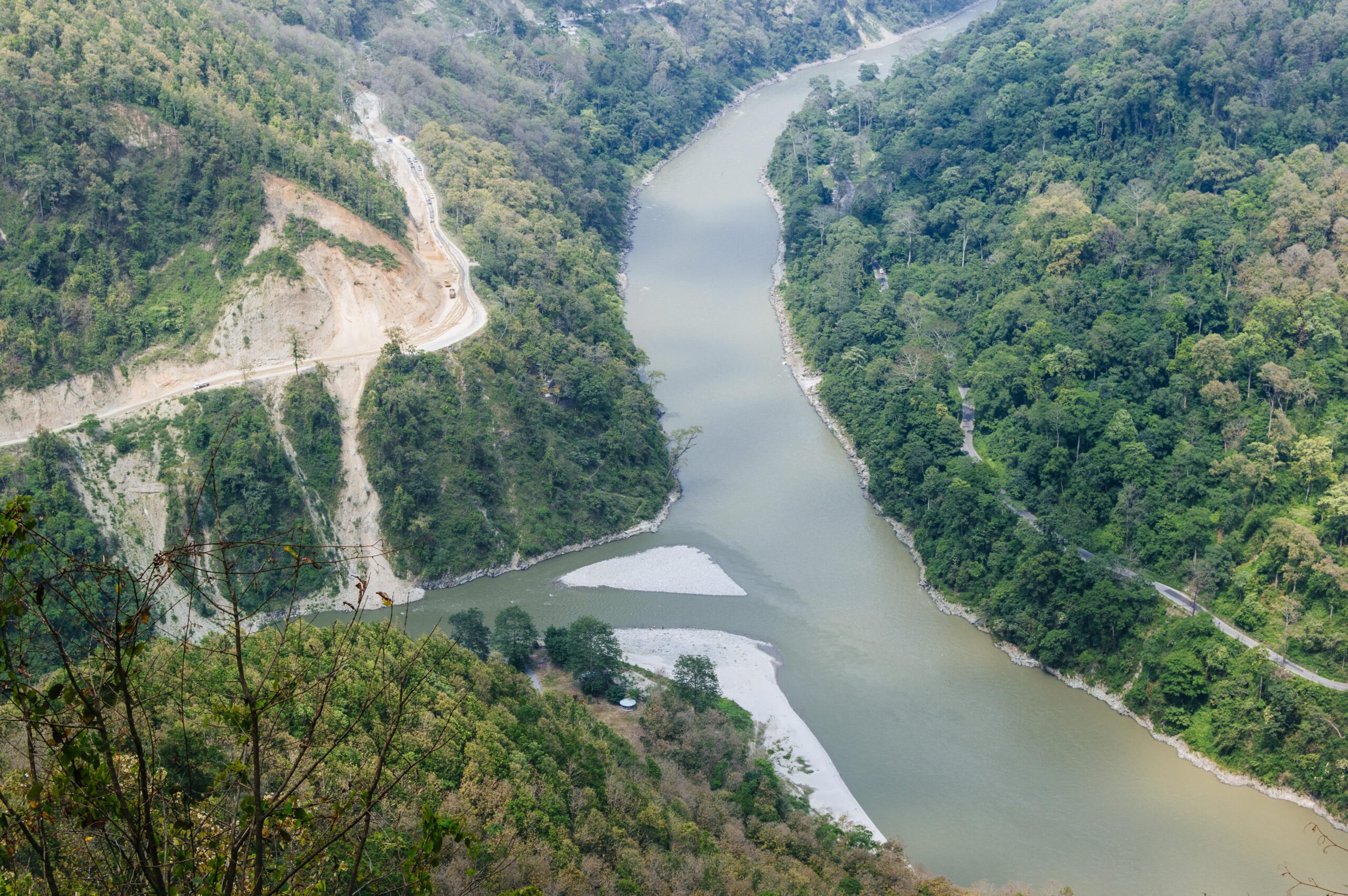
Flowing down from the hills in Sikkim, through West Bengal and into the Jamuna River in Bangladesh, the Teesta is a highly seasonal river. Around 90% of its water flow comes during the monsoon over the Indian side of the river, while severe shortages can occur in the dry season. Indian dams, barrages and hydropower projects – in particular the Gajoldoba Barrage – release too much water during monsoons, causing floods in Bangladesh, while withholding water during the dry season.
In 2011, New Delhi and Dhaka forged an agreement that would have allocated 42.5% of dry-season water to India and 37.5% to Bangladesh. However, the West Bengal government led by Mamata Banerjee has persistently refused to acquiesce to this arrangement. She has claimed that the river was the “lifeline” of northern West Bengal, and that it was hydropower projects in Sikkim that were responsible for the river’s flow.
The river is also a lifeline to Bangladesh, where 30 million people across its northern agricultural belt are reliant on it for agriculture and drinking water. A lack of dry season water creates greater dependence on groundwater extraction and increases the costs for irrigation pumps and diesel. These increased costs and the water-intensive nature of rice is leading to Bangladesh losing an estimated 1.5 million tonnes of the primary staple crop annually.
Despite being a water-rich country overall, Bangladesh faces deep regional imbalances in water access. The drought-prone Barind Tract, which overlaps with the Teesta basin, is particularly exposed to climate change and environmental stress, with drying riverbeds contributing to land degradation, declining fish stocks and broader threats to biodiversity.
Therefore, a durable and equitable water-sharing agreement that supports both West Bengal and Bangladesh’s development needs, while safeguarding the river’s long-term sustainability, is essential.
Geopolitical Tension
Frustration with India’s state politics preventing such an agreement from being implemented has added to other woes and expanded the dispute into a geopolitical contest. While Bangladesh’s former Prime Minister Sheikh Hasina had hoped to find a solution with India, following her deposition in 2024’s July Uprising, the interim government led by Muhammad Yunus turned to China for financial assistance and expertise. Proposing the “Teesta Mega Project” – a large-scale river management and infrastructure initiative.
The project’s aim is to restore and manage the Teesta River through dredging, embankment construction, reservoirs and modern irrigation infrastructure, with the hope of expanding agricultural productivity as well as reducing both flooding and drought impacts. Bangladesh’s new government formally sought Chinese involvement as the foreign minister visited Beijing in early May. However, without considering the management of water from a basin wide perspective, any large engineering project in a region that is prone to risk will face its own set of issues in the future.
For New Delhi, this creates an urgency for the new West Bengal government to agree to the water-sharing arrangements. Increased Chinese activity in the Teesta basin would be seen as further encroaching on India’s strategically sensitive Siliguri Corridor (known as the “Chicken Neck”). Thus is a narrow slither of land between Bangladesh, Nepal and Bhutan that divides India’s northeastern states (one of which China claims as its own territory) and the rest of the country. With China pressuring Bhutan to give up its territory overlooking the “Chicken Neck” from the north, India feels it is being wedged by Beijing.
Bilateral Reset
While Hasina’s government had friendly relations with New Delhi – and Hasina herself is now in exile in India – the direction of the new Bangladeshi government remains to be seen. Given the integrated ecosystems and long, complex political border, it is within both countries interests for relations to prosper. Even with Hasina’s conviction for crimes against humanity and the new government’s request that India extradite her, New Delhi refuses.
The cooperative frameworks that divide the region’s fundamental resources are the platform on which prosperous relations could be built. This makes the Teesta River Agreement both essential for the communities that are reliant on the health of its ecosystem and provides an opportunity to build momentum for other essential cooperation. Despite internal upheaval in Bangladesh and tenuous relations last year, negotiations on the Ganges Water Treaty – due to expire in December – have been underway, and are seen by the new government in Bangladesh as a critical test of relations.
This also offers an opening and platform to advance bilateral dialogue on the Teesta. The new state government in Kolkata can be a critical partner to New Delhi in using the negotiations both as a confidence building measure and as a strategic leverage to build out the new phase in the India-Bangladesh relationship. Water has rarely been a driver of cooperation in South Asia, a region that lags behind many others in this arena. A renewed Ganges Treaty coupled with a Teesta agreement that leads to dialogue on a more expansive and integrated river management treaty could pave the way for this shift. With the electoral defeat in West Bengal of one of the primary obstacles to this cooperation, the politics of the region’s water may now flow in a more sustainable direction
Ambika Vishwanath is a Principal Research Fellow at the La Trobe Centre for Global Security.
Grant Wyeth is a foreign policy analyst and columnist for The Diplomat.
This article is published under a Creative Commons License and may be republished with attribution.