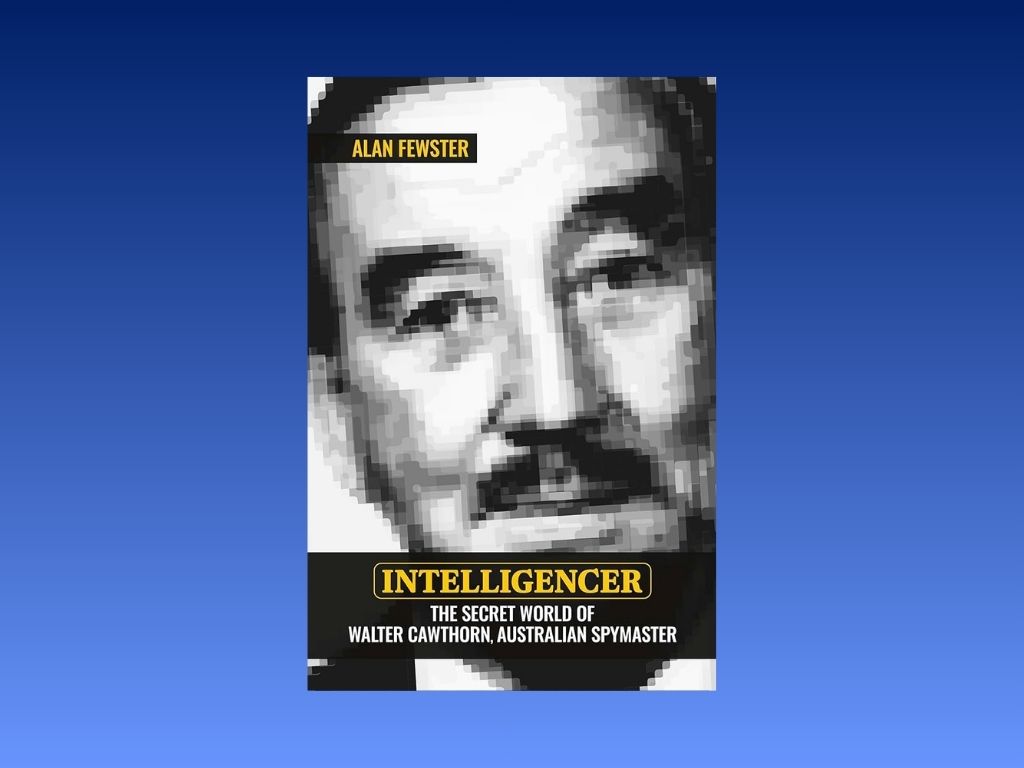
In 2011, as Alan Fewster recounts in Intelligencer: The Secret World of Walter Cawthorn, Australian Spymaster, a senior Australian foreign affairs official travelled from Islamabad to New Delhi to meet Shivshankar Menon, India’s National Security Advisor to Prime Minister Manmohan Singh. On welcoming the visiting Australian official, Menon remarked tongue in cheek: “I see you have come from Pakistan – did you meet with your ISI friends there? They were created by an Australian, of course”. Menon was referring to William (“Bill”) Cawthorn, who, in the late 1940s, while serving as Deputy Chief of Staff of the Pakistani Army, had established the Inter-Services Intelligence (ISI) bureau—an organisation that, “from an empty room with packing cases for desks”, would develop into one of the world’s most formidable intelligence agencies. As Fewster also notes, Cawthorn later served as Australia’s High Commissioner in Karachi—then the capital of Pakistan, before Islamabad took over that role in 1967—and acted as an adviser to many of the post-independence Pakistani leaders.
For an Australian from a modest background, these were notable achievements among many in an exceptional career. Born in Melbourne in 1896 to a paper merchant and paper bag manufacturer who had migrated to Australia from Britain, and Victorian-born Frances Williames, Bill Cawthorn attended Melbourne High School and briefly trained as a schoolteacher before enlisting in the Australian Imperial Force (AIF). He saw combat at Gallipoli and on the Western Front in France. In June 1916, he sustained a serious gunshot wound to the abdomen at Armentières and was taken to a military hospital near London. Returning to France in the autumn of 1916, he saw action in the Ypres and Somme sectors. He did not, however, take part in the military operations to halt the German spring offensive of 1918, nor in the subsequent Allied counter-offensive later that year. In February 1918, when the government of British India sought volunteers from the British dominions to bolster the officer corps of the British Indian Army—depleted by the loss of approximately 60,000 men during the First World War—he decided to enlist. As Fewster notes, this was a decision that “changed the course of Bill’s life” and set him “on a path he would follow for the next fifty years: the shadow of world intelligence and espionage”. His enlistment in the British Indian Army also marked the beginning of his long association with the Indian Subcontinent. In 1919, Cawthorn served as a company officer and commander in the 46th Punjabi Regiment in Palestine. In 1925, he joined the 16th Punjab Regiment, where he participated in policing operations on the North-West Frontier.
Highly regarded by his superiors, he was sent to Southeast Africa in 1935 to assess whether British colonial territories such as Southern Rhodesia (now Zimbabwe), Northern Rhodesia (Zambia), Nyasaland (Malawi), and Kenya were suitable for settlement by recently retired or soon-to-be-retired Indian Army officers. His final report, completed in 1936, offered (and still offers) valuable insight into the political, economic and social conditions of these territories, as well as their suitability for such settlement. In 1936, Cawthorn left his Punjabi regiment and relocated to London to serve as a General Staff Officer at the War Office. He was soon appointed Director of the Middle East sub-section of the Directorate of Military Intelligence, which operated under the authority of the Committee of Imperial Defence, Britain’s principal peacetime defence-planning body. At the outbreak of the war, Cawthorn—recently promoted to colonel—was placed in charge of the newly established Middle East Intelligence Centre (MEIC) in Cairo and was also nominated as political adviser to General Archibald Wavell, the new General Officer Commanding-in-Chief (Middle East), and as a joint services representative on the Middle East Joint Planning Staff. When, in 1941, British Prime Minister Winston Churchill replaced Wavell with Claude Auchinleck and transferred him to India—initially as Commander-in-Chief (India) and afterwards as Viceroy—Cawthorn returned to India to serve under Wavell as Director of Military Intelligence. His responsibility was to restructure and enhance the British Raj’s wartime intelligence efforts. In this role, he closely monitored the activities of Indian nationalists and Japanese military operations in Burma—the two most serious threats to the survival of the British Empire in the Indian Subcontinent. When the Supreme Allied Commander in Southeast Asia, Vice-Admiral Louis Mountbatten, moved his headquarters from Delhi to Kandy in Ceylon in late 1943, he brought Cawthorn with him and appointed him Deputy Director of Military Intelligence, Southeast Asia Command.
At the end of the war, the India Office appointed him a member of British India’s delegation to the San Francisco conference establishing the United Nations. His task was to ensure that the delegation’s Indian members adhered to the India Office’s instructions and did not deviate from the British line on high policy. When British India was partitioned in August 1947, Bill Cawthorn was among nearly 400 British Indian Army officers who opted to join the newly formed Pakistani Army. In December 1947, he was appointed Deputy Chief of Staff on a three-year contract. In this role, he played a key part in building the Pakistani Army from the ground up, for example, by helping establish the Inter-Services Intelligence bureau (ISI) in 1948, which would grow to oversee Pakistan’s foreign, domestic, and military intelligence, as well as counterintelligence and covert operations. In 1949, Cawthorn negotiated and signed the Karachi ceasefire agreement, which not only ended the first Indo-Pakistani war but also established the ceasefire line that continues to divide Pakistan’s Azad Kashmir from the Indian-administered Kashmir. During this period, he also developed close relationships with the first generation of Pakistan’s postcolonial political and military leaders.
As the Pakistani government gradually sought to replace British officers in the Pakistani army, Cawthorn faced the prospect of early retirement at the end of his contract. He was eventually appointed Principal Research and Defence Officer in the Joint Intelligence Bureau in Australia, despite lacking the same network of contacts he had in Britain. In 1954, Australian Minister of External Affairs Richard Casey appointed him High Commissioner to Pakistan, a position he would hold for four years. He later served briefly as High Commissioner to Canada before being recalled to Australia to become the third Director-General of the Australian Secret Intelligence Service (ASIS), established by the Menzies government in 1952. During his tenure, ASIS expanded from three overseas stations—in Indonesia, Japan, and Portuguese Timor—to a wider regional network that, by the time he retired in 1968, included the Philippines, Burma, Thailand, Cambodia, and South Vietnam. This no doubt reflected the Coalition government’s growing recognition of Asia’s importance to Australia’s security amid significant regional turmoil. By then, as Fewster observes in this engaging biography of Bill Cawthorn, he had accumulated fifty-four years of service in a wide range of roles under various governments in three countries. His career was impressive and his contributions significant, particularly in secret intelligence across Britain, British India, Pakistan and Australia. Level-headed, composed, and guided by a strong sense of duty, yet highly capable and adaptable, Bill Cawthorn belonged to what Fewster characterises as “the crown and empire generation” and had “the bearing of pukka sahib” (Hindi and Urdu for “true [European] gentleman”). These traits, Fewster adds, “stood him in good stead with the likes of Casey and Menzies” after his return to Australia. However, they “probably did little to endear him to the younger generation of [Australian] officials and diplomats, whose influence in the environment in which Bill moved was ever-growing, just as Bill’s was diminishing”.
Drawing on British, Australian, and American declassified government files, as well as various collections of private papers, including those of Louis Mountbatten, Robert Menzies, and Richard Casey, Alan Fewster’s book expertly guides the reader through the key moments in Bill Cawthorn’s life and career. Equally important, it offers valuable insights into the institutional milieu in which he operated. In this respect, the book is a valuable source of both significant information and contextual material. The former includes, for example, detailed examinations of the British Indian Army, the British intelligence machinery before and after the Second World War, and the creation of an Australian intelligence apparatus in the post-war period, culminating in the establishment of the Australian Secret Intelligence Service (ASIS) in 1952 as Australia’s foreign intelligence agency. The latter encompasses, among other topics, the lives of British army officers in India and the workings of the Australian High Commission in Karachi, as well as the practical and professional challenges that a posting to Karachi posed for resident Australian diplomats, including the need to manage difficult relationships with visiting Australian ministers, such as the ‘impossible’ Doc Evatt. Thoroughly researched and clearly written, Fewster’s book will be of value to readers of Australian diplomatic and intelligence history, as well as to those interested in the practical workings of British and Australian government institutions.
This is a review of Alan Fewster’s Intelligencer: The Secret World of Walter Cawthorn, Australian Spymaster. Australian Scholarly Publishing, 2024. ISBN: 9781923267053
Andrea Benvenuti is an Associate Professor of Politics and International Relations at the School of Social Sciences, University of New South Wales, Australia. He teaches twentieth-century international history and diplomacy at both undergraduate and postgraduate levels. His research focuses on post-1945 international history, with a particular emphasis on the Cold War in Asia. He recently published Nehru’s Bandung: Non-Alignment and Regional Order in Indian Cold War Strategy (London: Hurst, 2024).
This article is published under Creative Commons License and may be republished with attribution.