Women migrant workers under Australia’s PALM scheme face layered vulnerabilities. Legal dependence on employers has heightened visa precarity, constrained reproductive autonomy, and limited maternity care, suggesting that reproductive justice is an imperative for equitable and safe labour mobility. The systemic gaps in the protection and provision of reproductive rights undermine Australia’s claims to be a credible partner in the region.
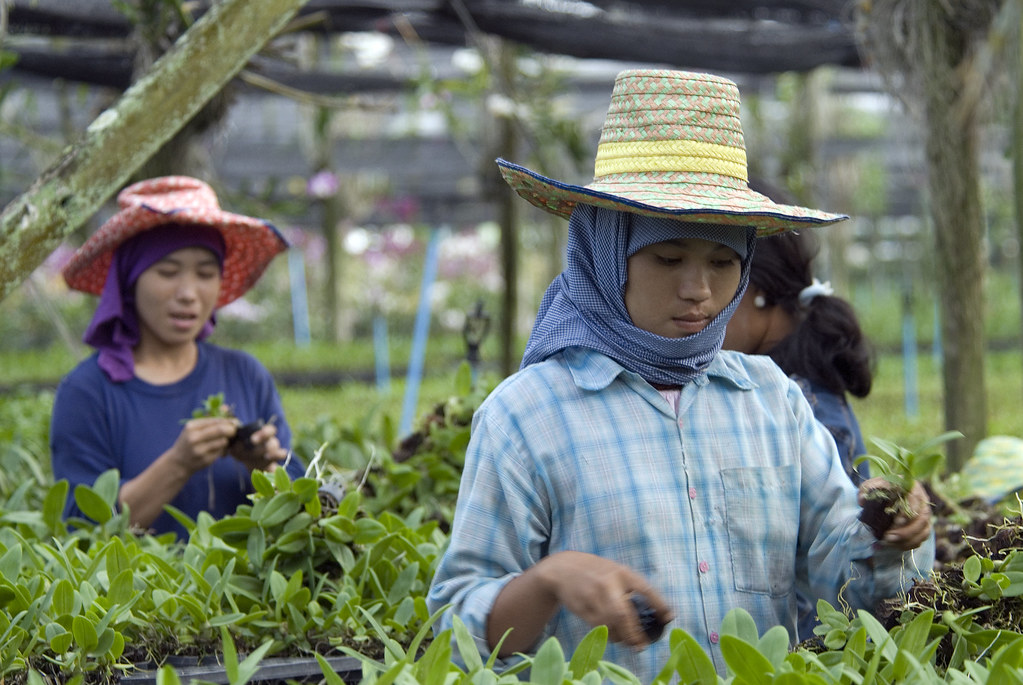
In 2025, over 7,000 workers employed under the Pacific Australia Labour Mobility (PALM) scheme left their employers and entered a visa limbo. This figure includes pregnant women who were denied maternal care for months. Launched in 2021, the PALM scheme brings workers from Timor-Leste and nine Pacific Island countries to work in Australia under temporary visas to address labour shortages in sectors such as agriculture, hospitality, and aged care. The systemic deficiencies embedded in the scheme, such as tying workers’ legal status to employers, restricting visa mobility, and failing to guarantee accessible healthcare, have created reproductive vulnerabilities for female workers who must choose between financial stability and reproductive autonomy and rights. If unaddressed, these dynamics undermine Australia’s claims to safe and equitable regional leadership as they hinder gender equality and reproductive rights.
The Australian government has affirmed that the scheme is “an important investment in regional prosperity and resilience”, framing it as a pillar for regional cooperation. Yet the scale of worker disengagement and the persistence of exploitation show that the scheme’s design continues to produce systemic harm, particularly for women whose health and livelihood are made contingent on remaining in employer-approved work.
Compounding evidence of migrant workers’ exploitation raises the question of whether labour mobility can truly be a credible pillar of regional partnership if it reproduces reproductive injustice.
Reproductive justice entails the right to maintain personal bodily autonomy, have children, not have children, and parent children in safe and sustainable communities, all of which are systemically excluded for female workers in PALM contexts. A May 2025 report by Australian National University researcher Lindy Kanan highlighted that discrimination and injustice begin even before entry into the scheme: while pregnancy tests conducted in sending countries barred participation entirely, employers often hesitated to hire women due to the potential costs associated with pregnancy. Once in the program, women remain unaware of workplace rights regarding parental leave, maternity leave, or the ability to return to Australia post-pregnancy, leaving them with limited recourse and social support. Combined with fear of dismissal, deportation, and limited antenatal care, these conditions create a system in which reproductive autonomy is constrained by visa status and employer power.
These incidents do not emerge from a vacuum, but from critical gaps in policy design, including the absence of enforceable protections against pregnancy-based discrimination, the lack of independent access to reproductive healthcare, meaningful separation between visa status and employer control, and weak awareness of rights and entitlements. Australia ratified the Convention on the Elimination of All Forms of Discrimination against Women (CEDAW) in 1983, and its preamble states that the reproductive status of women should not be a basis for discrimination, requiring that social services and childcare facilities be available to all individuals. Australia’s National Employment Standards (NES), too, guarantees that employees who have been continuously employed for more than 12 months, including casual employees, may access unpaid parental leave, paid “no safe job” leave, and a right to return to work. Yet, these normative commitments are contravened in PALM contexts by the dismissal of women workers on grounds of pregnancy, pregnancy testing at recruitment, and the lack of access to parental care.
These gaps between policy commitments and their implementation in practice underscore the urgent need for targeted and systemic reform.
First, pregnancy testing at recruitment should be prohibited, and dismissal or contract non-renewal based on pregnancy should be explicitly banned. Although Australia is not bound by the ILO’s Maternity Protection Convention, the standards outlined by it provide a useful international benchmark for protecting pregnant workers, including prohibitions on pregnancy-based discrimination, hiring tests, and dismissal linked to maternity. Aligning PALM with these protections, both onshore and offshore, would be a critical step.
Second, reproductive healthcare must be decoupled from employer control: PALM workers need to be guaranteed confidential and publicly funded access to antenatal care, contraception, and abortion services, regardless of visa status or employment continuity.
Third, a “visa portability” mechanism allowing workers to switch employers without visa cancellation to mitigate the fear of deportation tied to pregnancy or family needs should be introduced. Finally, while the Australian government ensures relaying information on reproductive health, workplace rights, and support services online, this must be made more accessible and culturally appropriate in accessible formats, addressing current gaps in awareness and understanding among workers.
Australia cannot credibly present PALM as a model of regional partnership while its structure leaves women to choose between income and reproductive autonomy. If the scheme is to reflect the values of dignity, fairness, and regional cooperation that Australia claims to advance, it must move beyond labour extraction towards a rights-based labour governance, recognising that reproductive justice is a core measure of whether labour mobility is truly equitable.
Comprehensive reforms centring the rights, protection, and wellbeing of women migrant workers would bring PALM into closer alignment with Australia’s GEDSI commitments and its broader obligations under international labour and human rights standards. More importantly, they would shift the scheme away from a model of dependency towards a framework of mutual respect and prosperity, positioning Australia as a fair and inclusive regional partner.
Tanisha Lamichhane is a Master of International Relations graduate from the University of Melbourne with a background in research, gender advocacy, and policy analysis. She has contributed to reforms in Nepal’s national juvenile justice frameworks, co-authored submissions for the UN Universal Periodic Review examining human rights violations in Australia, and worked as a Policy and Advocacy Support Officer amplifying students’ voices in the University of Melbourne through the Graduate Student Association. Currently, as a contributing writer at the Young Diplomats Society and National Publications Director at Asia Australia Youth Association, she publishes academic articles on gender, structural justice, and inequities in regional and international contexts. Her work focuses on context-sensitive approaches to amplify underrepresented voices in political discourses and policymaking.
This blog is part of a joint series between AIIA and WIIS-A, which aims to elevate the work of female and gender-diverse individuals in the field of international affairs.
This article is published under a Creative Commons License and may be republished with attribution.