Sri Lanka is India’s closest maritime neighbour, and New Delhi has long cast itself as a net security provider in the Indian Ocean. The island nation is central to India’s Neighbourhood First policy and MAHASAGAR (Mutual and Holistic Advancement for Security and Growth Across Regions) vision.
The sinking of the Iranian vessel IRIS Dena, returning from the Indian Navy’s MILAN exercise in the Bay of Bengal, 20 nautical miles south of Galle, has sharpened regional maritime security concerns and highlighting the need for deeper India–Sri Lanka cooperation. Trincomalee Port sits at the centre of this emerging partnership. While Trincomalee is currently being developed primarily as an energy hub, its strategic location in the Indian Ocean and proximity to India’s southern coastline make it difficult to separate energy infrastructure from broader maritime and strategic considerations, giving such projects long-term security significance.
Located in a deep-water bay on Sri Lanka’s northeastern coast, Trincomalee Port is South Asia’s only fully sheltered natural harbour. Its terraced highlands and two headlands offer natural protection, and favourable conditions for berthing and ship-to-ship cargo transfers. Historically, the port has served as a naval facility with dedicated berths and an airstrip; today it handles general cargo and dry bulk, supported by specialised terminals (e.g., Tokyo Cement, Prima Flour, and the Ashroff jetty). Nearby, World War II–era oil storage tanks sit on government land. These features make the port well suited for logistics, energy storage, and naval and commercial access. Consequently, the port has become a strategic asset in the Indian Ocean.
India’s Continuous Engagement in and around Trincomalee Port
Under Prime Minister Narendra Modi, New Dehli’s foreign policy has shifted toward investment-led engagement, prioritising the development of Sri Lanka’s connectivity, energy sector, airports, and maritime infrastructure. There has also been a sustained interest in the Eastern Province, even before the post-crisis investment agreements. India has consistently supported local communities after the civil war through initiatives spanning fisheries and livelihoods, education and training, transport links, healthcare, water and other infrastructure, and housing. These efforts included 40 boats, fishing nets and cold storage for displaced communities in Vaharai; livelihood support for war widows and women in Ampara; 1,260 computers and 218 printers; investment in the Siddha Faculty in Trincomalee and Nenasala e-learning centres; and vocational training centres in Batticaloa.
India’s Investment Turn: From Hesitation to Strategic Opportunity
A full-scale revamp and investment-led development of the Trincomalee Port, beyond basic development activities in the Eastern Province, was not on the cards for India before Sri Lanka’s economic crisis, as little tangible progress had materialised between India and Sri Lanka at Trincomalee over the years, and both sides had reservations about developing the port. India remained cautious about deep involvement in Trincomalee due to the political sensitivities surrounding Sri Lanka’s Tamil-majority northeast, while Colombo was often wary of excessive Indian involvement in matters linked to sovereignty and domestic politics.
However, since the economic crisis, Sri Lanka has an urgent need to expand economic activity and create new opportunities for growth to revive its economy and has expressed interest in developing the Trincomalee Port. India viewed this as an opportunity that aligns with its developmental, security, and geopolitical interests, and proposed the development of Trincomalee into an energy hub and the creation of an industrial zone.
India has positioned itself as a partner to Sri Lanka in its post-crisis recovery, with a long-term focus on fostering regional stability and development, particularly, through cooperation initiatives where both countries’ interests align. This evolving framework offers mutual gains by supporting sustained economic growth and improving access to affordable, reliable energy. Moreover, this energy interdependence has created a strategic leverage within the bilateral relationship. To understand India’s growing engagement in the Eastern Province, it is necessary to examine the key projects shaping Trincomalee’s transformation into an energy hub with broader maritime and strategic significance.
Agreements Driving Trincomalee’s Development
At the centre of India’s investment initiatives is the Memorandum of Understanding which established Trincomalee as a regional energy and industrial hub. The Memorandum is a trilateral agreement signed by the UAE’s Ministry of Investment, the Indian Ministry of Petroleum and Natural Gas, and Sri Lanka’s Ministry of Energy to develop Trincomalee jointly. The focus is on developing this area as a strategic energy hub to enhance Sri Lanka’s energy security. This multifaceted collaboration will support a range of infrastructure and energy projects in Trincomalee.
Prime Minister Narendra Modi’s Grant Assistance Package covers the three districts of the Eastern Province, namely Ampara, Batticaloa, and Trincomalee. In addition, Prime Minister Narendra Modi announced 33 socio-economic development projects under this initiative. The total value of the package is approximately INR 640 million (USD 7.77 million).
These agreements collectively reflect India’s shift towards long-term economic and infrastructure-led engagement in Sri Lanka’s Eastern Province.
Energy Infrastructure and Strategic Connectivity
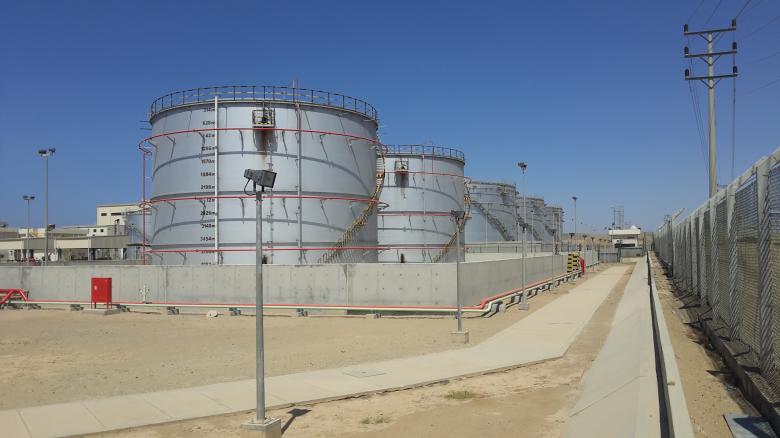
The current agreement between India and Sri Lanka over the Trincomalee Oil Tank Farm (TOTF) is a long-standing arrangement that has been revived and upgraded. The Sri Lankan government has decided to lease the tanks for 50 years. Under this arrangement, Ceylon Petroleum Corporation (CPC) received 24 fuel tanks, the Lanka Indian Oil Company (LIOC) received 14 fuel tanks, and Trinco Petroleum Terminal Limited received 61 fuel tanks. Under the joint development arrangement, LIOC holds a 49% stake in Trinco Petroleum Terminal Limited, while CPC retains 51 per cent. The two sides are expected to jointly refurbish 61 of the 99 tanks at the farm. The refurbishment of the oil tanks and the export of petroleum products could transform Trincomalee into a bunkering hub, supplying fuel and paving the way for the further development of the harbour. Developments that are essential for building Sri Lanka’s industrial capacities that will strengthen security capabilities in the region.
According to NTPC Limited, the Sampur Solar Power Plant is a solar project power with an initial capacity of 50 MW that can be extended to 120 MW and is intended to strengthen India’s presence in the regional energy landscape. This solar project is being established by Trincomalee Power Company Limited (TPCL), a 50:50 joint venture between NTPC Limited of India and the Ceylon Electricity Board (CEB) of Sri Lanka, with an envisaged investment of USD 100 million. The Power Purchase Agreement between TPCL and CEB, and the Implementation Agreement with the Government of Sri Lanka for Phase I of 50 MW, have been signed. The project will help diversify Sri Lanka’s energy mix by significantly boosting the country’s clean energy capacity, avoiding an estimated 200,000 metric tons of CO2 emissions annually, and reducing reliance on fossil fuels.
An agreement is under consideration to construct a multi-product oil pipeline. The proposed pipeline will be constructed from Nagapattinam to Trincomalee and is expected to strengthen regional logistics and fuel security. Under this agreement, Trincomalee is positioned to become a regional hub for oil-related activities, supported by port development and associated investment zones.
While these projects are primarily energy-oriented, collectively they deepen India’s strategic and energy footprint in Trincomalee
Despite these developments, India’s engagement in Trincomalee remains gradual and has yet to fully translate into reality. Projects are still in the very initial phase of development; some have begun, while others have not yet received approval from Sri Lanka’s cabinet.
Turning Potential into Power
India should rapidly scale up its investment in Trincomalee, as it matters more than ever to its strategic and energy interests. India’s role as a net security provider in the region has come under renewed scrutiny following the sinking of the vessel in Sri Lankan waters. At the same time, energy disruptions linked to instability in the Gulf have exposed vulnerabilities in both India’s and Sri Lanka’s energy security frameworks. In this context, the development of Trincomalee as an energy hub assumes critical importance, with its potential to enhance the region’s energy resilience and strengthen India’s strategic presence in the Indian Ocean.
The convergence of maritime security imperatives and energy cooperation positions Trincomalee as a pivotal node in India’s regional strategy one that links Sri Lanka’s economic recovery with broader geopolitical stability. While the agreements are already in place, progress so far has been incremental rather than transformative. India’s strategic bet on Trincomalee will ultimately be judged by its ability to translate these commitments into tangible on-the-ground outcomes. Only through sustained investment and long-term development can Trincomalee evolve from an emerging energy hub into a strategically significant maritime asset for India in the future.
Vrinda Malik is a Ph.D. Research Scholar in Political Science at the University of Delhi, specialising in South Asian security and Indian Ocean geopolitics. Her research focuses on maritime security, multilateral diplomacy, and the foreign and security policies of island states in the Indian Ocean Region. She has experience in policy research, conference rapporteurship, and multilateral dialogues, including engagements with United Nations platforms such as UNITAR and UNU. Her work has appeared in The Diplomat, Australian Outlook, Modern Diplomacy, and NERPS Trends (Hiroshima University), and reflects a focus on concise, evidence-based analysis for academic and policy audiences.
This article is published under a Creative Commons License and may be republished with attribution.