The latest round of high-level engagements between Australia and Japan reflects far more than routine diplomatic interaction. The relationship, once centred primarily on trade, energy, and resources, has now evolved into one of the region’s most consequential security partnerships.
Japanese Prime Minister Sanae Takaichi’s recent visit to Canberra, alongside Japanese Defence Minister Shinjiro Koizumi’s meetings with Australian leaders, demonstrates the emergence of a deeper strategic compact between two of the Indo-Pacific’s most influential middle powers.
From Economic Partnership to Strategic Alignment
This year marks the 50th anniversary of the 1976 Basic Treaty of Friendship and Cooperation between Australia and Japan. Over the past five decades, the relationship has evolved from economic interdependence into a comprehensive strategic partnership encompassing defence, cyber security, maritime cooperation, intelligence sharing, critical minerals, and defence-industrial collaboration. Prime Minister Anthony Albanese described the partnership as vital for maintaining “a peaceful, stable and prosperous region.”
The latest Australia–Japan summit further strengthened cooperation on critical supply chains, co-development of defence capabilities, economic security, and advanced technologies. Japan remains one of Australia’s key economic partners in energy, liquefied natural gas, hydrogen, and resilient supply-chain diversification.
This growing strategic convergence reflects wider geopolitical shifts in the Indo-Pacific, particularly concerns over China’s naval expansion, military modernisation, and coercive behaviour in the East and South China Seas. Consequently, Canberra and Tokyo are strengthening security coordination to support regional stability and a rules-based Indo-Pacific order.
Defence Cooperation and the Mogami Frigate Deal
The Australia–Japan Annual Leaders’ Meeting in 2026 produced one of the most ambitious defence cooperation frameworks in the history of the bilateral relationship. The two governments issued a Joint Statement on Enhanced Defence and Security Cooperation aimed at strengthening interoperability, deepening military integration, and expanding strategic coordination.
The agreement builds upon earlier milestones, including the 2022 Australia–Japan Joint Declaration on Security Cooperation, the 2023 Reciprocal Access Agreement (RAA), and the Framework for Strategic Defence Cooperation established in 2025. The new framework prioritises increased information and intelligence sharing, co-development and co-production of defence technologies, advanced weapons testing, cyber-security cooperation, joint maintenance and sustainment of military assets, enhanced military exercises, and securing critical maritime routes and supply chains.
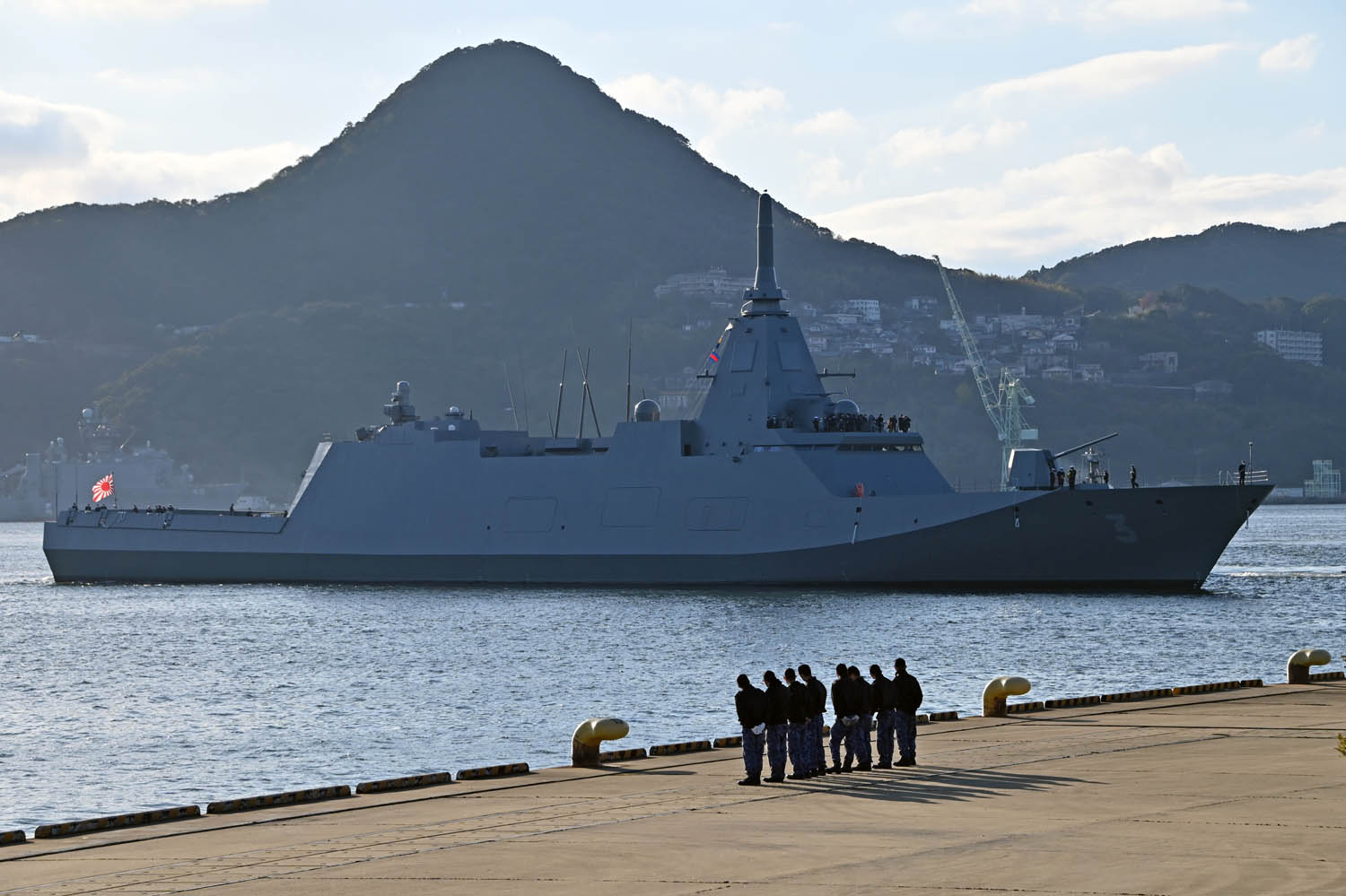
The most consequential development was Australia’s decision to procure upgraded Mogami-class frigate warships from Japan. The deal is widely regarded as one of Japan’s largest defence export agreements since Tokyo relaxed its post-war restrictions on military exports in 2014. Under the agreement, the first three frigates will be constructed in Japan and delivered to the Royal Australian Navy beginning in 2029, while later vessels are expected to be built in Western Australia.
Built by Mitsubishi Heavy Industries, the upgraded Mogami-class frigates possess advanced anti-submarine warfare capabilities, stealth features, vertical launch systems, and long-range operational capacity. The agreement also includes joint sustainment, operational training, and defence-industrial collaboration. The signing of the “Mogami Memorandum” between Defence Ministers Richard Marles and Shinjiro Koizumi reaffirmed both countries’ commitment to long-term defence industrial cooperation and maritime interoperability.
The Indo-Pacific Security Environment and the China Factor
The deepening Australia–Japan strategic partnership must be understood within the context of a changing Indo-Pacific security environment. Both countries increasingly view China’s military rise, naval expansion, coercive economic practices, and assertive behaviour in the East and South China Seas as significant challenges to regional stability, maritime security, and the rules-based order. Concerns over vulnerable sea lanes, grey-zone tactics, and strategic competition have accelerated defence and security coordination between Canberra and Tokyo.
For Japan, Australia is a trusted democratic partner, a major supplier of energy and critical minerals, and an important maritime power committed to preserving freedom of navigation and an open Indo-Pacific. Tokyo is particularly concerned about the security of sea lanes connecting the Indian and Pacific Oceans, especially amid instability in the South China Sea and the Strait of Hormuz.
For Australia, closer ties with Japan diversify its regional security partnerships beyond reliance on the United States while supporting military modernisation through Japanese expertise in naval shipbuilding, cyber capabilities, and advanced defence technologies. Both countries increasingly frame their cooperation around the vision of a “free and open Indo-Pacific,” while also complementing wider regional frameworks such as the Quad and engagement with ASEAN partners and India.
Japan’s Expanding Indo-Pacific Strategic Activism
Japan’s growing strategic activism is not limited to Australia alone. Tokyo has simultaneously expanded defence cooperation with Southeast Asian nations, particularly Indonesia and the Philippines, signalling Japan’s transformation into a wider Indo-Pacific security actor. During recent meetings in Jakarta, Indonesian Defence Minister Sjafrie Sjamsoeddin and Japanese officials discussed maritime security cooperation, military exchanges, and defence technology collaboration.
This broader diplomatic outreach illustrates Japan’s evolving security posture under changing regional conditions. Tokyo is increasingly moving beyond its traditionally cautious post-war strategic identity and embracing a larger regional security role. The willingness to export advanced military platforms, deepen defence-industrial cooperation, and participate more actively in Indo-Pacific security arrangements reflects Japan’s recognition that regional stability now requires stronger partnerships among like-minded democracies.
The Australia–Japan relationship therefore represents more than a bilateral partnership. It forms part of an emerging Indo-Pacific security architecture involving Australia, Japan, India, ASEAN partners, and the Quad. Unlike Cold War-style military alliances, these partnerships are flexible, issue-based, and driven by shared concerns regarding strategic coercion, economic vulnerability, cyber threats, supply-chain resilience, and maritime insecurity.
Ultimately, the latest Australia–Japan agreements demonstrate that Canberra and Tokyo are no longer merely economic partners. They are increasingly becoming central pillars of a new Indo-Pacific strategic framework designed to preserve regional balance, strengthen deterrence, and uphold a stable, rules-based maritime order in the twenty-first century.
Dr Ashok Sharma, Visiting Fellow, The University of New South Wales Canberra at the Australian Defence Academy and an Academic Fellow at Australia-India Institute, The University of Melbourne.
This article is published under a Creative Commons License and may be republished with attribution.