This week in Australian Foreign Affairs: Australia announced several Joint Statements and Declaration made with Japan on defence, cyber-security, critical minerals, and economic resilience, and more.
On 4 May, the Prime Minister of Australia announced that Australia and Japan are committed to strengthen their relationship of deep trust and friendship by establishing the Australia-Japan Leadership Dialogue. A 1.5 track dialogue between the two countries is stated to bring together leaders and experts from across government, academia, business and civil society to address the most important issues in the Australia-Japan relationship.
The Government noted they seek to use the Dialogue to drive practical cooperation between diverse stakeholders, share common perspectives, and advance opportunities to shape the future of the relationship. In the media release, Prime Minister Anthony Albanese said that, “our friendship with Japan has never been closer, and in these uncertain times, friendships mean more than ever.”
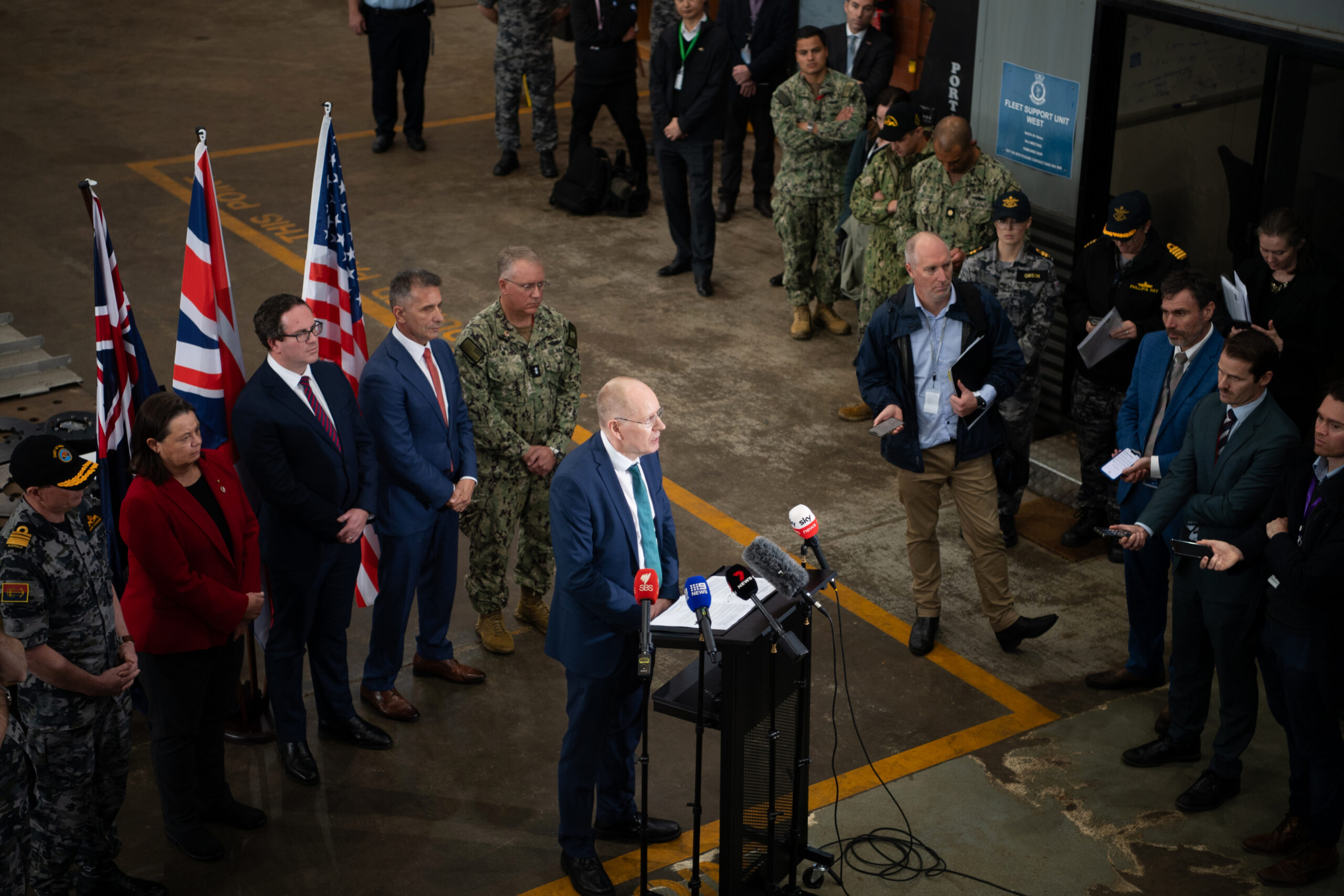
On 4 May, the Australian Government announced that Australia and Japan have agreed to take steps to enhance defence and security cooperation, to support a shared ambition for a peaceful, stable and prosperous region. The Joint Statement on Enhanced Defence and Security made by Prime Minister Anthony Albanese of Australia and Prime Minister Takaichi Sanae of Japan announced various key defence and security priorities. These include increased information sharing; co-development, co-production and co-sustainment of defence capabilities; advanced weapons testing; enhanced training and exercises; joint maintenance and sustainment of assets, and closer collaboration to secure supply chains and critical maritime routes.
This follows a development on the already close cooperation with Japan, building on decades of engagement such as the 2022 Australia-Japan Joint Declaration on Security Cooperation, the 2023 Australia-Japan Reciprocal Access Agreement (RAA) and last December’s establishment of the Framework for Strategic Defence Cooperation (FSDC). The Joint Statement reflects a share commitment between the two countries towards deepening cooperation in the defence industry, following Australia’s decision to procure the upgraded Mogami class frigates for Australia’s general purpose frigate program. In a media release, Prime Minister Anthony Albanese said, “In a complex strategic environment, cooperation between Australia and Japan is essential to maintaining a peaceful, stable and prosperous region.”
On 4 May, the Australian Government announced bolstering cooperation on economic security to achieve more resilient supply chains for Australia and Japan, as well as the region. The Joint Declaration on Economic Security Cooperation was made by Prime Minister Anthony Albanese and Prime Minister Takaichi Sanae outlines a commitment to build regional economic resilience. This involves strengthening supply chain resilience for key goods such as energy products, food and critical minerals, and promoting and protecting critical technologies.
The Government highlighted its important economic ties with Japan, being Australia’s third largest two-way trading partner and second-largest export market. The Joint Declaration will boost the two-way trade and investment, noting how Japan and Australia are more strategically aligned than ever on key priorities such as economic security. This involves continuing the consult with each other on economic security contingencies and consider measures to mitigate risks. In a media release, the Minister for Foreign Affairs, Penny Wong, said, “Australia and Japan are more strategically aligned than ever, including as close partners on economic security.”
On 4 May, the Australian Government announced joint efforts and cooperation on critical minerals between Australia and Japan. Prime Minister Anthony Albanese and Prime Minister Sanae Takaichi issued the Australia-Japan Strategic Cyber Partnership that aims to collectively harden cyber defences, improve shared awareness and collaboration on cyber threats, as well as building collective resilience of the Indo-Pacific through public-private partnerships.
The Partnership will be underpinned by a yearly Cyber Dialogue, which will be held in June in Tokyo. The Government noted the importance of working loosely with trusted partners to bolster cyber defences, consulting each other on cyber-related contingencies that could affect the sovereignty and regional security interests. In a media release, Prime Minister Anthony Albanese said, “Cyber threats do not respect national boundaries, so this is why we must work together with key partners, such as Japan.”
On 4 May, the Australian Government announced a new partnership that enables deeper cooperation on complex cyber security challenges for Australia and Japan. This involves a joint effort of supporting onshore processing, refining and related advanced manufacturing, outlined in a Joint Statement on Critical Mineral Cooperation.
The Government noted the Joint Statement aims to make critical minerals a core pillar of Australia’s economic and national security relationship and will drive coordinated investment in strategic projects to address the most urgent supply chain vulnerabilities. The cooperation builds on existing Australia Japan Critical Minerals Partnership launched in 2022 and will enable greater access to capital and technology. The Government will provide up to $1.3 billion, including non-binding Letters of Support, to critical mineral projects through the Critical Minerals Facility and Export Finance Australia. This increases the potential to provide Japan with critical minerals including gallium, nickel, graphite, rare earths and fluorite. In a media release, Prime Minister Anthony Albanese said, “By working closely with Japan, we can attract greater investment in our critical minerals sector and further develop the sector, creating jobs and capability in Australia.”
On 5 May, the Foreign Minister of Australia announced in a join media release with Minister for Pacific Islands Affairs, The Hon Pat Conrow MP, plans to travel to Fiji as part of the Albanese Government’s efforts to deepen ties and strengthen regional fuel security. Minister Wong and Minister Conroy will meet with Prime Minister Sitiveni Rabuka and Fiji’s Cabinet to discuss progress towards the Vuvale Union, a new treaty that will enhance the partnership between Australia and Fiji.
The Foreign Minister noted the visit will include discussion on regional energy security, strengthening strategic, economic and institutional cooperation between Fiji and Australia as well as enhancing engagement with other Pacific Island countries and shared partners in the region. There will be an opportunity to progress the establishment of the Pacific Resilience Facility (PRF) during the visit, which is a Pacific-led initiative to support climate adaptation, disaster preparedness and resilience across the region. The Pre-COP, hosted by Fiji and Tuvalu in October, will bring leaders to the Pacific to see climate impacts and solutions first-hand, with a special session at COP31 to provide a platform for pledges to the PRF. In a media release, The Foreign Minister said, “Australia will continue to stand alongside Fiji and other Pacific Island partners to address fuel security challenges, including advocating for open and stable global supply routes so essential shipments can reach our region.”
On 5 May, the Australian Government is setting up a new program to enable young Australians to become successful in future jobs and industries through strengthening Asian language education. The Fluency in Asian Languages program aims to support Asian language learning, shared between nine organisations across Victoria, New South Wales and the Australian Capital Territory, receiving $2.5 million to establish the program.
The funding as part of the Government’s $25 million Community Language Schools program and aims to support students in Years 7 to 12 to build fluency in more than 15 Asian languages. The Government noted the funding will increase student participation and retention in Asian language learning through community language schools and strengthen the operational capability of schools, enabling them to support sustained and high‑quality language study. It will also support the development of curriculum and learning resources designed to strengthen community language education nationwide. Assistant Minister for Citizenship, Customs and Multicultural Affairs, Julian Hill said in a media release, “This investment recognises the dedication of teachers, volunteers and families who work every week to keep languages, cultures and community connections strong.”
On 6 May, the Australian Foreign Minister Penny Wong formally ratified the Pacific Resilience Facility (PRF) Treaty with Fiji’s Minister for Foreign Affairs and External Trade, Sakiasi Ditoka at the Pacific Islands Forum Secretariat in Suva in the presence of Secretary General Baron Waqa. This is a landmark agreement that enables Pacific communities towards having greater resources and control in addressing the growing impacts of climate change.
The Foreign Minister noted that the PRF is the first Pacific-led, owned and managed community resilience financing facility. It will provide grants for climate adaptation, disaster preparedness, and projects that respond to loss and damage. Other Pacific Island countries that have ratified the Treaty include Tonga, Nauru, the Republic of the Marshall Islands, Solomon Islands, Tuvalu, Cook Islands, New Zealand and Niue. The ratification paves the way for the initial call for proposals, set for launch at the 55th Pacific Islands Forum Leaders Meeting in Palau in late August 2026.
This article is published under a Creative Commons License and may be republished with attribution.