This week in Australian foreign affairs: Australia expands AUKUS submarine supply chain cooperation and domestic defence manufacturing; Australia and Singapore reaffirm economic resilience and energy security cooperation; Australia announces humanitarian assistance to Solomon Islands and Papua New Guinea in response to Tropical Cyclone Maila; and more.
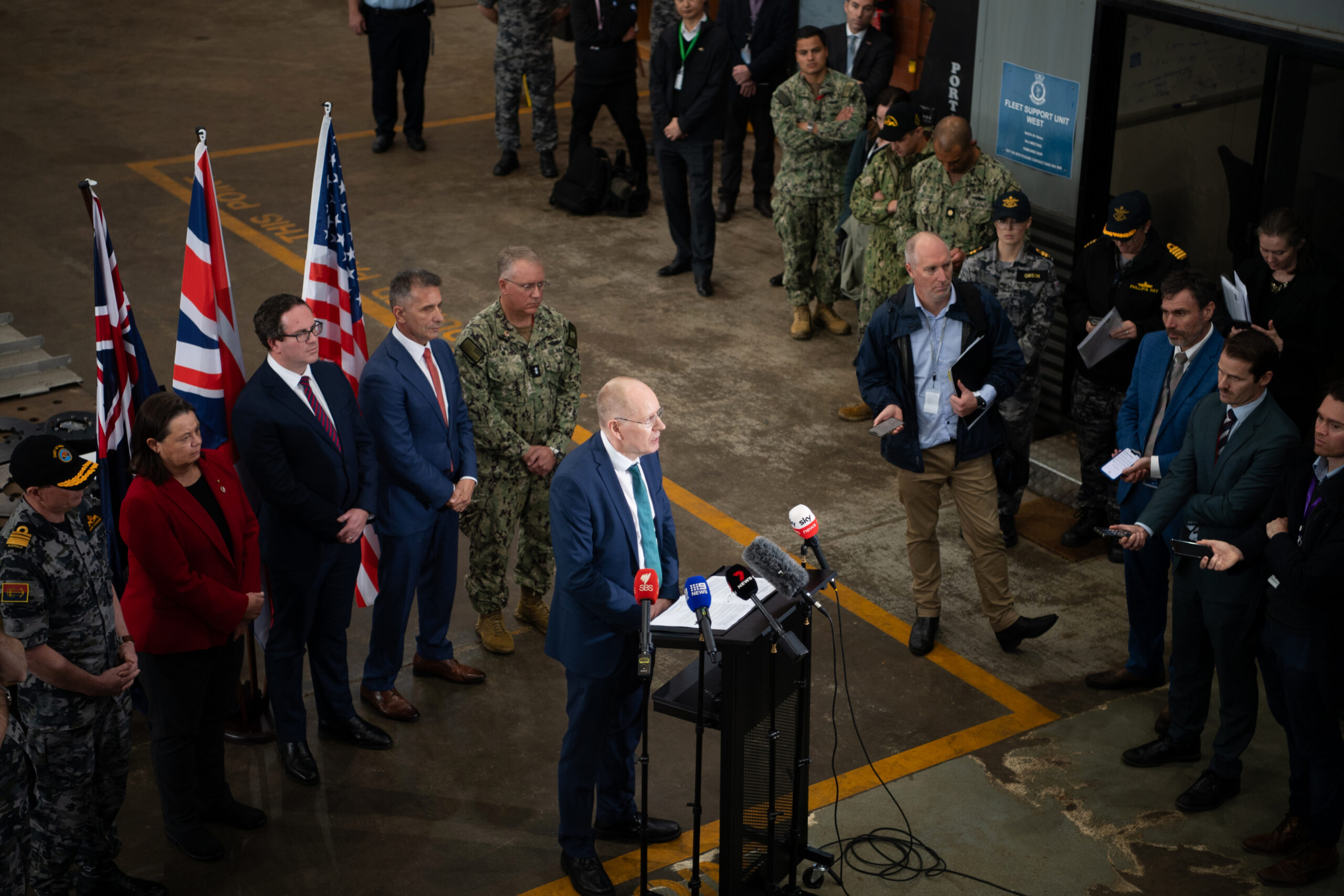
On 10 April, the government announced an expansion of opportunities for Australian industry to participate in AUKUS submarine supply chains, particularly with the United Kingdom and the United States. The Australian Submarine Supplier Qualification (AUSSQ) program will receive an additional $21 million investment to support Australian suppliers in providing sustainment services to UK submarines and to expand integration into US naval supply chains, including nuclear-powered submarines and aircraft carriers. The government also announced a new supply chain qualification program led by ASC and BAE Systems, enabling Australian companies to contribute to the SSN-AUKUS submarine build programs in both Australia and the United Kingdom. The initiatives are intended to strengthen domestic industrial capability, expand supply chain access, and support future submarine construction, which is expected to generate significant employment in South Australia.
In a media release, Deputy Prime Minister Richard Marles said: “AUKUS is one of the greatest industrial endeavours in our nation’s history – supporting advanced manufacturing, creating high-value jobs, and strengthening Australia’s security and the Albanese Government is committed to seeing Australian businesses at its forefront.”
On 10 April, Australia and Singapore reaffirmed their economic and strategic partnership through a joint statement on economic resilience and essential supplies. Prime Minister Anthony Albanese and Singaporean Prime Minister Lawrence Wong emphasised the need for coordinated responses to global economic disruptions, particularly amid the ongoing Middle East crisis, and reiterated support for a ceasefire and continued negotiations. The statement highlighted the importance of energy security cooperation, noting the mutual role both countries play in supplying refined petroleum products and liquefied natural gas. Both leaders committed to ensuring the continued flow of essential goods, improving coordination across supply chains, and strengthening trade resilience through new mechanisms, including an Economic Resilience Dialogue and a future protocol under the Singapore-Australia Free Trade Agreement.
On 12 April, the Minister for Foreign Affairs, Penny Wong and the Minister for Pacific Island Affairs, Pat Conroy, announced that Australia will provide $2.5 million in humanitarian assistance to Solomon Islands and Papua New Guinea in response to Tropical Cyclone Maila. Of this, $1.5 million will be allocated to Solomon Islands, where a state of disaster has been declared in Western and Choiseul provinces, while $1 million will support Papua New Guinea, particularly in the Autonomous Region of Bougainville and affected areas in Milne Bay Province.
The assistance will support the delivery of humanitarian relief supplies and technical assistance to affected communities, with funding also channelled through the Australian Humanitarian Partnership to support local organisations. Australia will work with the governments of Solomon Islands and Papua New Guinea to coordinate the response and ensure assistance reaches the areas most impacted by the cyclone. In a media release, Wong said “our focus is on getting essential support on the ground quickly to help those most affected in Solomon Islands and PNG.
On 13 April, Prime Minister Anthony Albanese announced that he will travel to Brunei Darussalam and Malaysia from 14 to 17 April alongside Minister for Foreign Affairs Penny Wong. The visit forms part of efforts to strengthen engagement with regional partners to support the continued flow of energy supplies, fertiliser, and other critical goods amid ongoing global disruptions. In Brunei Darussalam and Malaysia, discussions will focus on energy security, food supply, and the resilience of essential goods trade, reflecting the importance of both countries as key partners in Australia’s supply chains. The visit will also reinforce existing partnerships and support continued coordination on maintaining stable flows of essential goods. In a media release, Prime Minister Anthony Albanese said, “Engaging with critical regional partners such as Brunei Darussalam and Malaysia will help ensure Australia’s energy supply remains secure during times of uncertainty. We are taking every step to reinforce relationships and engage with key partners to keep our fuel supply flowing. My Government is continuing to take every practical action to shield Australians from the impact of the war in the Middle East.”
On 13 April, the Minister for Defence Industry Pat Conroy announced that the first Australian-made Guided Multiple Launch Rocket System (GMLRS) missiles had been successfully test-fired at the Woomera Test Range in South Australia. The test expands the Australian Army’s long-range strike capability and marks a step forward in the development of Australia’s sovereign defence industry, with the missiles capable of striking targets beyond traditional artillery range and deployed via the High Mobility Artillery Rocket System (HIMARS). The test follows the establishment of a dedicated manufacturing facility at Port Wakefield in December 2025 and forms part of a $320 million investment to support Australian companies in producing GMLRS components.
In a media release, Conroy said, “Making missiles in Australia is central to Australia’s national defence resilience. Australia is now the only country outside the United States to make the GMLRS missile, providing opportunities for Australian industry to enter into global supply chains. This successful test-firing is a major milestone for Australia’s sovereign guided weapons capability, demonstrating concrete progress in strengthening our national self-reliance and delivering a defence future made in Australia.”
On 13 April, the government announced a series of senior leadership appointments within the Australian Defence Force, subject to the Governor-General’s approval, with changes taking effect from July 2026. Vice Admiral Mark Hammond, current Chief of Navy, has been recommended for appointment as Chief of the Defence Force, while Lieutenant General Susan Coyle will be appointed Chief of Army, becoming the first woman to hold the position.
Rear Admiral Matthew Buckley will be appointed Chief of Navy, with further appointments to be confirmed in due course. The announcement also acknowledged the service of outgoing Chief of the Defence Force, Admiral David Johnston, and Chief of Army, Lieutenant General Simon Stuart, both of whom will retire following the transition. Prime Minister Anthony Albanese, in a media release, said, “The Australian Defence Force is tireless in its efforts to keep Australians safe – and I am so pleased to announce these new appointments. From July, we will have the first-ever female Chief of Army in the Australian Army’s 125-year history.”
On 15 April, Prime Minister Anthony Albanese and Sultan Haji Hassanal Bolkiah of Brunei Darussalam released a joint statement reaffirming their countries’ commitment to energy and food security, as well as the continued flow of essential goods. The statement emphasised the importance of resilient supply chains and open trade, particularly in light of disruptions linked to the ongoing crisis in the Middle East.
Both leaders committed to strengthening cooperation on energy supply chains, including through regional collaboration and the development of alternative energy sources, while also underscoring the importance of stable food supply systems. The statement reaffirmed support for maintaining open and secure trade in key resources, including petroleum products and agricultural inputs, and called on other partners to help ensure global supply chains remain stable.
On 15 April, the Minister for Foreign Affairs Penny Wong joined counterparts from multiple European countries and the United Kingdom in a joint statement calling for Lebanon’s inclusion in regional de-escalation efforts and urging all parties to work toward a lasting political solution. The statement welcomed moves toward direct negotiations between Lebanon and Israel and emphasised the need to uphold the ceasefire and broader de-escalation efforts in the region.
The ministers condemned attacks by Hezbollah against Israel and Israeli strikes on Lebanon, which resulted in significant civilian casualties, and called for the protection of civilians and UN peacekeepers in accordance with international humanitarian law. “We express our full solidarity and our steadfast support for the Lebanese people and authorities. We stand ready to provide emergency assistance to the more than one million displaced persons in Lebanon, in coordination with the Lebanese government,” said Wong in a media release.
Akshit Tyagi is an intern at Australian Outlook at the Australian Institute of International Affairs. He is a postgraduate student in International Relations at the Australian National University in Canberra and holds a Bachelor’s degree in Business Administration and a Postgraduate Diploma in Journalism. He previously worked as a business reporter in New Delhi and has written for The Canberra Times, Woroni (ANU student media), The Hill, and other publications.
This article is published under a Creative Commons License and may be republished with attribution.