This week in Australian foreign affairs: Australia announced defensive military assistance to Gulf countries amid escalating Iranian attacks, the government assisted Australians returning home amid travel disruptions in the Middle East, Deputy Prime Minister Richard Marles announced travel to Indonesia for defence talks, and more.
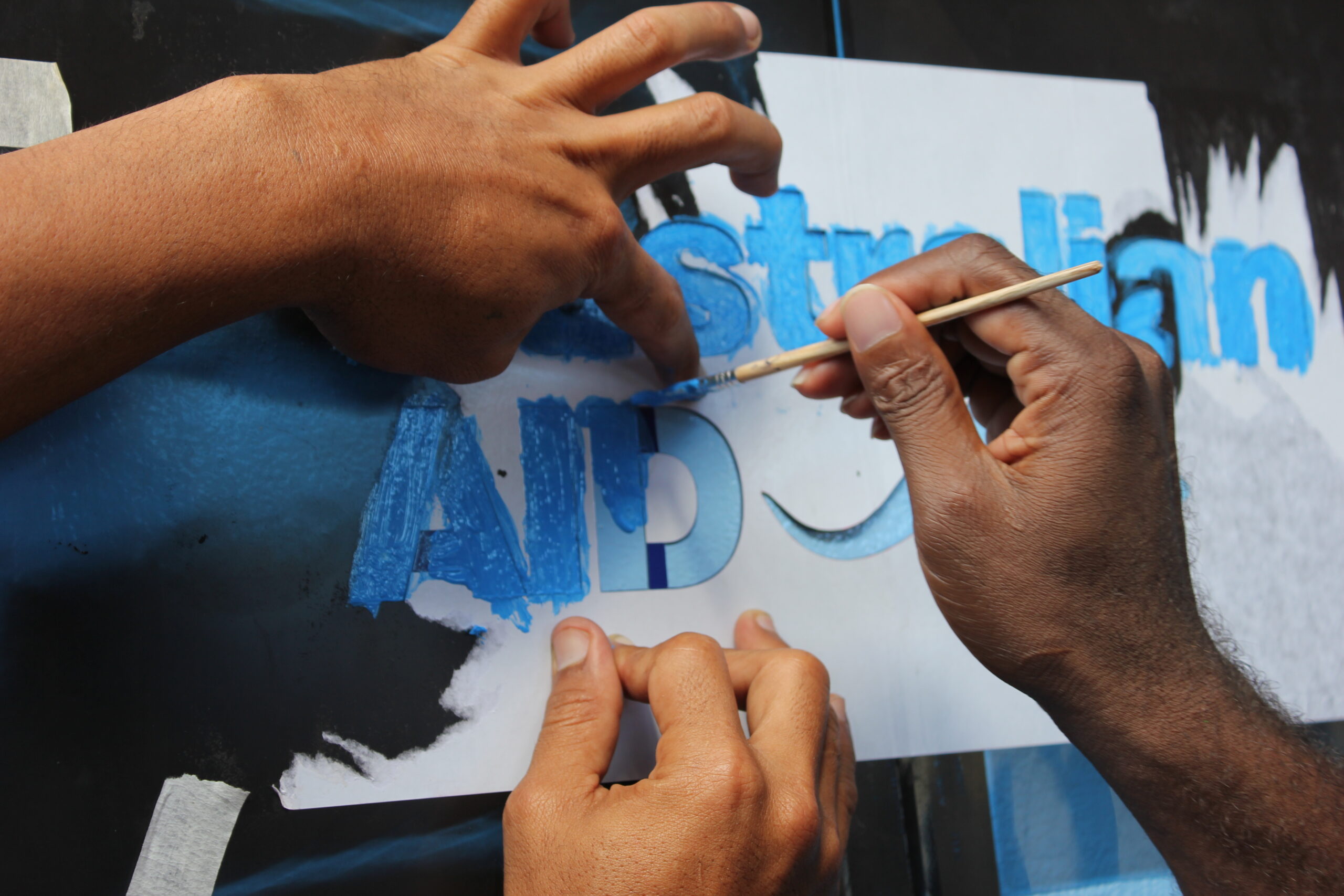
On March 6, Minister for Foreign Affairs Penny Wong, along with Minister for Communications Anika Wells and Minister for Pacific Island Affairs Pat Conroy, announced that audiences in Timor-Leste will now have access to Australian television programming through PacificAus TV. The initiative provides broadcasters with free access to Australian content, including drama, children’s programming, current affairs, and sport, and forms part of the Albanese Government’s Indo-Pacific Broadcasting Strategy, which aims to support independent media and strengthen regional engagement. Public broadcaster Radio e Televisão de Timor-Leste joins 17 free-to-air broadcasters across 11 Pacific countries already accessing the service. In a joint media release, Wong said, “Supporting local broadcasters with content, training and collaboration opportunities helps strengthen a vibrant, resilient and independent media sector in Timor-Leste and across the region.”
On March 6, the Australian Government raised concerns with China following what it described as an unsafe and unprofessional interaction between a People’s Liberation Army-Navy helicopter and an Australian Defence Force MH-60R helicopter operating from HMAS Toowoomba in the Yellow Sea. The incident occurred on March 4 while the vessel was conducting routine activities as part of Operation Argos, which supports the enforcement of United Nations Security Council sanctions against North Korea. In a media release, Defence stated, “The PLA-N helicopter matched the ADF helicopter’s altitude before closing in to an unsafe distance. The PLA-N helicopter moved slightly ahead, increased speed and then rolled towards the ADF helicopter, which required evasive action to maintain safe flight.”
On March 8, Minister for Defence Industry and Minister for Pacific Island Affairs Pat Conroy, together with Western Australia Minister for Defence Industry Paul Papalia, announced that Bechtel Infrastructure Australia has been appointed as the design services consultancy to undertake master planning for the Henderson Defence Precinct in Western Australia. The precinct is intended to support sovereign naval shipbuilding and sustainment, including facilities for landing craft construction, future Mogami-class frigates, submarine support infrastructure, and maintenance capabilities. In the joint media release, Conroy said, “Awarding this contract moves us closer to making the Henderson Defence Precinct the home of continuous naval shipbuilding and sustainment.”
On March 10, the Australian Defence Force announced that it had strengthened partnerships with allies and regional partners through participation in Exercise Cobra Gold 2026 in Thailand, held from February 23 to March 6. Around 19 Australian personnel were deployed to integrate into the multinational headquarters, focusing on enhancing joint capabilities in space and cyber operations. In a media release, Chief of Joint Operations Vice Admiral Justin Jones said, “The ADF personnel who deployed on Exercise Cobra Gold were provided a meaningful experience as an Australian joint integrated force within a multinational environment.”
On March 10, Minister for Foreign Affairs Penny Wong, together with Prime Minister Anthony Albanese and Deputy Prime Minister and Minister for Defence Richard Marles, announced that Australia will provide defensive military assistance to Gulf countries amid escalating Iranian attacks in the region. The Australian Defence Force will deploy an E-7A Wedgetail aircraft and supporting personnel to the Gulf for an initial four weeks to assist in securing regional airspace, and Australia intends to provide Advanced Medium Range Air-to-Air Missiles (AMRAAMs) to the United Arab Emirates. The Government stated the measures are aimed at supporting the collective self-defence of Gulf nations and protecting Australians in the region. In the joint media release, the ministers said, “We are taking defensive action to support our partners’ efforts to keep Australians safe. Australia supported action aimed at preventing Iran from getting a nuclear weapon and preventing Iran from continuing to threaten international peace and security. Our position remains that we do not want to see the conflict continue to escalate.”
On March 10, the Joint Standing Committee on Foreign Affairs, Defence and Trade announced that its Trade Subcommittee will hold a public hearing with Austrade as part of its inquiry into strengthening Australia’s trade and investment relations with Africa. The hearing will examine Austrade’s role in supporting Australian businesses to expand and diversify in international markets and provide insight into trade and investment opportunities across African markets. In the media release, Chair of the Trade Subcommittee Fiona Phillips said, “Austrade plays a valuable role in the trade and investment environment by supporting Australian businesses to expand and diversify in international markets. Australian businesses rely on Austrade’s expertise to provide advice on opportunities, market entry, and local business practices to engage with African markets. Austrade is therefore positioned to provide the Subcommittee with valuable insights into its terms of reference.”
On March 11, Deputy Prime Minister and Minister for Defence Richard Marles announced that he will travel to Jakarta, Indonesia, to meet with Indonesian Minister of Defence Gen (ret) Dr Sjafrie Sjamsoeddin. The meeting will build on Prime Minister Anthony Albanese’s recent visit to Jakarta, where the Australia-Indonesia Treaty on Common Security was signed, and will also provide an opportunity to progress the Defence Cooperation Agreement signed between the two countries in August 2024. In the media release, Marles said, “Our bilateral defence ties with Indonesia make an important contribution to our shared security, and that of the region. Australia is committed to working more closely than ever before with Indonesia to support a secure and peaceful Indo-Pacific.”
On March 11, Minister for Foreign Affairs Penny Wong announced efforts to assist Australians seeking to return home amid ongoing travel disruptions in the Middle East. The Government stated that more than 3,000 Australians have returned to Australia on 21 direct commercial flights, with additional flights scheduled as airspace restrictions continue to affect major transit hubs in the region. Australians in the region were encouraged to continue monitoring travel advice and make use of available commercial flight options where possible. In the media release, Wong said, “Our first priority is keeping Australians safe, and we are working around the clock to help Australians who need it. The Government advises Australians if they can secure a commercial flight or other transport to leave Lebanon, and it is safe to travel to the departure point, they should consider doing so.”
On March 11, Deputy Prime Minister and Minister for Defence Richard Marles, along with Minister for Defence Industry Pat Conroy, announced a $176 million investment to deliver 40 Australian-designed and built Bluebottle uncrewed surface vessels for the Royal Australian Navy. The investment will expand the Navy’s operational fleet to 55 vessels and enhance long-range intelligence, surveillance, and reconnaissance capabilities across Australia’s maritime domain. In the joint media release, Marles said, “The Bluebottle is an innovative platform designed, developed and manufactured right here in Australia. Over the next five years and beyond, Bluebottle will monitor Australia’s maritime approaches and strengthen Defence’s ability to protect our national security interests.”
On March 12, the Parliamentary Joint Committee on Intelligence and Security tabled a report supporting the listing of the Islamic Revolutionary Guard Corps (IRGC) as a state sponsor of terrorism under Australia’s Criminal Code. The Government originally listed the IRGC in November 2025, following security assessments that the organisation orchestrated at least two terrorist attacks on Australian soil in 2024, targeting the Jewish community in Sydney and Melbourne. In the media release, Chair of the Committee Senator Raff Ciccone said, “The evidence before the Committee is clear, the IRGC has supported terrorist activity abroad and in 2024 that threat reached Australia. Security agencies assessed that the organisation was responsible for attacks targeting the Jewish community here at home. No Australian should accept foreign state-directed terrorism on our streets.”
Akshit Tyagi is an intern at Australian Outlook at the Australian Institute of International Affairs. He is a postgraduate student in International Relations at the Australian National University in Canberra and holds a Bachelor’s degree in Business Administration and a Postgraduate Diploma in Journalism. He previously worked as a business reporter in New Delhi and has written for The Canberra Times, Woroni (ANU student media), The Hill, and other publications.
This article is published under a Creative Commons License and may be republished with attribution.