Germany’s new military strategy has both direct and indirect ramifications for Australia and the Indo-Pacific. As Germany aims to act as Europe’s centre of gravity in respect to conventional Army capabilities, as well as its explicit commitment to defend Europe, it will allow the US to continue its focus on the security dimension of the Indo-Pacific.
Germany unveiled its first‑ever military strategy since World War II on 22 April 2026, marking a significant shift in how it conceives its role in Europe and on the global stage, and in how it defines the purpose, strategy, and capabilities of its armed forces as a future cornerstone of European security and military protection.
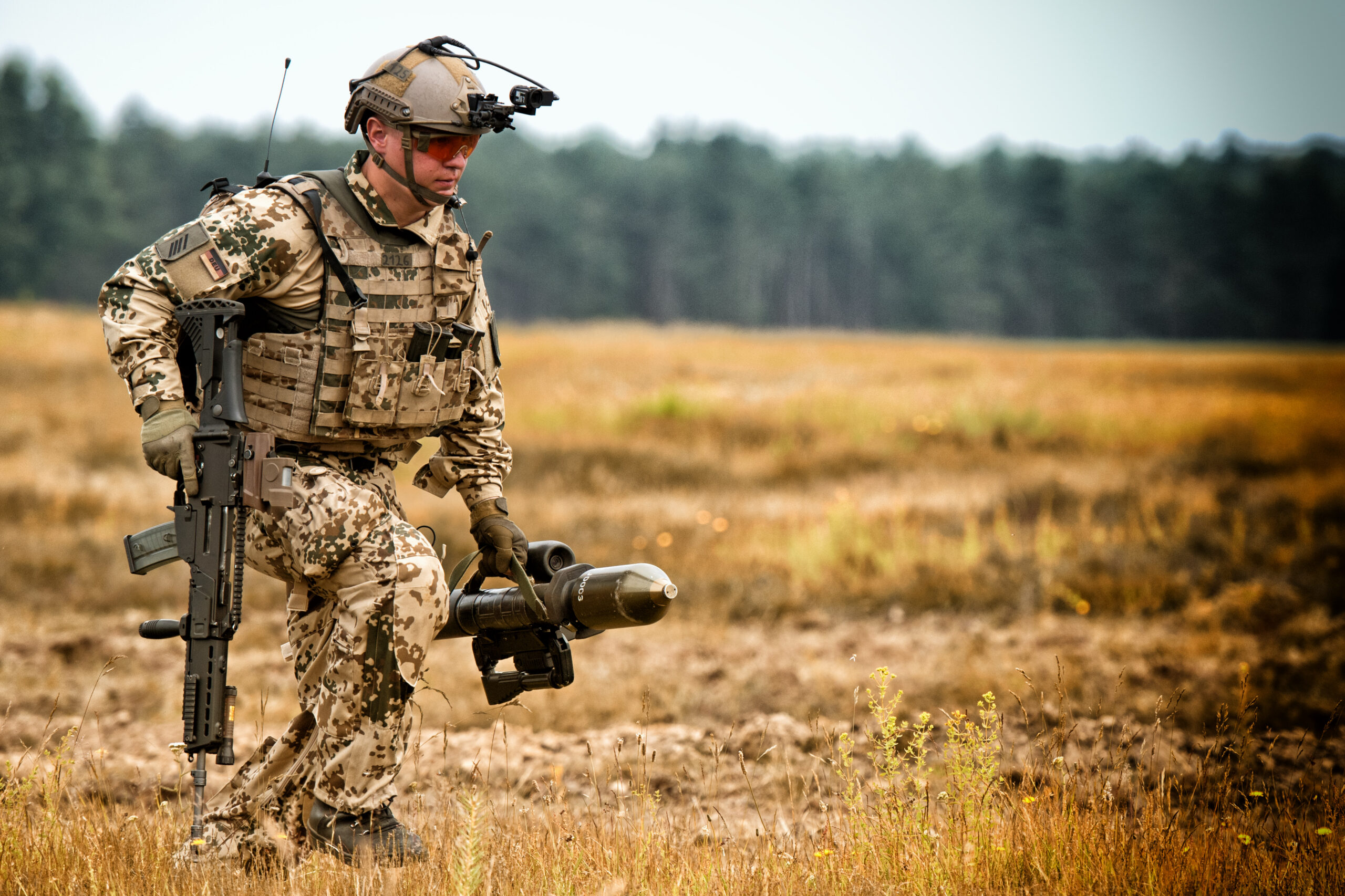
The military strategy titled “The overall concept of military defence – Military Strategy for the Armed Forces − Responsibility for Europe” identifies Russia as the main potential threat to Europe and its NATO partners, commits Germany to becoming “Europe’s strongest conventional army by 2039” and to prioritise deterrence and defence capability in the context of national and collective defence as a military strategic priority. It also identifies hybrid attacks, such as sabotage and other hybrid activities, as a further military strategic priority, thereby tasking the Bundeswehr with mitigating such attacks as part of a whole-of-government approach.
The military strategy, together with the Bundeswehr Capability Profile, forms Germany’s overall concept of military defence. It also highlights a seismic change from Germany’s old Cold War strategic culture and identity, with Germany often acting as a junior partner to the US and NATO in all matters of territorial defence. Responsibility for Europe recognises the permanence of the Russian threat to Europe, the need for Germany to become Europe’s military centre of gravity for both national and collective self-defence, while it calls on Germany to view and use military power as once more an accepted tool of state power.
Responsibility for Europe also highlights how the mandate and role of the German Armed Forces (the Bundeswehr) have changed since the End of the Cold War.
When I joined the Bundeswehr in 1993 we had ‘won’ the Cold War and were slowly trying to explore new roles for the Armed Forces: from ‘out of area’ peacekeeping in Somalia, (UNOSOM II), Bosnia-Herzegovina (IFOR/SFOR) to Kosovo (KFOR) to peacekeeping, peacebuilding through stabilization and training as part of a wider alliance and with UN mandate (Afghanistan and Mali). Since 1992 the Bundeswehr has deployed in more than 60 missions abroad and in support of global peace and security. The new mission spectrum saw a strategic shift away from the military’s original territorial defence focus against superior conventional Warsaw Pact forces with nuclear capabilities to a ‘lighter’ capability spectrum, which saw a drastic reduction in both troop numbers and military hardware. Troop strength decreased from 400,000 to 180,000 between 1993 and 2022, and the number of tanks decreased from 4,000 to 260.
This all changed in light of Putin’s war of aggression against Ukraine: starting with then Chancellor Olaf Scholz who called for ‘Zeitenwende’ (Turning point) in regards to Germany’s defence and security policy a seismic shift has happened. Today, Germany has become the largest weapons supplier to Ukraine, overtaking the US after President Donald Trump’s reversal of his predecessor,Joe Biden’s support, as well as the largest producer of artillery shells, and NATO’s largest defence spender after the US with a budget of US $114 billion for 2025.
Responsibility for Europe resembles a profound shift in how Germany sees its role in terms of national, transatlantic and international security, how it will provide answers to the security situation and how to transform the Bundeswehr into Europe’s strongest conventional army while providing strategic guidance in respect to capabilities and capacity requirements modelled after changing security needs and challenges.
Germany’s Military Shift and Its Implications for Australia
Germany’s new military strategy has both direct and indirect ramifications for Australia and the Indo-Pacific. As Germany aims to act as Europe’s centre of gravity in respect to conventional Army capabilities, as well as its explicit commitment to defend Europe, it will allow the US to continue its focus on the security dimension of the Indo-Pacific. The more Europeans shoulder their own defence responsibilities, the less they depend on the US. While the transatlantic partnership with the US continues to matter, the future of a more reliable and comprehensive European approach will reduce over-reliance on the US, which will also benefit Australia in diversification of security in terms of weapons procurement and development (Rheinmetall with its Boxer CRV) and exchanges with like-minded partners (Naval, Air Force and Army cooperation).
Just one month ago, Germany’s Defence Minister, Oskar Pistorius, visited Australia to sign a letter of intent to cooperate on space defence, among other defence collaboration projects. During his visit, Pistorius spoke at the National Press Club in Canberra on “Germany and Australia: Partners in an Era of Strategic Competition”where he covered many aspects of German–Australian bilateral relations and cooperation in the areas of defence, business, and research. Pistorius also stressed Germany’s commitment to increasing its Indo-Pacific Engagement. Noteworthy were his statements on the need to diversify strategic partnerships, working towards Europe stepping up its commitments to its own defence while keeping the US engaged despite its often-challenging rhetoric against NATO and its allies.
“Responsibility for Europe” explicitly incorporates the Indo‑Pacific into a broader strategic shift toward a “one‑theatre approach,” treating NATO territory, the Middle East, and the Indo‑Pacific as interconnected security spaces rather than discrete operational theatres. The doctrine not only highlights the significance of the Russian Pacific Fleet—supported by air, space, and strategic rocket forces—but explicitly frames this presence as an integral component of a unified, transregional threat environment. In doing so, the strategy underscores that challenges emanating from the Indo‑Pacific are inseparable from European security. Given the German Foreign Minister’s March visit to Australia and the region in March, which highlighted Germany’s commitment to its Indo Pacific Strategy of 2020 with its tacit goal of countering an “increasingly assertive and ambitious China”, it seems clear that Germany is viewing the region as essential for Europe’s economic and security needs and is being viewed as crucial for both balancing China and deterring Russia.
Greater multilateralism expanded military‑industrial cooperation, and more frequent military exchanges strengthen Canberra’s position as a middle power by enhancing its strategic relevance, deepening alliance networks, and increasing its capacity to shape outcomes amid intensifying great‑power competition. And Germany seems to have committed itself towards these steps.
This article is published under a Creative Commons License and may be republished with attribution.
Professor Sascha-Dominik (Dov) Bachmann is Professor in Law and Security and (eo) Docent/Reader in War Studies at The Swedish Defence University. He is a Research Fellow with the National Security Institute, University of Canberra, and a Research Fellow with The Department of Strategic Studies, Faculty of Military Science, Stellenbosch University.