Antarctica’s 1959 treaty locked the continent into a Cold War-era pact of ‘frozen sovereignty,’ reserving the world’s largest freshwater reserve for scientific use alone and banning military activity outright. Yet recent Russian discoveries of vast oil, gas, and rare earth deposits are raising fears that this fragile consensus could collapse into a new contest for resources.
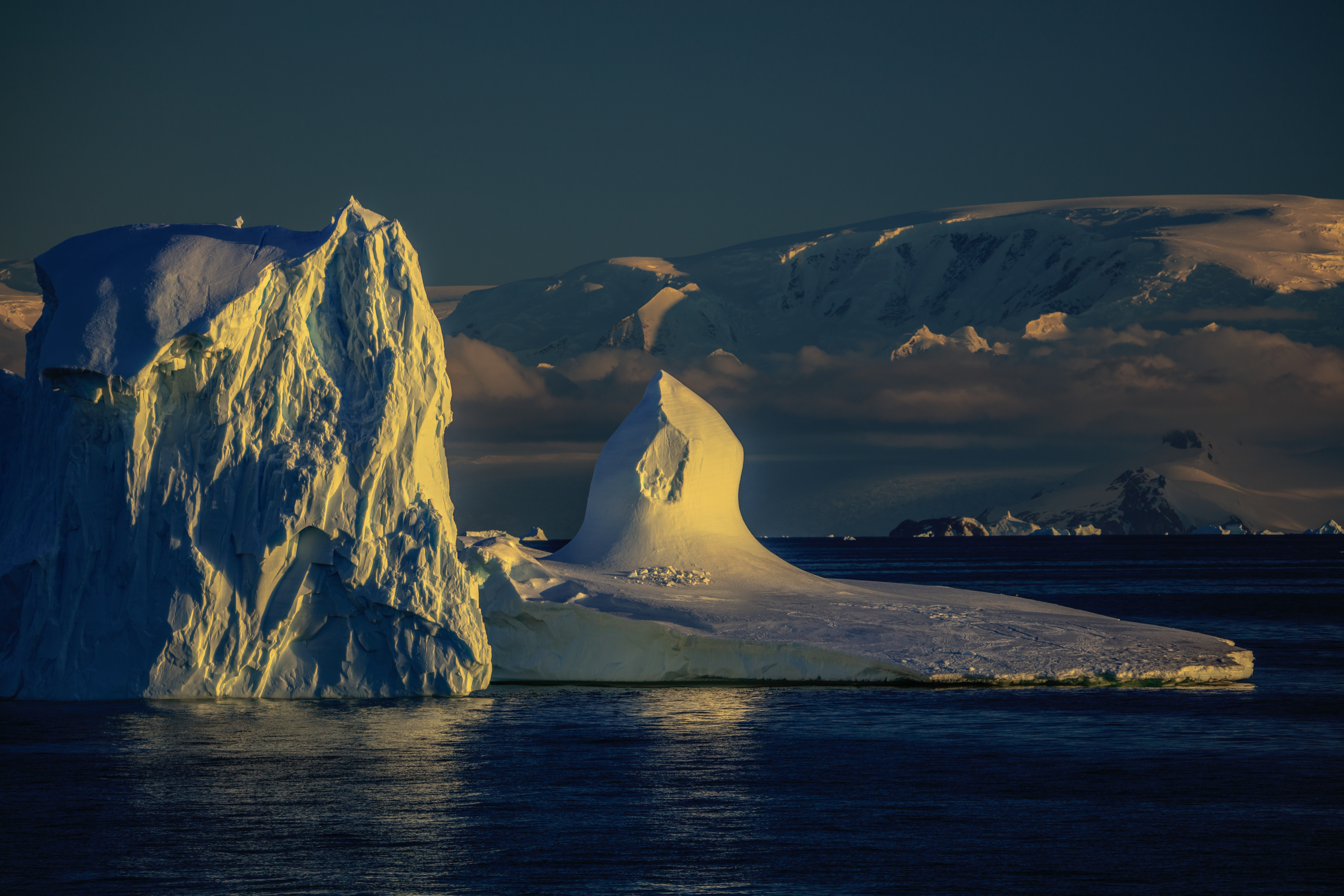
Antarctica is a fourteen-million-square-kilometre frozen continent containing seventy percent of the world’s freshwater. Characterised by its extreme temperatures and winds, it is a global common managed under the Antarctic Treaty System (ATS). Unlike other commons defined by resource extraction, international law designates Antarctica under a framework of ‘frozen sovereignty’, limiting usage strictly to scientific research purposes only. Established during the Cold War via cooperation between the United States and the Soviet Union, the 1959 treaty was the world’s first international demilitarisation agreement. However, recent geological discoveries, including 300 to 500 tons of natural gas and an estimated 511 billion barrels of oil by Russian researchers in 2024, may threaten that status quo. Concerns are growing that the region could devolve into an arena for resource warfare, as powerful states are constantly in a race for Rare Earth Elements (REE), oil, and gas for modern-day life.
Claim of Antarctica
The legal claim of Antarctica is rooted in historical trajectories of imperial exploration and later the Antarctic Treaty. Early nineteenth-century naval expeditions generated competing territorial assertions among European and Nordic countries. The Imperial Russian Navy’s 1819 voyage, led by Faddey Bellingshausen and Mikhail Lazarev, proved the continent’s existence for the first time in history. Consequently, British captain William Smith discovered the South Shetland and King George Islands in 1819. Expeditions from France, the United States, Germany, Norway, and Belgium soon followed. By the mid-twentieth century, seven claimant nations emerged: Britain, Norway, France, Australia, New Zealand, Chile, and Argentina. These countries have different claims on Antarctica. Some claims came from discovery, such as Russia, France, Norway, and Britain; others from sovereignty transfers, such as Chile and Argentina from Spain and Australia from Britain, or geological ties. The most interesting claim comes from Chile’s geological connection to Antarctica, through the Andes Mountains and the Scotia Ridge. However, overlapping claims among Britain, Chile, and Argentina still exist today.
The Antarctic Treaty System (ATS), signed on December 1st, 1959, and entering into force on June 23, 1961, stabilised and froze all these disputes temporarily. Consisting of fourteen articles, the treaty mandates that Antarctica be used exclusively for peaceful purposes, banning military fortification, weapon testing, and nuclear explosions. Crucially, Article IV froze all territorial claims, preventing new assertions or extensions by any state. This core architecture expanded to include the 1972 Convention for the Conservation of Antarctic Seals (CCAS) and the 1980 Convention on the Conservation of Antarctic Marine Living Resources (CCAMLR), which established Marine Protected Areas (MPA) like the Ross Sea. Later, the 1991 Madrid Protocol, which came into force in 1998, strengthened environmental protection by introducing a fifty-year moratorium on mineral extraction and establishing mandatory Environmental Impact Assessments (EIA). However, this will be up for review in 2048, which may threaten the current frozen sovereignty. Nevertheless, the frozen continent is now warming at around twice the world’s average. Hence, Antarctica’s governance problem is no longer confined to only sovereignty, science, or resource extraction; its governance affects beyond its territorial boundary. Rising sea levels, driven by thermal expansion and ice-sheet loss, are already reshaping the existential security dynamics of small island and deltaic states like Tuvalu, the Marshall Islands, Kiribati, the Maldives, and Bangladesh. According to IPCC and World Bank, Tuvalu will be submerged into the sea by 2050, even at this current rate of sea level rise. While Bangladesh will lose up to 17% of its coastal land by then. The problem is therefore not only whether Antarctica remains demilitarised, but whether its governance system can respond to the external harms borne by states with little influence over Antarctic decision-making.
Rising Sea Levels: A Normative Claim of Antarctica
The traditional structures of the ATS are increasingly insufficient against the existential threat of sea level rise. According to the International Monetary Fund and NASA , rising sea levels accelerated by the polar ice melt may submerge approximately 80% of the Maldives and 17% of coastal Bangladesh by 2050, directly threatening the existence of low-lying states of the Global South. As Tuvalu is sinking, its Foreign Minister Simon Kofe gave a chilling knee-deep speech in seawater during the COP-26 conference, warning of sea level rise and its existential threat to coastal countries.
This shows a deep structural inequality; the frontline victims of Antarctic degradation are marginalised or have little to do within the Antarctic Treaty Consultative Meetings (ATCM), while the wealthy, high-emitting countries in the Global North, who are responsible for most of the Antarctic ice melting, are leading the Antarctic governance as they please. Even within the existing ATS laws are not enough to prevent sea level rise, which is an existential threat to small island developing states (SIDS). Thus, to safeguard Antarctica as a true global common and a common heritage to all mankind, a stronger, comprehensive, and inclusive legal framework is needed, along with a delicate balance between the Global South, SIDS, and claimant countries of Antarctica.
Firstly, the Antarctic legal architecture must include a formalised absolute prohibition of mineral resource extraction by codifying a ‘Prohibition of Antarctic Mineral Resource Activities’ into the Antarctic Treaty. As of now, there is no legal architecture of banning resource extraction in the Antarctic Treaty System. The current legal structure of ‘resource extraction ban’ was created under the 1998 Madrid Protocol which contains ambiguities regarding the permissible scale and duration of exploration, allowing states to execute mineral surveys under the pretext of scientific research. As of now, the US and Russia both have six, and China has total five research stations, with China stating its ambitions of becoming a ‘Polar Great Power’ by 2030, including giant Icebreakers which are the main tools for deep icesheet breaking. The Oeconomous Economic Research Foundation has also stated its concern on the ‘militarising’ and unregulated resource extraction in Antarctica due to legal lack of legal prohibition.
Since 2017, China and Russia have repeatedly blocked the creation of further marine protected areas (MPAs) and other conservation measures in Antarctica. The two countries are exercising their veto power to Antarctic krill fishing, Russia invested $600 million in 2022, while China has violated MPA areas several times by fishing. France, along with Australia, New Zealand, the UK and the US has been pushing for the creation of three marine protected areas since 2012, which Beijing and Moscow have opposed for a long time, interpreting these efforts as an attempt to limit the ability of other states to establish a greater presence in Antarctica. On the other hand, Madrid Protocol is also coming up for review in 2048. Thus, codifying an absolute ban in the ‘Antarctic Treaty System’ will close this systematic loophole, establishing an institutional taboo that insulates the Southern Ocean from the industrial spill-overs of the Antarctic Gold-Rush.
Secondly, global governance of Antarctica needs a political realignment led by the Global South. Because the costs of polar warming fall disproportionately on developing coastal and island states, political leadership must operate from affected states rather than inherited privileges from the Cold War. Frontline nations, including Kiribati, the Marshall Islands, Tuvalu, the Maldives, and Bangladesh, must be integrated into the core consultative framework along with the traditional seven claimant countries. Within this model, Argentina and Chile can act as regional conveners, as they are the closest regional claimants and both have a geological connection to Antarctica; while Australia and New Zealand preserve a strategic balance between the Global South and major maritime powers.
Finally, the regional isolation of the Antarctic Treaty System (ATS) must be established into a formalised institutional nexus between the ATS and the United Nations Framework Convention on Climate Change (UNFCCC). The original 1959 treaty and the Madrid Protocol lack explicit, enforceable mandates and proper responsibility to combat sea level rise. Integrating these systems would bind Antarctic Treaty Consultative Parties (ATCP) to align their domestic emission targets directly with the integrity of the polar ice sheets. The real test of Antarctic governance is no longer only keeping conflicts away from the region but managing the consequences Antarctica exports to vulnerable coastal states. Without reform, the ATS may preserve frozen sovereignty while failing the states already living with rising sea levels.
Muhammad Irfan Sadik is a researcher and currently serves as the Senior Foreign Policy Analyst at the Youth Policy Forum. He is also the Executive Director of Project Upokul, a coastal-based research organization in Bangladesh. Sadik holds an M.S.S. and B.S.S. from the Department of International Relations at Jahangirnagar University. His research focuses on Intra-State Conflicts, Strategic Studies, International Security Studies, Disarmament, and International Arms Control and Maritime Affairs. Mr. Sadik can be reached at rajinsadik110@gmail.com.
This article is published under a Creative Commons Licence and may be republished with attribution.