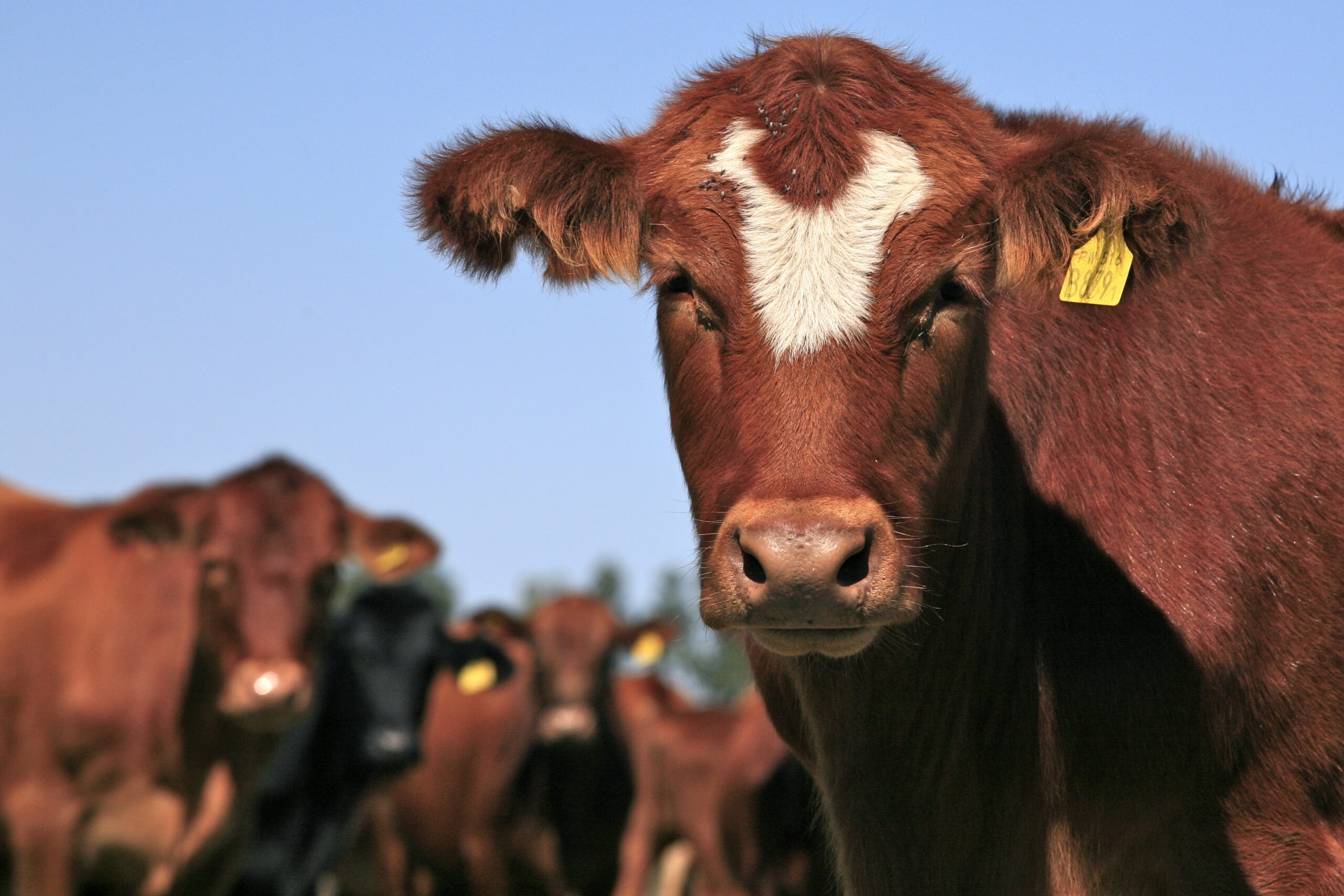
Synthetic biology (SynBio) could allow States to create enhanced foot-and-mouth disease for use in grey zone operations to economically devastate Australia’s livestock industry. However, SynBio is also the critical means of resilience to this threat by way of scaled domestic mRNA FMD vaccine capability that will build upon existing biosecurity measures.
The devastating impact of foot-and-mouth disease (FMD) was highlighted during the 2001 UK outbreak, which led to the culling of millions of cattle, pigs and sheep. Fortunately, Australia has avoided a case of FMD since the 1870s. However, FMD’s potential impact remains a persistent concern. In August 2025, a NSW Government media release noted that “if a widespread outbreak was to occur it would have a catastrophic impact on meat supply and exports costing the Australian economy up to $80 billion”. This is based on findings from the Australian Bureau of Agricultural and Resource Economics and Sciences estimating the direct economic impact of “[a] large multi-state foot and mouth disease outbreak … over 10 years”. However, there is a new dimension to the FMD threat. Advances in synthetic biology (SynBio) open the door for enhanced variants of FMD to be used as a grey zone tactic by other countries to target Australia’s livestock (and consequently Australia’s economic security) without having to resort to direct conflict. Unlike other grey zone tactics, such as economic coercion, that are typically attributable and overt, using SynBio-enhanced FMD offers both covertness and difficulties in attributing the attack to a specific perpetrator.
SynBio applies engineering principles to build, design and redesign biological systems. Put simply, synthetically bioengineered agents can be designed to blend in with natural ecosystems. Because these agents can obscure their origins and leave little to no forensic trace behind, they blur the line between what might be considered a naturally occurring phenomenon and what could be a deliberate, man-made attack. A technology that has allowed for greater precision and lower cost in SynBio is known as Clustered Regularly Interspaced Short Palindromic Repeats (CRISPR). There is significant concern that SynBio, especially when combined with advances in AI-assisted biological research, could facilitate a new wave of biological threats. For example, existing pathogens could be reconfigured to ramp up their lethality. The increasing democratisation of science means the genetic materials and technology (specifically CRISPR and AI) to create biological threats is open to a wider number of states.
FMD is one pathogen that could be potentially enhanced by SynBio. It already has strong attributes, such as survivability in various environments and can transmit via direct (animal to animal) and indirect contact (for example, contaminated soil or clothes). SynBio could harden the virus to withstand lengthier transportation and in tougher conditions (such as inside a shipping container) and enhance its direct and indirect transmissibility. Massive amounts of goods ship to Australia every year, but many will evade border control measures, such as screening processes and disclosure obligations. This is highlighted by, amongst other things, the sheer amount of illicit imported tobacco that now represents 80% of total tobacco sales in Australia. Vials of the enhanced FMD could be hidden within a myriad of other goods in a shipping container, taking up only a minute amount of space. International mail offers an alternate (or additional) avenue. Not all mail coming into Australia is screened – instead, a risk-based approach is utilised. For example, following FMD outbreaks in Indonesia and China in 2022, the Australian Government required all mail coming from both countries to be scanned. However, FMD engineered in a lab could evade this risk-based approach as there will not be evidence of FMD in the livestock of the origin country. Once in Australia, an individual working for the country that created the enhanced FMD could transmit it to livestock. A cursory internet search by the author found numerous cattle farms in Australia that give public tours.
There are multiple serotypes of FMD and each one requires a different vaccine, and in some cases immunity in one strain within a serotype might not protect against another. SynBio could enhance specific strains or combine multiple strains, rendering existing vaccination measures ineffective. Known as “viral recombination”, FMD strains can already merge to create novel strains within infected livestock – SynBio could open the door to customising this capability and allowing for a multitude of different combinations. Detection of FMD in livestock and subsequent containment and response measures could be evaded by using SynBio to elongate the pre-symptomatic period (when an animal is infected but does not display symptoms) or altering the pathogen to avoid existing detection measures such as air sampling systems.
The reader would be forgiven for perceiving SynBio as potentially causing more harm than good. But SynBio is a double-edged sword – yes, it could create threats, but it also will be a key means of countering those threats and give another string to the bow of Australia’s biosecurity measures. Australia is currently reliant on a vaccine bank located in France because of domestic restrictions on vaccine research using live FMD strains. However, recent breakthroughs using SynBio open the door for the domestic manufacturing of vaccines, as these new vaccines are created without using live FMD strains. In 2025, a collaborative effort which included biotechnology company Tiba BioTech and the NSW Government used SynBio to create the world’s first synthetic mRNA vaccine for FMD. mRNA vaccines can be created and scaled faster than traditional vaccines. This was illustrated during the global response to COVID-19, which saw vaccines created in record time.
mRNA vaccines will be critical to countering SynBio engineered pathogens in not only livestock but also the Australian population. However, at the time of writing, the mRNA vaccine for FMD is undergoing further testing, before possible approval for emergency use. Australia must seize this opportunity to turn a scientific breakthrough into production at scale to protect its livestock while also building domestic manufacturing capability and greater resilience in the vaccine supply chain. If the Federal Government is deeply committed to strengthening Australia’s supply chains and countering the potential economic devastation of an FMD outbreak, then supporting and nurturing domestic mRNA FMD vaccine capability is critical. As part of a more holistic effort, the Federal and State Governments should also support and collaborate with the private sector to leverage breakthroughs in pathogen detection and support these companies in developing capability in those areas impacting Australia’s agricultural sector.
Dr Jon Cottam is a Lecturer in National Security and Intelligence in Macquarie University’s School of International Studies and a Fellow of Macquarie University’s Geopolitical Risk Research Centre. His research focuses on the intersection of biology, national security and intelligence.
This article is published under a Creative Commons Licence and may be republished with attribution.