Prabowo Subianto promised a “good neighbor policy,” but his administration’s increasingly confrontational rhetoric towards Singapore risks undermining Indonesia’s diplomatic credibility and economic interests. As domestic pressures mount, political posturing could come at the expense of foreign investment, energy-export revenues, and regional trust.
Addressing a crowded hall at the Jakarta think tank Centre for Strategic and International Studies in 2023, the then-Presidential candidate, Prabowo Subianto, outlined his so-called ‘good neighbour policy,’ underlining a “web of strong friendships between Indonesia and good neighbors.” Such a web, he posited, “will invite foreign investment that will open markets for us and create jobs for our people.” Three years later, one may be forgiven for thinking that the President has forgotten his promise.
Within a week in late October, Prabowo’s ministers have sparked spats with Singapore, arguably Indonesia’s most important neighbour. The Minister of Energy and Mineral Resources, Bahlil Lahadalia, has cut gas supplies to the city-state. While the Energy Minister justified the cuts on maintenance and domestic supply grounds and stressed that they remain within the contract, his earlier warning that Indonesia could halt energy exports to countries that do not respect Jakarta has raised suspicions that the cuts are politically motivated. Responding to comments by Calvin Cheng about cutting Indonesia’s internet connections, the Minister of Communication and Digital Affairs, Meutya Hafid, said that if the undersea internet cables between Indonesia and Singapore are cut, 80% of Singapore’s digital connectivity could be debilitated, a statement that one could interpret as a slight threat. Lastly, the Vice-Minister for Umrah and Hajj Affairs, Dahnil Anzar Simanjuntak, advised Indonesians undertaking the Umrah pilgrimage to Saudi Arabia to avoid stopovers in Singapore and Malaysia and take direct flights, justifying such recommendations with a perceived need to support the country’s national airlines and reduce exposure to risks arising from tensions in the Middle East without explaining how direct flights are any safer than a connecting flight through Singapore or Malaysia.
Domestic Pressures and Regional Friction
Such phenomena do not happen in a vacuum; they came amid international pressure on the Indonesian president over the Sumatra and Borneo wildfires, whose smog has reached Malaysia and Singapore, pushing air quality to dangerous levels. The Singaporean government has consequently issued notices to 10 Singapore-based companies with operations in Indonesia, asking how they have been preventing or suppressing fires on their land. Prabowo seems to be taking issue with these measures. Without naming any country, he chastised countries he deemed to have insulted Jakarta over the forest fires, even though the responsible companies are based there. In comments reported on 22 October, a member of the President’s advisory board, Ignasius Jonan, upbraided criticisms by Singapore and Malaysia and implored them to cooperate instead, even though Singapore has offered help since October 10. Domestically, too, the President’s prospects seem dim: his approval rating has fallen to 44.5 per cent in an October SMRC survey, down from 81.2 percent in November 2022.
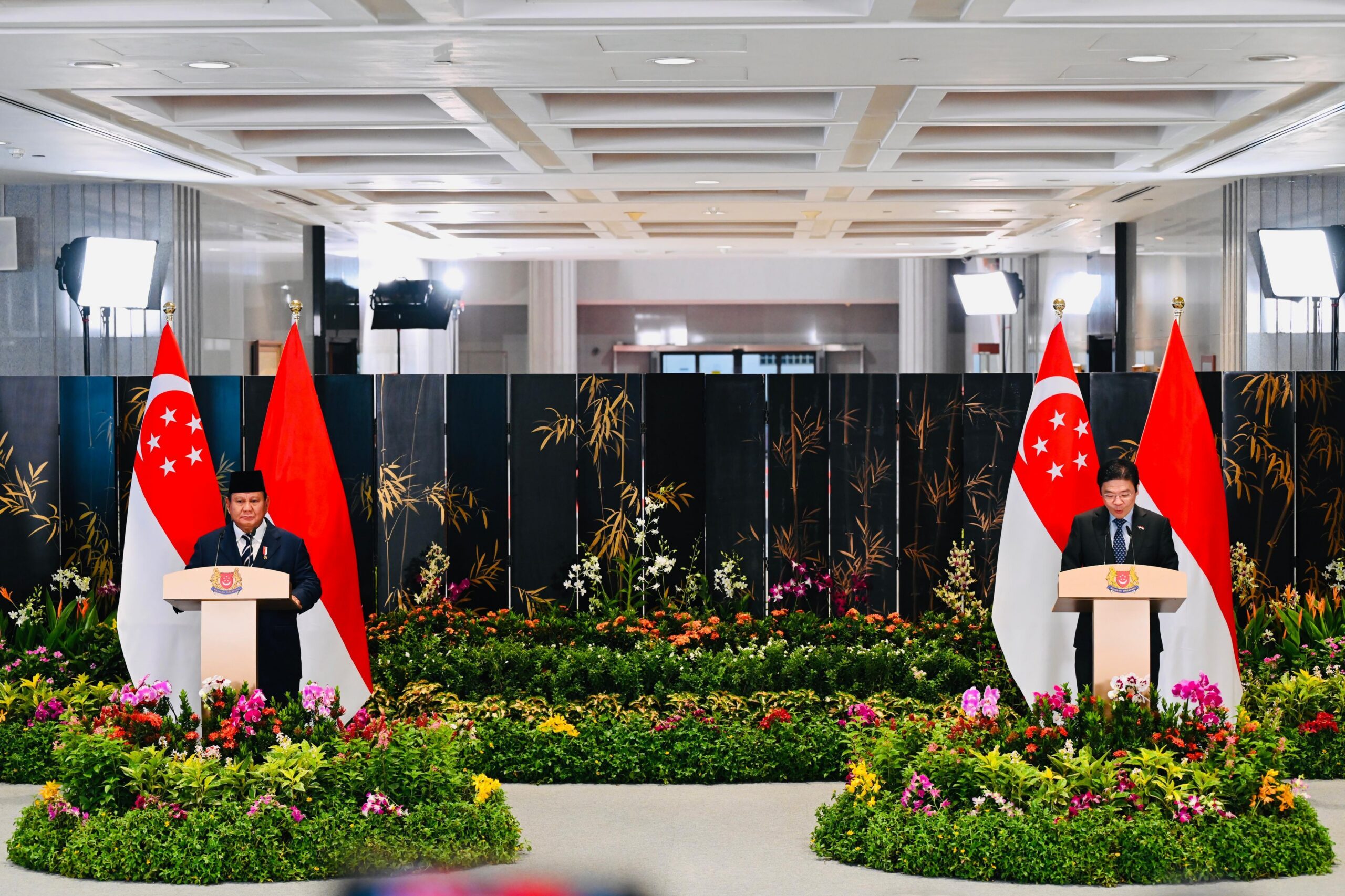
The government’s rhetoric raises the possibility that domestic political pressures are shaping its handling of the dispute. Whether or not this is a deliberate diversionary strategy, portraying foreign criticism as an affront to national dignity could redirect public attention from domestic governance failures towards external adversaries and increase his support among Indonesians, as he could be perceived as Indonesia’s defender against foreign malice, a phenomenon known as the ‘rally around the flag’ effect. It is unclear whether Indonesia’s Foreign Minister was consulted before Prabowo’s other Ministers made such comments or took such measures, given a history of consequential foreign policy decisions made without consultation or despite warnings from the Foreign Ministry, and a lack of statements by the Foreign Minister before a meeting with the Singaporean foreign minister on 27 October, where the Indonesian top diplomat recognised that “from time to time, there will be differences” and pledged to open a hotline.
The Cost of Undermining Confidence
It is hard to see any benefits from such spats with Singapore. In fact, such adverse policies are more likely to erode Indonesia’s international credibility and the confidence of its international partners. International credibility rests, among other factors, on trustworthy foreign policies and behaviour, as well as strong governance and contractual capabilities. A loss of international credibility could make it harder to attract foreign investment and build modern industries that Indonesia needs for its economic growth and development, as foreign investors highly value economic and political predictability and stability to ensure their operations can run with minimal hindrance. Foreign companies already operating in Indonesia have complained about regulatory and political instability, and the impression that the Indonesian government could cut supplies and internet cables gives foreign partners more reason to conclude that political reasoning could lead the government to undermine its obligations.
As a result, foreign investors may refrain from investing and, even when they do, may invest less than they otherwise would with high confidence, to limit losses if an investment fails.
Singapore has already been diversifying its energy supply, including investing in LNG terminals to import gas from different countries. Singapore’s Energy Market Authority has stated that the cuts amount to less than 2% of Singapore’s daily gas demand. The current cut may have limited immediate effects on Singapore, while creating a longer-term risk to Indonesia’s commercial relationship and future export opportunities. In the end, Indonesia may soon see the third largest natural gas export market of volume in 2025 find other suppliers and reduce its imports from Indonesia, resulting in less export revenue for the country. The quest for domestic nationalistic hype can lead to a concrete economic loss. In short, a seller that treats its customers as political adversaries should not be surprised when those customers begin looking for more reliable alternatives.
Trystanto Sanjaya is a Visiting Fellow at the Norwegian Institute for International Affairs in Oslo.
This article is published under a Creative Commons Licence and may be republished with attribution.
Photo: BPMI Setpres, Indonesian Government (Public Domain)