Australia’s growing economic ties with East Africa need a strategy, and partnering with Japan on agriculture and logistics offers a practical way to build one.
Australia has spent the past decade placing the Indo-Pacific, a concept Rory Medcalf champions in Contest for the Indo-Pacific, at the centre of its foreign policy, building partnerships from Japan and India through Southeast Asia and the South Pacific. One dimension remains underdeveloped: economic engagement with East Africa.
The region’s Indian Ocean ports, expanding markets and agricultural potential make it relevant to Australia’s wider interests. It is also a gateway to the continent’s interior and an increasingly important part of regional and global supply chains. Japan’s established diplomatic, financial and commercial engagement in Africa offers Australia a practical way to deepen its presence without building a new framework from scratch.
Presence Without Strategy
Australia’s engagement with Africa is already substantial. Two-way goods and services trade was worth A$12.7 billion in 2024, according to the parliamentary inquiry launched in October 2025. DFAT counts more than 170 ASX-listed companies operating in 35 African countries, and in June 2025 Australia signed a memorandum of understanding with the African Continental Free Trade Area (AfCFTA) Secretariat. The Australian Centre for International Agricultural Research (ACIAR) planned 17 projects across ten eastern and southern African countries in 2024–25.
East Africa shows both the foundation and the room to grow. In 2023 Australia exported US$118 million of goods to Kenya and US$73.5 million to Tanzania, and imported US$35.3 million and US$8.1 million respectively. The pattern is complementary: Australian grain and machinery for East African coffee and cut flowers. Christopher Burke has made the strategic case for looking west. The harder task is identifying the mechanisms to deliver it.
That task has become more pressing. On 19 October 2026 the parliamentary committee tabled its report, with 17 recommendations including a whole-of-government, risk-differentiated trade and investment strategy for priority regions and sectors. A strategy needs content, and East Africa offers a place to start.
East Africa’s Strategic and Economic Weight
East Africa matters beyond its national markets. Much of the continent’s interior reaches international trade through its eastern corridors. On the Northern Corridor, which runs inland from Mombasa, Uganda accounted for 62.3 per cent of 2023 transit traffic, South Sudan 16.8 per cent, the Democratic Republic of Congo (DRC) 13.2 per cent and Rwanda 4.6 per cent, according to the corridor authority’s figures.
The East African Community (EAC) has eight members and, on Institute for Security Studies figures, had a combined GDP of US$293 billion in 2023. It forms part of the AfCFTA, a market the Secretariat describes as 1.4 billion people and about US$3.4 trillion. The ISS projects the EAC’s population will rise from 332 million in 2023 to 647 million by 2050, with GDP reaching US$1.5 trillion on current trends. These are projections, not guarantees.
Australian mining companies already operate in Tanzania, the DRC and Uganda. Yet the corridors that carry minerals also serve farmers, manufacturers and small businesses. Regional integration remains incomplete and the bloc faces mounting financial pressure. That strengthens the case for targeted projects that remove practical barriers rather than relying on broad declarations of regional ambition.
Japan as a Strategic Partner
Japan offers an established institutional and commercial foundation. At TICAD 9 in Yokohama in August 2025, Tokyo emphasised private-sector investment. Japan and the African Development Bank agreed on a joint financing target of up to US$5.5 billion, with a financing framework for 2026–28, and a JBIC guarantee helped Côte d’Ivoire issue a ¥50 billion (about US$336 million) Samurai bond, a first such guarantee provided by JBIC for a sub-Saharan African government. Then Prime Minister Shigeru Ishiba also proposed an Indian Ocean–Africa Economic Region, placing the Indian Ocean at the centre of Japan’s Africa engagement.
This is an opportunity to build on the Australia–Japan relationship. The 50th anniversary of the Basic Treaty of Friendship and Cooperation in 2026 offers an occasion to elevate bilateral cooperation. Burke’s Shared Interests, Practical Cooperation identifies the Japan International Cooperation Agency (JICA), the Japan Bank for International Cooperation (JBIC) and Nippon Export and Investment Insurance (NEXI) as foundations for cooperation in East Africa. His analysis of the Quad, the informal strategic and diplomatic partnership between Australia, India, Japan and the United States, suggests how Australia can complement existing initiatives rather than duplicate them.
The capabilities are complementary. Australia brings agricultural research, water management, logistics and geospatial expertise, and experience in complex frontier markets. Japan contributes industrial technology, mechanisation, cold-chain infrastructure and established financing networks. But cooperation should not be designed around Australian or Japanese interests alone. East African governments, businesses and institutions must set priorities and lead implementation.
Agricultural Productivity and Food Security
Agriculture is a practical starting point. Japan has experience with smallholder development in Kenya through its Smallholder Horticulture Empowerment and Promotion (SHEP) approach, developed from 2006 with Kenya’s horticulture authority. JICA reports that average incomes for about 2,500 participating farmers rose from US$273 in 2007 to US$560 in 2009.
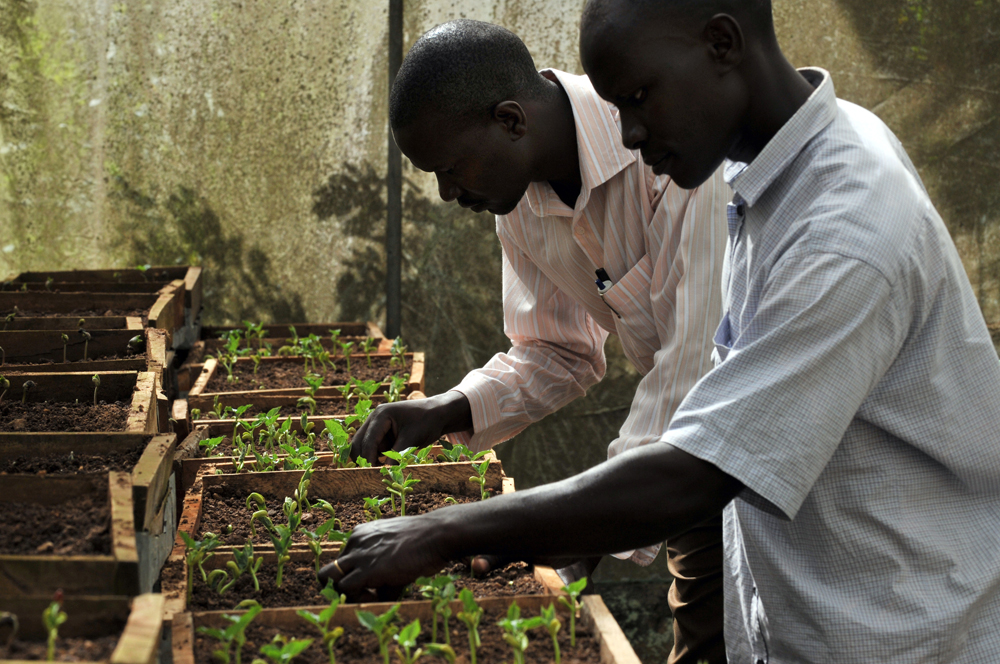
Australia offers complementary expertise. ACIAR points to similarities between agricultural environments in eastern Africa and northern Australia, from Rwanda’s wet tropics to the semi-arid tropics. Yet higher output is only part of the challenge. Farmers must also preserve, process and move what they grow. A World Bank and FAO study put post-harvest grain losses in sub-Saharan Africa at around US$4 billion a year, including US$1.6 billion in eastern and southern Africa, or 13.5 per cent of production value. The estimate dates from 2011 and is not a current measurement, but it illustrates the scale.
Combining Australian agricultural research and agricultural technology with Japanese storage, cold-chain and processing technology could cut post-harvest losses, improve supply reliability and strengthen food security.
Infrastructure, Logistics and Regional Connectivity
Even productive farms need reliable routes to market. The Northern Corridor authority reports road freight rates for 2023 from Mombasa of about US$1.88 per container-kilometre to Kampala and US$2.32 to Kigali. In 2023, 79.1 per cent of cargo through Mombasa was imports against 13.8 per cent exports, implying many trucks return with limited cargo and push costs up.
For a small business in Kigali or Kampala, such costs can decide whether exporting is viable at all.
Burke’s Landlocked Africa is an open opportunity for Australia identifies Australian strengths in remote logistics, governance and technical standards as relevant here. Australian agencies and firms could contribute to customs modernisation, regulatory design and logistics systems, while Japanese partners help mobilise finance and build physical infrastructure. Cutting delays at checkpoints and in clearance can matter as much as new roads and ports.
From Strategy to Practical Implementation
Australia and Japan should begin with targeted public–private initiatives in Kenya, Tanzania and Rwanda, focused on agricultural technology, post-harvest infrastructure, cold chains and regional logistics. ACIAR, CSIRO and Australian agribusinesses could work with Japanese industrial firms, JICA, JBIC and NEXI, with local businesses and institutions involved from the outset.
Pilots should be judged on practical outcomes: lower post-harvest losses, higher agricultural productivity, reduced transport costs and better access to regional markets. Successful projects could then extend to other EAC members. East African farmers and small businesses would gain more efficient routes to market, Australian technology providers and exporters would find new opportunities, and Japanese firms would gain additional commercial partners.
The broader objective is not simply a larger Australian presence in Africa. It is a more coherent economic relationship connecting Australia’s Indo-Pacific interests, Japan’s established engagement and East Africa’s development priorities.
Ali Atti is an international affairs researcher and Executive Director for the Middle East and Africa at Global Economy Hub. He is pursuing a Master of Diplomacy at the Australian National University and holds a Master’s degree in International Political Economy at King’s College London, alongside undergraduate degrees in Philosophy & Sociology from Sorbonne Université. His research interests include international relations, diplomacy, foreign policy, and emerging technologies.
This article is published under a Creative Commons Licence and may be republished with attribution.
Photo: “Uganda screenhouse” by Alliance of Bioversity International and CIAT, CC BY-SA 2.0