This week in Australian foreign affairs: the Australian Government signed onto various Joint Statements on the sidelines of the UNGA, reaffirmed commitments to international law and maritime security, launched campaigns for seats on the UN Security Council and International Maritime Organisation Council, and more.
The Prime Minister started the week with a visit to Apple Park in Cupertino. Meeting with the Executive Chairman of the Board, Mr Tim Cook, Anthony Albanese discussed Australia’s efforts in setting world-leading legislation promoting safer online environments, particularly for children. The Australian government will be working with Apple to further this initiative, which Albanese says shows “that the industry can, and must, compete on safety credentials, not just convenience.”
On 21 September, the Foreign Minister announced the appointments of four new Heads of Missions who will be representing Australia across various host countries and regional posts. In separate statements, the Minister welcomed a High Commissioner to the Democratic Republic of Timor Leste, a High Commissioner to Papua New Guinea, a Consul-General to New York, and an Ambassador to Egypt. In leading these diplomatic missions the new high commissioners, ambassador and consul-general will allow Australia to promote its interests in sustaining peace, security, investment, trade, consular services and deepening connections abroad.
The same day, the Foreign Minister chaired the 30th MIKTA Meeting on the sidelines of the 81st United Nations General Assembly, releasing several joint statements with her counterparts from Mexico, the Republic of Korea, Indonesia and Türkiye. The first statement was dedicated to a renewed vision for deepened and purposeful cooperation amongst MIKTA members. Highlighting the significance and reach of this diverse group of middle powers, MIKTA champions new practical approaches for protecting international institutions and rules.
Speaking to this updated Vision Statement, the MIKTA Foreign Ministers signed on to a Joint Statement on the Protection of Humanitarian Personnel and Humanitarian Action from Misinformation, Disinformation and Harmful Narratives. The initiative reaffirms UN Security Council Resolution 2730 and the Declaration for the Protection of Humanitarian Personnel, working to combat the risks posed by harmful and false information that misrepresent humanitarian personnel and operations, incite violence, or obstruct humanitarian activities. The ministers note that such risks have been made more prevalent today with the rapid advancement of digital communications, artificial intelligence, and social media.
Also on 21 September, the Prime Minister opened the Climate Group’s 2026 Climate Week in New York. In his keynote, the Prime Minister emphasised the growing concern of climate change in the Indo-Pacific and the need to bring more attention and partnership in the region. Ahead of Pre-COP and COP31 meetings next, Albanese further notes the profound global leadership of Pacific Island Nations, particularly in climate action and innovation.
During the United Nations High-Level Week, the Australian Government announced its bid for a seat on the Security Council in the 2029-2030 term. Citing Australia’s founding role in the UN and its continued commitment to peace and security, the campaign sets out Australia’s ambitions to platform small- and mid-size voices, defend an international rules-based order, and support practical and bold reforms should it be elected to the council. The Prime Minister calls the vision a simple one, where “[w]e listen with respect, we partner as equals and we protect what matters most.”
On 22 September, Minister Wong along with Foreign Ministers and high-level representatives of the European and Indo-Pacific Partners released a Joint Statement acknowledging the progressively fragmented and volatile state of the global strategic environment. Signed by Australia, Japan, Germany, France, the UK, New Zealand, the Republic of Korea and Poland, the statement recognises the increasingly intertwined fates of the Indo-Pacific and Europe as . The release also reiterates support for UNCLOS and the promotion of maritime peace, referencing disruptions and tensions across the Straits of Hormuz, Bab-el-Mandeb and Taiwan.
Later in the week, the Prime Minister and the President of Ukraine signed the Australia-Ukraine Bilateral Security Agreement. The agreement outlines long-term support and cooperation between the two countries, reaffirming Australia’s position in aiding Ukraine and their fight against Russian incursion. Now bringing Australia’s total contribution to Ukraine to about $1.9 billion, the government has also committed $60 million, providing military equipment, support for Ukraine’s Energy Support Fund and humanitarian assistance. Penny Wong says “[Australia] will continue to provide unwavering support to Ukraine and we will continue to work with partners to impose costs on Russia and starve its war machine.”
On 24 September, Minister Wong delivered a UN Press Stakeout Statement on behalf of 79 countries and three transnational entities. Urging the immediate implementation of Security Council Resolution 2817, the statement condemns the Islamic Republic of Iran’s continued attacks across the region and the Houthi’s renewed hostilities against Saudi Arabia, which have placed further pressure on the Strait of Bab al-Mandeb. The condemnation is also noted in part for the disruptions caused to international trade, reiterating support for opening the Strait of Hormuz and the important role of the International Maritime Organization and regional partners in supporting maritime security.
This week, the Declaration for the Protection of Humanitarian Personnel, a motion led by Australia and 8 partners, received landmark support from over two-thirds of the UN. One year since its launch in 2025, the declaration has become a shared commitment by 130 countries, supporting accountability, better protection, and safer access for humanitarians operating in conflict zones. Following this milestone, Australia is pledging another $10 million to strengthen accountability measures and practical protection for humanitarian workers.
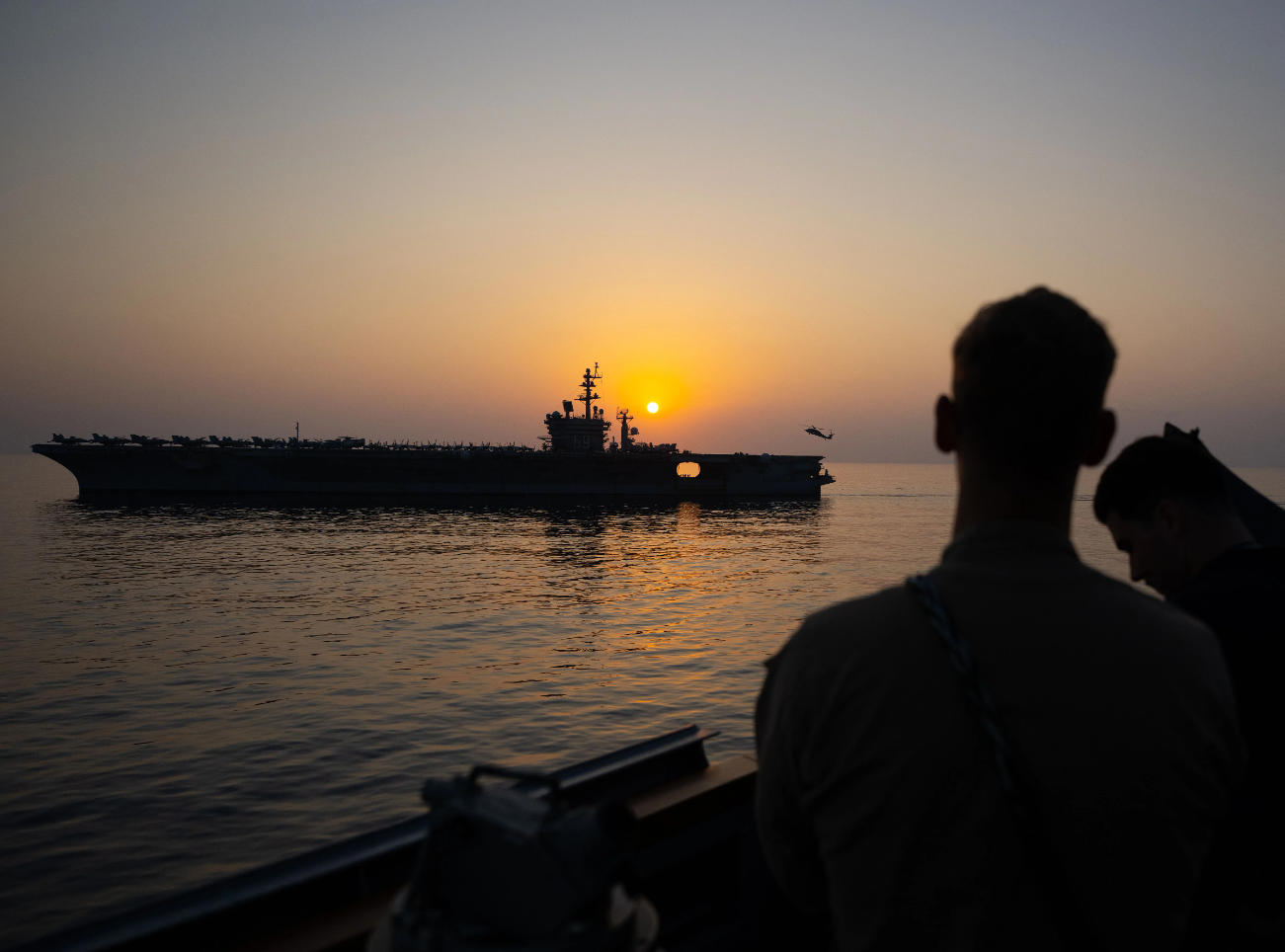
On World Maritime Day, Penny Wong and the Minister for Infrastructure, Transport, Regional Development and Local Government announced Australia’s renomination for the International Maritime Organization Council. Vying to be re-elected to ‘Category B’ of the Council, Minister King acknowledges that “[t]he vast majority of Australia’s imports and exports rely on a strong, safe and sustainable maritime sector. Shipping connects our island nation to global markets, so it’s vital we have a seat at the table where international standards are established.”
This article is published under a Creative Commons License and may be republished with attribution.