Pope Leo XIV’s first encyclical on artificial intelligence never mentions Australia. Yet its central question, what happens to people when the machines work exactly as designed, is one Robodebt already answered.
On 25 May 2026, Pope Leo XIV released Magnifica Humanitas, the first papal encyclical devoted entirely to artificial intelligence. It is a long document, 245 paragraphs ranging across theology, labour, warfare, and the concentration of private technological power. Canberra is not mentioned by name, but it did not need to be.
Australia, meanwhile, is implementing and expanding its own AI governance architecture. The Commonwealth’s updated Policy for the Responsible Use of AI in Government took effect on 15 December 2025, requiring agencies to strengthen accountability, governance, and risk-based assessment across their AI use cases. Broader regulatory approaches for high-risk systems remain under active development. The language is competent and managerial: risk tiers, impact assessment, human oversight, conformity requirements. What it leaves unresolved is the question the encyclical keeps pressing: not whether machines malfunction, but what happens to people when they function exactly as designed.
That is a question Australia already knows how to answer; however, the answer is not exactly reassuring.
The Partiality of Technology and Australia’s Lesson in Ensuring Human Oversight
The encyclical’s central argument is deceptively simple. Technology, Leo XIV writes, is never a neutral instrument:
“In practice, however, technology is never neutral, because it takes on the characteristics of those who devise, finance, regulate and use it. Therefore, the primary choice is not between a ‘yes’ or ‘no’ to technology, but rather between constructing Babel or rebuilding Jerusalem; between a power that claims to dominate the heavens and a people who work together in the presence of God to rebuild the walls of fraternal coexistence.” (MH 9)
Sorting an algorithm into a risk category does not change what it does, who designed it, or whose interests it serves. It changes the paperwork required to deploy it. A framework that stops at categorisation has mistaken administration for governance.
The Robodebt Royal Commission, which reported in 2023, documented how an automated debt-recovery system raised unlawful debts against welfare recipients over several years, with responsibility so dispersed across the process that it effectively belonged to no one. When asked to account for the harm, ministers and departmental leaders pointed at each other and at the system. The Commission found this was not an accident of implementation, but rather a consequence of how the system had been built from the outset: to process at scale, with human review reduced to something closer to procedural cover than substantive judgement.
Australia’s current approach draws one lesson from Robodebt: that high-risk systems require human oversight. That is correct, but insufficient. Oversight is only meaningful when the person exercising it has the time, the information, and the institutional authority to refuse. A case officer approving hundreds of automated welfare decisions a day is not providing oversight. They are providing legal cover. A framework that cannot tell the two apart has left the most important question unanswered.
The encyclical speaks directly to this:
“When efficiency becomes the ultimate measure of value, human beings are tempted to see themselves as a project to be optimised rather than as persons called to relationship and communion.” (MH 112)
A regulatory structure that reduces human review to a signature requirement has already accepted efficiency as its governing principle. It has answered the question of what oversight is for before the oversight begins.
The Risks of the Industry: Navigating Between Corporations and Parliament
The second structural problem concerns what the framework asks of industry, and what it does not. Australia’s proposed mandatory guardrails for high-risk AI represent a serious step forward, but any model that allows substantial reliance on developer self-assessment risks confusing compliance with accountability. This matters because the most consequential AI systems will rarely look dramatic from a distance. Automated hiring tools, credit assessments, welfare-eligibility systems, fraud-detection models, and public-sector triage tools may all read as administrative. In practice, they decide whether a person gets work, housing, income support, or access to essential services.
Letting the developers of such systems play a central role in assessing their own compliance can be defended on practical grounds: independent audit is slow, technical expertise is scarce, and excessive process may deter investment. But these are constraints that deserve genuine answers, not the quiet acceptance of self-certification as a structural default. The choice is really about whose interests the framework protects when those interests conflict, and it deserves to be stated plainly rather than buried in a technical provision.
Leo XIV is direct about the structural reality beneath such arrangements. The primary drivers of AI development, the encyclical observes, are now predominantly private and transnational, operating with resources and reach that exceed those of many national governments. (MH 5) A framework built too heavily around industry self-assessment, on this view, does not so much regulate industry as delegate part of the regulatory function to the regulated party, and then record that delegation as compliance.
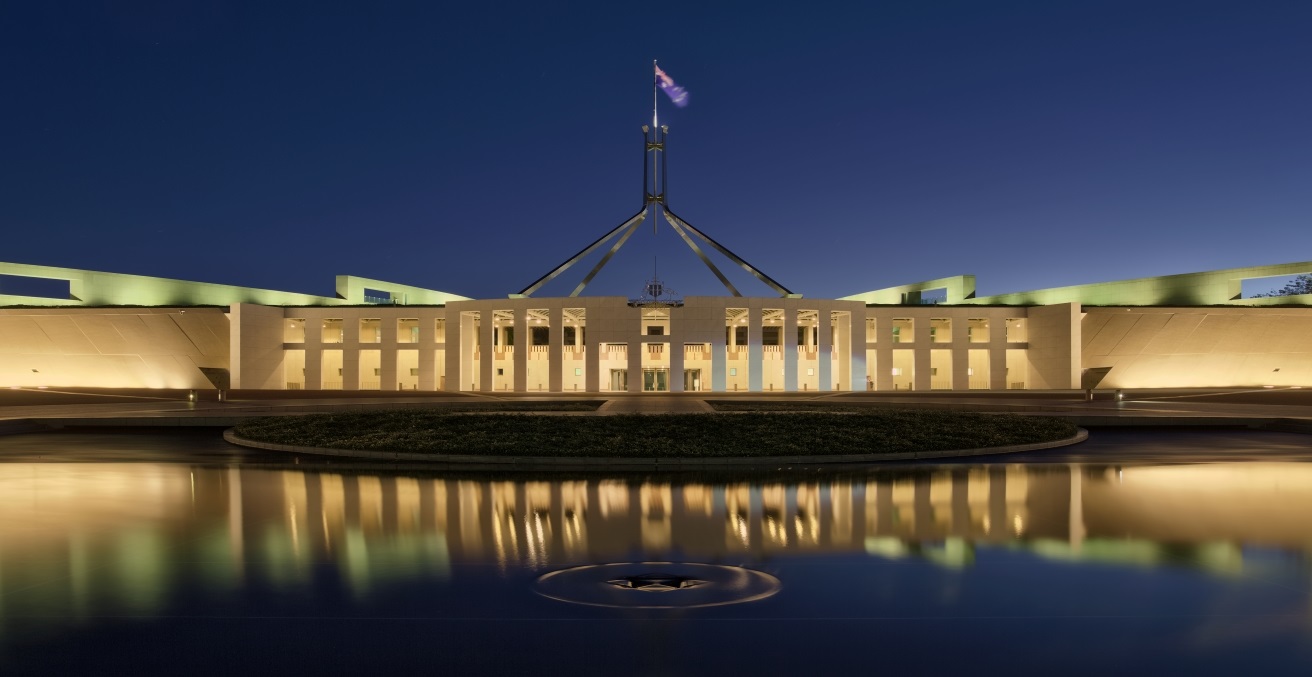
Sovereignty over Australia’s digital infrastructure does not currently rest with the parliament that is supposed to govern it. It rests with the corporations whose systems Australians use daily, and whose standards the framework has not yet found the political will to contest. In the encyclical’s terms, this is a failure of democratic responsibility operating under the name of regulatory pragmatism.
Final Remarks – Where to Next?
There is a version of Australia’s AI framework that earns the ambition its architects claim for it. It would define substantive human oversight rather than procedural human presence, require independent conformity assessment for any system making consequential decisions about individuals, and create public accountability mechanisms that survive a change of government. None of this is technically impossible. The question is not whether it can be done, but whether Canberra has decided it is worth doing.
Magnifica Humanitas closes with an image that has no obvious place in a parliamentary briefing note but belongs in this argument, nonetheless. In the era of artificial intelligence, Leo XIV writes, the pressing duty is to remain profoundly human, and to safeguard a grandeur that no machine can replace. (MH 15) The language is theological. The challenge it names is not. It is the challenge facing any government that has not yet decided whether the people it governs are the point of the system or a variable within it. Australia’s framework has deferred that question into a risk matrix. Parliament should answer it before the matrix does.
Muhammad Amir is a PhD researcher at Deakin University, specializing in international relations and security studies. His research focuses on peace processes, strategic competition, defence policy, and emerging technologies.
This article is published under a Creative Commons License and may be republished with attribution.