The recent increase in the Pertamax price (non-subsidised fuel) in Indonesia did not directly receive the same public attention compared to changes in subsidised fuel. At first glance, it may look only as a technical adjustment following increased global oil prices. But behind that, there are much deeper and wider dynamics taking place.
The latest price increase is putting more pressure on Indonesia’s middle class, which already faces rising living costs from many directions. At the same time, it exposes an important gap in the political economy surrounding the energy transition, with consequences that may not only be felt in Indonesia but could also resonate more broadly across the Indo-Pacific region.
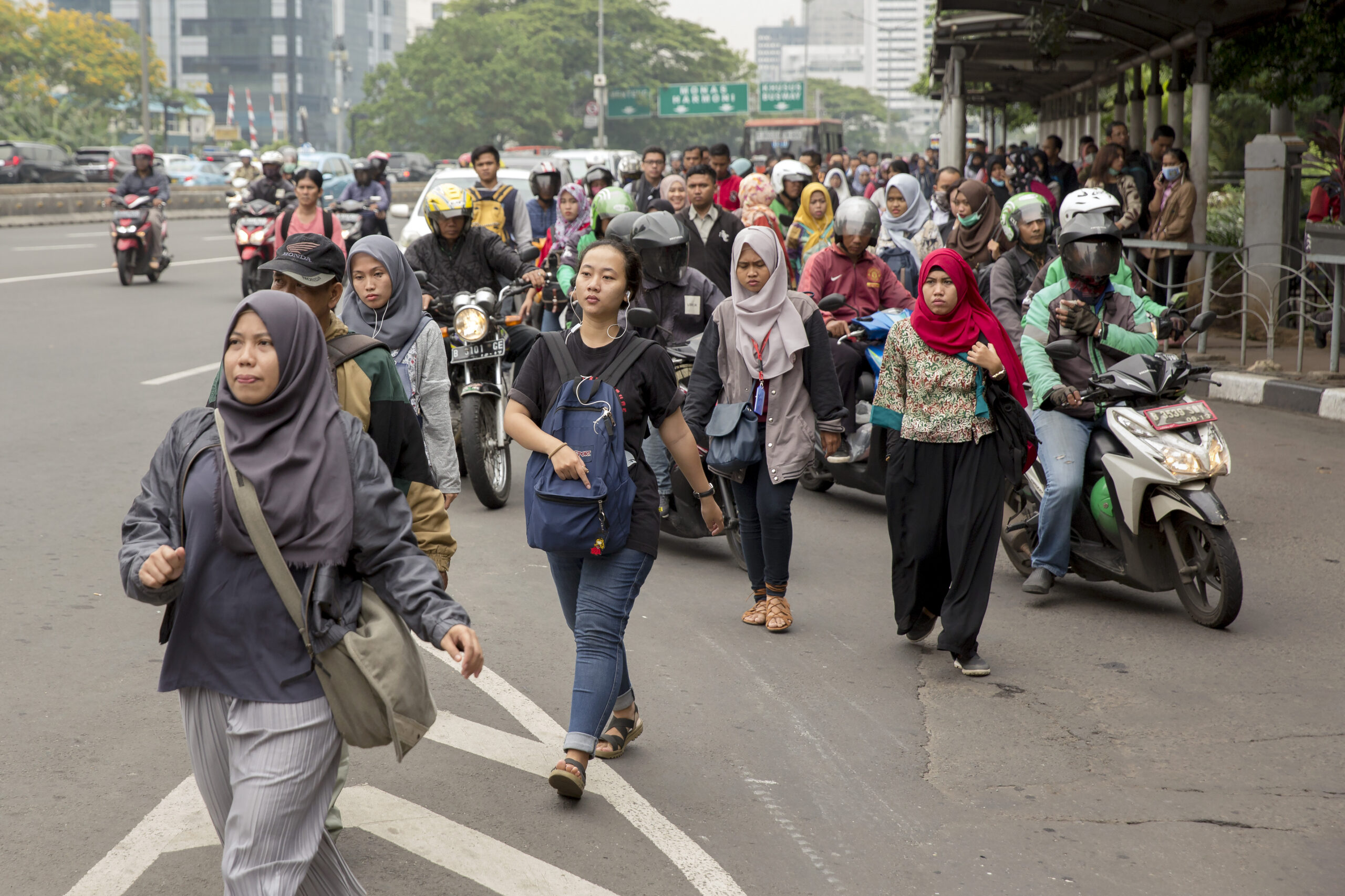
Unlike subsidised fuel, Pertamax is mainly used by urban communities with relatively higher incomes, such as professionals, small business owners, and daily commuters who rely on private vehicles. For many years, this group was quite protected from the dynamics of energy subsidy politics, which typically focused more on safeguarding lower-income communities. But now, that kind of protection seems to be starting to fade. Volatility in global oil prices is becoming more directly reflected in domestic fuel prices, making the middle class more exposed and increasingly vulnerable to cost-of-living pressures that stem from the energy sector.
This is important because the middle class has a very crucial role in maintaining political and economic stability, especially in developing countries. In Indonesia, like many countries across Southeast Asia, the middle class is not only becoming the engine of consumption but also one of the pillars for social stability itself. Governments often depend on the implicit support from this group to push gradual reforms, including on energy pricing and fiscal consolidation measures. But once fuel prices keep rising and start cutting their purchasing power in a noticeable way, public tolerance toward those reforms can decline quite fast, sometimes much faster than policymakers expected.
The effect is more than just consumer sentiment. Energy prices play a central role in the transition towards cleaner and more sustainable systems. In theory, rising fuel prices should encourage efficiency, reduce emissions, and accelerate the transition to alternatives such as electric vehicles and public transportation. However, in reality, those price signals do not exist within an economic vacuum. They operate inside a political context. If the increase creates broad public dissatisfaction—particularly from middle-class groups that tend to be more vocal and politically influential—governments usually become much more careful, and sometimes hesitant, in pushing further reforms.
Indonesia’s experience reflects this kind of delicate balance. On one side, the government is facing quite significant fiscal pressure, especially to keep energy spending under control and at the same time align domestic fuel prices closer with global market realities. But on the other side, the socio-political risk from increasing living costs is something that cannot simply be overlooked. Pertamax sits in a rather sensitive position in this equation. Even though it is not subsidised, its consumption is already widespread, highly visible, and carries considerable economic implications. A price hike may trigger what can be called a “silent backlash”—not necessarily through massive street protests or public unrest, but more through a slow and gradual weakening of public support toward the broader reform agenda.
This dynamic is not only happening in Indonesia. Across Southeast Asia, many governments are facing quite similar dilemmas as they work to balance both energy sector reforms and maintain social stability. Malaysia, for instance, still relies heavily on energy subsidies but is also under growing pressure to make its spending more rational. Thailand as well often deals with tensions caused by global energy prices that keep fluctuating. In this situation, the middle class is becoming increasingly important, even decisive, in determining whether those reforms can really be sustained in the longer term.
What makes Indonesia particularly important is the scale it has. Being the biggest economy in Southeast Asia, Indonesia’s policy direction often becomes somewhat of a benchmark across the region. If pressure toward the middle class starts limiting the room for energy reform in Indonesia, it may signal to other countries around the region that they might face similar challenges. The risk is not so much that reform will stop completely, but rather the progress could move slower; despite, the growing and inescapable need for countries to transition their energy systems.
For Australia and many other Indo-Pacific partners, this development is especially noteworthy. Energy transition strategies across the region mostly depend on cooperation—such as investment into renewable energy, strengthening supply chains for clean technologies, and ensuring policy alignment for reaching decarbonisation targets. But all of these projects rely on one key assumption: that domestic support in partner countries remains strong enough. If energy prices keep rising and start weakening this support, then even regional cooperation that is already well-designed and established may face some obstacles or at least become much harder to sustain.
The Indonesian case also shows the limitation of a more technocratic approach in energy policy. Price reform, subsidy reduction, and efficiency incentives are often viewed as rational steps toward sustainability. However, whether those policies work or not depends a lot on public acceptance—and that acceptance is mostly shaped by how the burdens are distributed. When the middle class starts feeling like they carry a bigger share of the cost, the reform narrative can easily shift. What was initially seen as necessary slowly became something perceived as unfair and not really balanced.
In the end, the biggest challenge for Southeast Asia’s energy transition may be a lack of resources or ambition, but a much more inconspicuous issue: how far the middle class can tolerate the burden of paying more today for a cleaner tomorrow that still feels distant and not always visible in everyday life.
Akhmad Hanan is an independent Indonesian researcher specializing in geopolitics and energy. He holds a bachelor’s degree in oceanography from Universitas Diponegoro (UNDIP) and a master’s in energy security from Universitas Pertahanan (UNHAN), the Indonesian Defense University. He is also a freelance writer and contributor to various international and regional media, with a focus on geopolitics, defense, energy, and emerging technologies.
This article is published under a Creative Commons License and may be republished with attribution.