Russia’s championing of SCO enlargement was never really about building a stronger bloc — it was about diluting China’s growing weight within it. As Beijing’s economic clout increasingly outpaces Moscow’s own, the organisation Russia once used as a stage for great-power posturing now looks more like a symptom of its shrinking options than a pillar of its strategy.
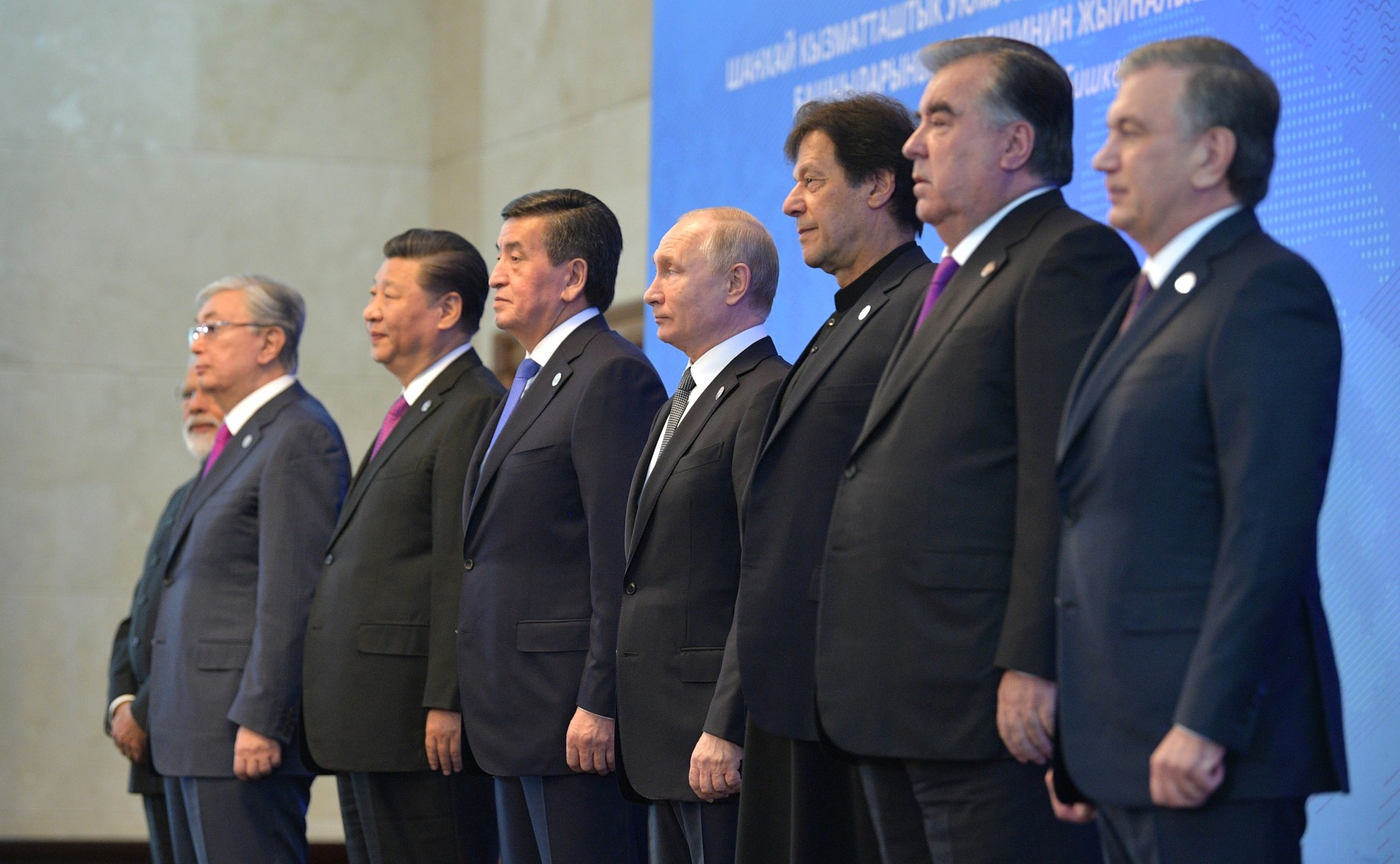
The SCO grew to 25 member states in June, and, significantly, it has grown to counter Western hegemony in the political and International financial systems. Over the past 30 years, Russia has viewed the Shanghai Cooperation Organisation (SCO) primarily as a platform, focusing more on utilising it than on strengthening the organisation. In its rhetoric, if not its emphasis, its goal has been to remain influential in Central Asia at affordable costs, to never lose it altogether to China, and to establish a multipolar legitimacy in the face of a Western-led order that it sees as threatening. The platform has become more important in Moscow’s overall diplomatic toolkit. For the first 15 years of its existence, the SCO was a subordinate organisation of the Collective Security Treaty Organisation (CSTO) and the Commonwealth of Independent States (CIS). However, it has been one of the last places where Russia can take its place as a normal member of the international community, rather than an isolated pariah state, after 2014 and particularly after 2022. Russian multilateralism is a broader pattern: institutions are worth to Moscow primarily as means to ensure status and to prevent constraints, rarely as means for profound integration.
Founding Logic: Border Security and a Secondary Track
The Shanghai Five, which preceded the SCO in 1996, was born out of a technical issue: demarcating and demilitarising the old Sino-Soviet border with Kazakhstan, Kyrgyzstan and Tajikistan. Moscow’s policy at the time was in the process of recuperation from the collapse of the Soviet administrative structures, and it was not concerned with establishing a new supranational machinery, but more with preventing a vacuum. For Russia, the SCO was beneficial but not imperative. Russia’s focus in the post-Soviet era has been on its own post-Soviet arrangements, particularly the CSTO as a military alliance, rather than the SCO, which seems more of a bridge to China. This hierarchy was hardly changed following the SCO’s formalisation as an organisation with counter-terrorism ambitions in 2001. In the 2000s, Russia’s Central Asian policy shifted to bilateral basing agreements and the CSTO’s collective-defence clause, an agreement deliberately not in the SCO’s repertoire. What the CSTO could not have provided was a framework involving China, thereby offering a way to handle Beijing’s regional agenda without granting it sole authority over it. “This indicates that the role of the SCO has been more of a forum where Russian diplomatic relations with China can operate through an organisation with established norms”.
A Division of Labour, Not a Partnership of Equals
In the 2010s, a working division had emerged. After the 2018 Qingdao summit, as the International Institute for Strategic Studies stated, “Russia leads on politico-military affairs, communications and culture, whereas China leads on economic development, investment and infrastructure. It was not an accident of comparative advantage; it was because Russia was not able to compete with China for capital, but Russia possessed cultural and military capabilities with which it could dominate a region with a Soviet-trained population: “Russian is relatively accessible” and “many Central Asian officers were trained in Russia”. So, Russia’s relevance to the SCO compelled it to justify its role in the “Peace Mission” joint exercises, in which Russia “typically takes the lead” because China is comparatively inexperienced in interoperability with military forces. The deal permitted Moscow to maintain a presence in the security field as Beijing became more economically dominant. “This follows a pattern of balancing China’s economic dominance in the region by providing other resources and benefits to the forefront of the SCO”.
Guarding Against Chinese Primacy Through Enlargement
Russia’s push for India’s SCO membership secured alongside Pakistan in 2017 was less a bid to strengthen regional order than a strategy to dilute Chinese influence within the bloc. The pairing was itself a proxy for Sino-Russian rivalry: China backed Pakistan’s accession, Russia backed India’s, and by 2018, both were full members. The SCO’s promotional statistics that followed — 80 per cent of Eurasia’s landmass, 43 per cent of the world’s population, a quarter of global GDP mattered to Moscow less as evidence of functional integration than as a way to shrink China’s relative weight within the club.
Russian scholarship reflects this framing directly. Marochkin and Bezborodov’s 2022 edited volume on the SCO opens by casting the organisation as proof that a multipolar order is possible “to the detriment” of a unipolar, Western-led one — language that tracks the Kremlin’s own diplomatic vocabulary of “mistrust between world powers” and a “crisis of the geopolitical paradigm.” Enlargement, in other words, served the same function for Russia as its broader instrumentalism elsewhere in the SCO: not deeper integration, but a numerical and rhetorical counterweight to Chinese primacy, proof that a world without Western tutelage is livable, even if Beijing sets most of its economic terms.
Sovereignty as Design Principle, Not Accident
This symbolic function accounts for Russia’s lack of aspirations toward supranational authority within the SCO, unlike its rhetorical flirting, at times, with deeper integration within the EAEU, which is a tool in which Moscow has the edge. The organisation’s initial pledges of “mutual trust, mutual respect, equality… respect for diverse civilisations” are appropriate for Russia twice
over: they preclude the organisation from permitting the outside world to examine its own policies and practices, and they set the SCO apart from the European Union model that the Kremlin has always considered to be a tool of Western value exportation. The same is evident in Naarajärvi’s conceptual framework of new-regionalism, where the SCO is ranked low on “political integration” and Central Asian regionalisation is characterised by “tightly in the hands of the state administrations” (Naarajärvi 2012, 121), an aspect the researcher considers to be somewhat more old than new. For Russia, it is not a failure but the essence: inscribing itself as the centre of the forum will simultaneously shield the sovereignty of its rulers from external criticisms. “Maintaining low political integration could be seen as a tool for diplomatic manipulation and advantage in the SCO. Instead, outsourcing important political and economic integration to other organisations deepens Russia’s dominance and status over core decisions”.
Conclusion: Dependency Without Deference
In this respect, Russian policy in the history of the SCO has always been that of a considered instrumentalism – with little investment where it had other options, with symbolic emphasis when it needed a stage, and with a constant opposition to any institutional depth that might limit its capacity for action. The SCO has become more integral to Russia’s interests than at any point in its history, given the pressures of recent years: Western sanctions, its insistence on finding non-Western political forums, and its growing need to treat China as an economic partner of last resort even as Beijing has strengthened its own influence within the organisation relative to Moscow’s. The kernel of Russian multilateralism is a contradiction, and it is the easiest one to spot: institutions are more valuable to Moscow the more its role in fashioning them decreases. Rather than a keystone of Russian grand strategy, the SCO reflects its limitations. The fewer alternatives Moscow has for posturing on the world stage, the more useful this one club becomes.
Ravi Raj is a Research Scholar at the Centre for Russian and Central Asian Studies, School of International Studies, Jawaharlal Nehru University (JNU), New Delhi.
His research focuses on nuclear non-proliferation, peacebuilding and conflict resolution in Eurasia, energy geopolitics, and India–Russia relations. He has actively participated in several international academic and policy forums, and regularly contributes analytical writings on global and regional security affairs.
This article is published under a Creative Commons License and may be republished with attribution.