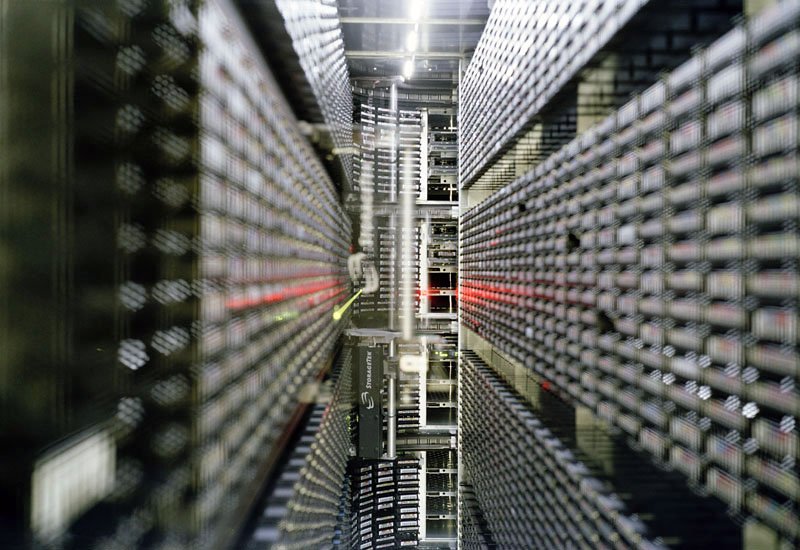
When officials talk about strategic infrastructure, they generally mean ports, shipping lanes, semiconductors, or key minerals. But one of the most important pieces of 21st-century infrastructure, the ‘data centre’ is rarely viewed through a geopolitical lens.
Data centres are used in artificial intelligence (AI), cloud computing, financial services, defence systems, digital public infrastructure, and almost every other modern economic activity. These installations are becoming the backbone of national economies and of the geopolitical race, which is far from the anonymous warehouses of servers. The “cloud” is getting more solid, energy-consuming, and geopolitically relevant, and the statistics tell why. The International Energy Agency (IEA) estimates that global data centre electricity demand will increase from around 415 terawatt-hours (TWh) in 2024 to almost 945 TWh in 2030, more than Japan’s current annual electricity consumption. AI will probably be a big part of this increase, because sophisticated models require exponentially more computer power than regular cloud services. As countries compete to dominate the AI economy, access to secure, resilient, and low-carbon digital infrastructure is now as strategic as access to oil.
This turn of events is a great opportunity for India and Australia. While cooperation in defence, maritime security, vital minerals, and clean energy has grown under the Comprehensive Strategic Partnership between the two countries, digital infrastructure has remained an underdeveloped foundation of bilateral interaction. But within the data centre development sphere, their skills are complementary. Rather than treat data centres as commercial real estate or just private investments, New Delhi and Canberra should treat them as strategic assets to bolster economic resilience, energy security, and Indo-Pacific stability.
New Geographies of Power
Geopolitical power traditionally rested on the control of trade routes and energy. Control of the infrastructure underpinning the digital economy is growing in importance. With the arrival of artificial intelligence, this equation has been fundamentally changed. Training frontier AI models requires thousands of specialised graphics processing units (GPUs), enormous computing clusters, constant power, high-speed fiber connectivity, and sophisticated cooling solutions. These demands have made data centre national infrastructure, with location affecting investment flows, technological leadership, and even strategic independence. Governments have begun to respond. The US has paired industrial policy with export controls on advanced semiconductors to preserve its technological lead. China has added digital infrastructure to the mix and moved computer resources around the country as part of its “Eastern Data, Western Computing” plan to strengthen domestic cloud capacity. The European Union has pursued digital sovereignty in the form of regulatory frameworks and investment initiatives to reduce dependence on foreign technology providers.
Geopolitical competition for AI is no longer confined to the algorithms or the sites of semiconductor fabrication. It’s moving more and more to the place where computation is happening and who controls the physical infrastructure that enables it to happen. India and Australia are middle powers, which means they can’t invest on the same scale as the US or China. But they can create trusted digital ecosystems that can fuel regional economic growth while reducing strategic dependence on any one technology bloc.
India’s Digital Economy Needs a Physical Base.
India has seen one of the most amazing digital transformations of any large economy. Today, more than 950 million Indians are online, and digital public infrastructure, which includes Aadhaar, the Unified Payments Interface (UPI), DigiLocker, and the Open Network for Digital Commerce (ONDC), has become a global benchmark for digital governance. India’s digital economy is to contribute about one-fifth of total national GDP by 2030, driven by rapid cloud adoption, deployment of AI, expansion of fintech, and digital manufacturing. However, more and more physical infrastructure is needed for digital transformation. Industry estimates indicate that India’s operational data centre capacity has already crossed the 1 gigawatt (GW) mark and is likely to reach 1.8 GW by 2027, on the back of investments of over $20 billion. Mumbai has emerged as one of Asia’s key hyperscale data centre markets, while Chennai, Hyderabad, Bengaluru, Pune, and the National Capital Region continue to attract global cloud providers and institutional investors. But this expansion has also revealed structural deficiencies within India’s digital infrastructure and industry.
Modern AI data centres use enormous amounts of electricity. The IEA estimates that a single large AI-enabled data centre could use as much electricity as hundreds of thousands of families use in a year. Cooling systems, in particular, use large amounts of water, especially in warmer climates. Rising power consumption, repeating heat waves, water scarcity, and increased frequency of extreme weather events are already affecting cities in India. As more organizations adopt AI at a faster pace, there is a risk that the country’s digital economy could be threatened by operational disruptions if investments in digital infrastructure in metropolitan areas are not paired with investments in renewable generation, transmission networks, and climate resiliency. In other words, India’s AI ambitions are inextricably linked to its energy transition. The long-term viability of India’s infrastructure will be as much a determinant of the future competitiveness of its digital economy as will software complexity.
Australia’s Strategic Advantage
Australia is approaching the digital infrastructure fight from a very different point of view. Australia doesn’t have a large local digital market like India. Its competitive advantage is its ability to provide reliable, safe, and long-term infrastructure that can serve the whole Indo-Pacific region. The country has a number of structural advantages that are becoming more and more valuable in the AI era. First, Australia has strong institutional credibility, stable legislation, and sophisticated cybersecurity frameworks that are increasingly valued by multinational technology corporations looking for predictable investment environments. Secondly, Australia has some of the world’s best renewable energy resources. The growth in solar and wind generation is rapid, backed by large investments in battery storage and transmission networks. With record electricity demand being driven by artificial intelligence, the ability to power data centres with low-carbon energy such as nuclear power alongside renewables is moving from a mere environmental goal to a competitive differentiator. Thirdly, Australia’s expanding capabilities in key minerals such as lithium, nickel, cobalt, and rare earth elements generate synergies across the AI value chain. These minerals are essential to battery development, renewable energy systems, and advanced electronics in today’s digital infrastructure.
This puts Australia in a good position to not only host hyperscale data centres but also be a major supplier of the clean energy and strategic materials required to power them. But the small size of the Australian domestic market points to the significance of collaboration. That’s where India comes in.
Conclusion
The next phase of the Australia-India Comprehensive Strategic Partnership should include a common agenda for digital infrastructure, military, maritime security, and vital minerals. The two countries have complementary strengths. India’s fast-growing digital economy is driving demand for AI and cloud computing, while Australia can provide reliable institutions, abundant renewable energy, and critical minerals needed for the digital value chain. Taken together, these benefits offer an opportunity to create a more resilient and sustainable digital infrastructure in the Indo-Pacific.
This could therefore turn the comparative advantage of India and Australia into an actual division of labor. India is likely to remain the primary market for demand and computing, with new AI and cloud data centers being constructed in existing digital hubs like Mumbai, Chennai, Hyderabad, and Bengaluru. Australia, however, may assist in developing energy-intensive computing capacity, where the availability of renewable power, land, and grid infrastructure makes large-scale operations more feasible. Australian pension funds, infrastructure investors, and tech firms could work together to finance such projects with Indian data center operators and global cloud providers in joint ventures rather than a government-to-government program. Australia’s strengths in renewable energy and critical minerals could help meet the power, storage, and hardware needs of these facilities, while India could provide its burgeoning digital market, software ecosystem, and demand for AI services. Over time, this could become a distributed Australia-India digital infrastructure corridor, with computing capacity and digital services based in India, supported by Australian capital, clean energy, critical minerals, and trusted infrastructure standards, as both countries bolster their positions in the emerging AI economy of the Indo-Pacific.
As competition moves from algorithms to the infrastructure underpinning them, digital resilience will be a vital foundation for economic security and geopolitical clout. The collaboration on data centres for India and Australia is not just about supporting the advancement of technology; it’s about building a reliable, secure, and sustainable digital order in the Indo-Pacific region. Today, the recognition of data infrastructure as a strategic asset may well be one of the defining features of the bilateral partnership for decades to come.
Anusreeta Dutta is a columnist and climate researcher with experience in political research analysis, ESG research, and energy policy.
This article is published under a Creative Commons License and may be republished with attribution.