Australia’s renewed focus on fuel security reflects a hard lesson absorbed over the past decade: in a contested and shock-prone world, national security is no longer just about platforms and weapons, but about sustainment. Fuel keeps forces moving, but food keeps nations standing.
Treating these as separate policy problems creates a blind spot that matters more than is usually acknowledged.
Fuel security has, rightly, moved up Canberra’s priority list. Australia remains heavily dependent on imported refined fuel, with limited onshore reserves and extended supply chains exposed to disruption. Recent reforms to minimum fuel stockholding obligations and deeper engagement with collective response mechanisms acknowledge this vulnerability.
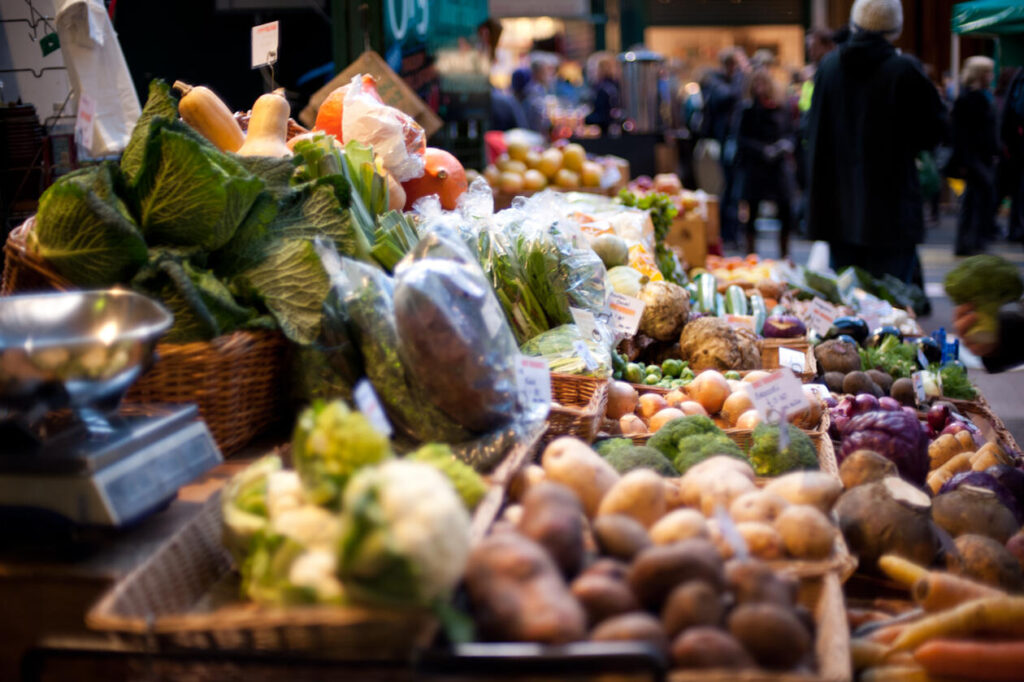
What is less integrated into strategic thinking is the civilian counterpart to fuel security: food. Despite being just as essential to endurance under crisis, food security is still framed primarily as an agricultural productivity issue, a cost-of-living concern, or a development topic. In strategic terms, this separation no longer holds.
Modern crises do not respect sectoral boundaries. A disruption severe enough to affect fuel imports will almost certainly affect food distribution as well. Transport, refrigeration, fertiliser supply, labour availability and retail logistics are all fuel-dependent. These systems fail together, not in neat sequence.
This matters because Australia’s defence planning increasingly emphasises sustained operations, logistics resilience and northern posture. The logic is sound. Strategic competition, climate volatility and the erosion of warning time mean Australia must be able to operate for longer and with greater self-reliance. Yet food supply is rarely treated as part of this sustainment equation, even though civilian resilience underpins defence readiness.
Northern Australia makes this linkage unavoidable. Defence posture, basing and logistics are increasingly concentrated across the north, but food supply chains in the same regions remain thin, expensive and highly exposed. Remote communities in the Northern Territory, northern Western Australia and far north Queensland rely on long transport routes, limited cold storage and diesel-intensive logistics. Extreme weather routinely disrupts access.
From a national security perspective, this is not a peripheral issue. Bases, ports and airfields do not function in isolation from surrounding civilian systems. Workforce availability, public health, social stability and basic access to food all affect the capacity to sustain operations during prolonged stress. Food insecurity does not need to become catastrophic to be strategically relevant; it only needs to compound other pressures.
Climate change acts as a force multiplier. More frequent floods, cyclones, heatwaves and droughts already affect agricultural output, transport corridors and cold-chain reliability. Scientific assessments increasingly point to systemic risk rather than isolated losses, particularly when climate shocks intersect with supply-chain disruption.
Australia’s food system is often described, accurately, as efficient and productive. It produces more food than it consumes and is a major exporter. But efficiency is not the same as resilience. Highly optimised systems are often brittle under stress, primarily when they depend on just-in-time logistics and imported inputs. The experience of the COVID-19 pandemic offered a mild preview. Shortages were driven less by production failures than by transport disruptions, labour constraints, and logistics bottlenecks.
Other advanced economies are beginning to internalise this lesson. Japan has elevated food supply resilience alongside energy security in response to regional instability and climate risk. The European Union increasingly treats food systems as part of its broader strategic autonomy agenda, particularly after the fertiliser and energy shocks triggered by Russia’s invasion of Ukraine.
These approaches do not militarise food policy. They simply recognise that civilian sustainment is inseparable from national security in a high-shock environment.
Australia already has much of the institutional architecture required to think this way. Whole-of-government resilience frameworks, critical-infrastructure regulation and emergency-management planning are well established. What is missing is explicit integration. Food remains adjacent to national security thinking rather than embedded within it.
An integrated approach does not require radical reform or new bureaucracy. It requires alignment.
First, food supply chains should be included in national resilience stress-testing alongside fuel, energy, telecommunications and transport. This means examining cold storage, processing nodes and regional distribution in the same way fuel terminals and pipelines are assessed.
Second, northern development, defence posture and food resilience should be treated as mutually reinforcing objectives. Investments in ports, roads and bases should consider how they support local food availability, storage capacity and workforce sustainment during surge operations. This strengthens defence readiness while delivering civilian benefits.
Third, critical food logistics — icy chains and major processing facilities — should be recognised as essential national infrastructure. This would improve visibility of risk and continuity planning without over-regulation.
There is also a regional dimension. Across Southeast Asia and the Pacific, food security is increasingly viewed as a signal of state capacity and partner reliability. Countries remember who can stabilise supply after shocks and who cannot. Australia’s credibility as a security partner is reinforced not only by exercises and patrols, but by its ability to maintain reliable food systems under stress. This complements, rather than competes with, traditional defence cooperation.
Australia is right to take fuel security seriously. But resilience is not achieved by hardening one pillar while leaving another exposed. In a contested and climate-stressed strategic environment, food security is not a secondary concern; it is a condition of national endurance.
Fuel keeps forces moving. Food keeps nations standing. Integrating the two within Australia’s national security and resilience planning would close a gap that is increasingly difficult to justify. The tools already exist. What is required now is the willingness to connect them.
Dr Hamed Zakikhani is an agronomist and researcher based in Queensland. He holds a PhD in Agronomy and has published widely on agriculture, food security, and strategy. His current focus is on the intersection of policy, international relations, and Australia’s role as a middle power in the Indo-Pacific.
This article is published under a Creative Commons License and may be republished with attribution.