This week in Australian foreign affairs: Australia advances AUKUS cooperation through submarine and defence industry developments with the United Kingdom, imposes new sanctions against Russia, marking four years since the invasion of Ukraine, and announces major shipbuilding investments to strengthen regional defence capability, and more.
On 19 February, Defence announced that Royal Australian Navy frigate HMAS Toowoomba conducted a routine transit through the South China Sea in accordance with international law as part of a Regional Presence Deployment in the Indo-Pacific. Defence said the deployment supports Australia’s interests by upholding the rules-based order, strengthening cooperation with regional partners, and maintaining a peaceful South China Sea open for trade. Chief of Joint Operations Vice Admiral Justin Jones said in a press release, “Australian vessels and aircraft uphold international law during freedom of navigation and overflight to exercise, particularly the United Nations Convention on the Law of the Sea.”
On 20 February, the Albanese Government announced the signing of major shipbuilding contracts for new Landing Craft Heavy and Landing Craft Medium vessels as part of the Australian Army’s transition toward a littoral capability. Defence stated the vessels would significantly enhance the Australian Defence Force’s ability to project and sustain capabilities across Australia’s northern approaches, while supporting humanitarian and disaster relief missions. Deputy Prime Minister and Minister for Defence Richard Marles said in a press release, “An increased focus on littoral manoeuvre will enable the ADF to respond more effectively in our region and keep Australians safe.”
On 21 February, Minister for Defence Industry and Minister for Pacific Island Affairs Pat Conroy announced he would travel to the United Kingdom to attend the Australia–United Kingdom Defence Industry Dialogue, the first such meeting since 2018. “The Australia-United Kingdom Defence Industry Dialogue is an opportunity to discuss deeper defence industry collaboration and ways we can collectively strengthen our defence capability,” said Minister Conroy in a press release.
On 22 February, Prime Minister Anthony Albanese officially opened the Museum of Chinese in Australia in Sydney’s Chinatown. The Albanese Government provided $2.6 million in funding to support the establishment of the museum, which preserves and presents the history, heritage and contributions of Chinese Australians. Located in the heritage-listed former Haymarket Library, the museum includes exhibition galleries, an archive and public program spaces. Prime Minister Anthony Albanese said in his press release, “This museum will celebrate a vital thread through the history of our modern nation – the long and extraordinary story of the Chinese people in Australia.”
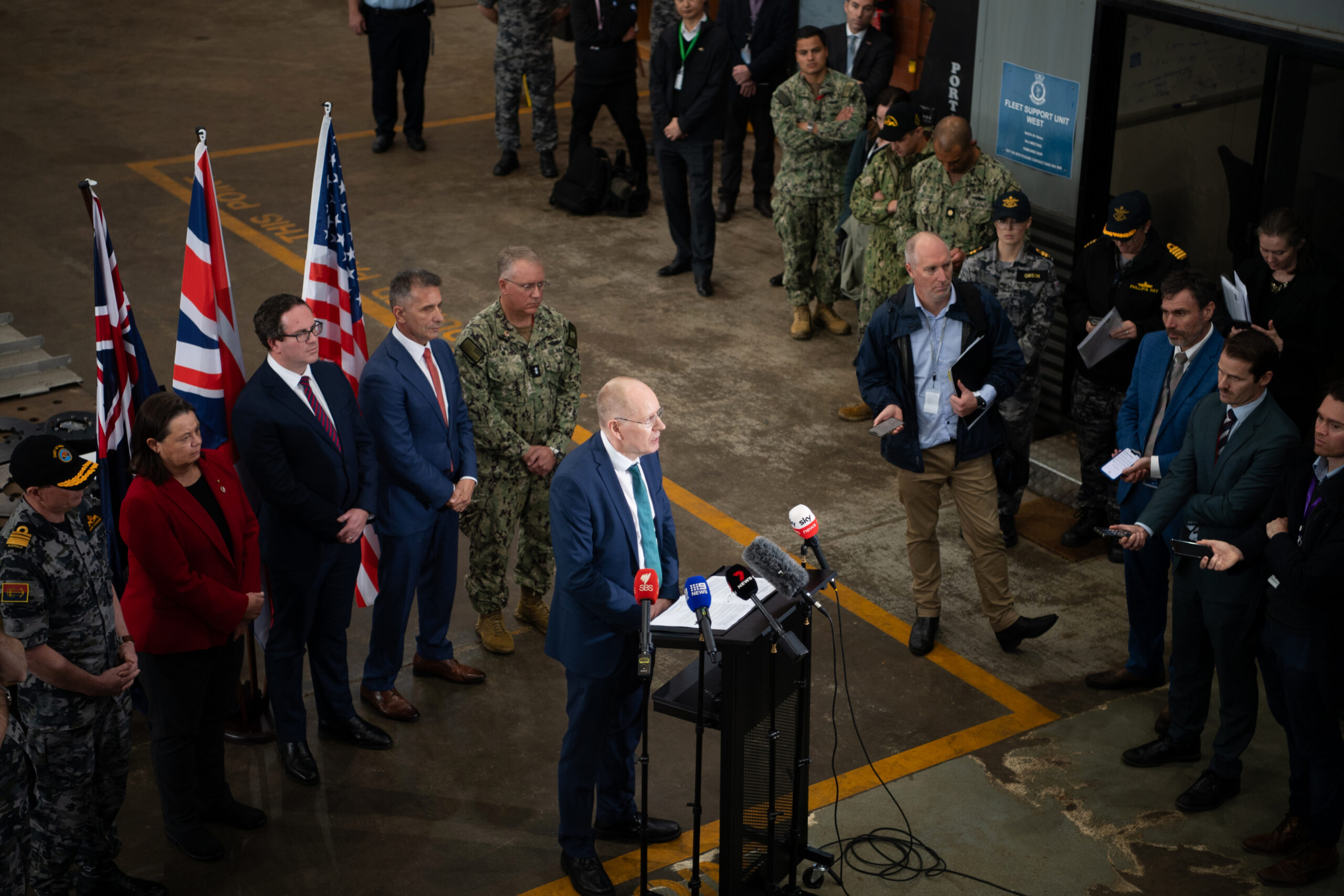
On 22 February, the United Kingdom’s Astute-class submarine HMS Anson arrived at HMAS Stirling in Western Australia for the first maintenance activity conducted on a UK nuclear-powered submarine in Australia. Australian personnel worked alongside the United Kingdom and the United States partners during the maintenance period, building operational experience and supporting preparations for the establishment of Submarine Rotational Force–West from 2027. Minister for Defence Industry Pat Conroy said in a press release that the investment was “an important milestone that will build confidence in our strategic partners that we have the workforce able to deliver AUKUS submarines and also lays the ground for more jobs for locals.”
On 23 February, the Australian Government expressed concern following the unsuccessful appeal of Australian citizen Gordon Ng against his guilty verdict in Hong Kong under the National Security Law. Foreign Minister Penny Wong, in her press release, stated, “Australia has expressed our strong objections to Chinese and Hong Kong authorities on the continuing broad application of national security legislation, including its application to Australian citizens.”
On 24 February, the Australian Government announced a $310 million investment to acquire long-lead components from the United Kingdom for Australia’s future SSN-AUKUS submarines. Deputy Prime Minister Richard Marles said in a press release, “Early investment in components such as the nuclear propulsion systems will be critical to the delivery of AUKUS. By working with our AUKUS partners, the Albanese Government continues to support the defence industry and workforce cooperation, which will, in turn, support jobs in Australia for generations to come.”
Also on 24 February, the Government marked four years since Russia’s full-scale invasion of Ukraine by announcing additional targeted sanctions against 180 individuals, entities, and shadow fleet vessels linked to Russia, “designed to squeeze Russian revenues and further constrain its ability to continue its illegal and brutal invasion”. The measures target sectors including finance, defence, transportation, and energy, and represent Australia’s largest sanctions package since February 2022.
On 24 February, the Government also announced completion of a $250 million wharf upgrade at HMAS Cairns, aimed at strengthening the Royal Australian Navy’s operational presence in northern Australia. Assistant Minister for Defence, Peter Khalil, in a press release, said “the new wharf at HMAS Cairns will support Arafura-class offshore patrol vessels, enhance engagement with our Pacific partners and ensure our Navy is equipped to meet operational demands well into the future.”
On 24 February, Foreign Minister Penny Wong announced she would travel to Samoa and Niue to strengthen Australia’s partnerships with Pacific nations. During the visit, the Minister is scheduled to meet Samoan Prime Minister Laʻaulialemalietoa and Niuean Prime Minister Dalton Tagelagi to advance cooperation across security, governance, climate action, health, education, and economic development. The Minister, in her press release, stated “Australia is a partner the Pacific can count on, listening and acting alongside Pacific leaders to build a peaceful, stable and prosperous region.”
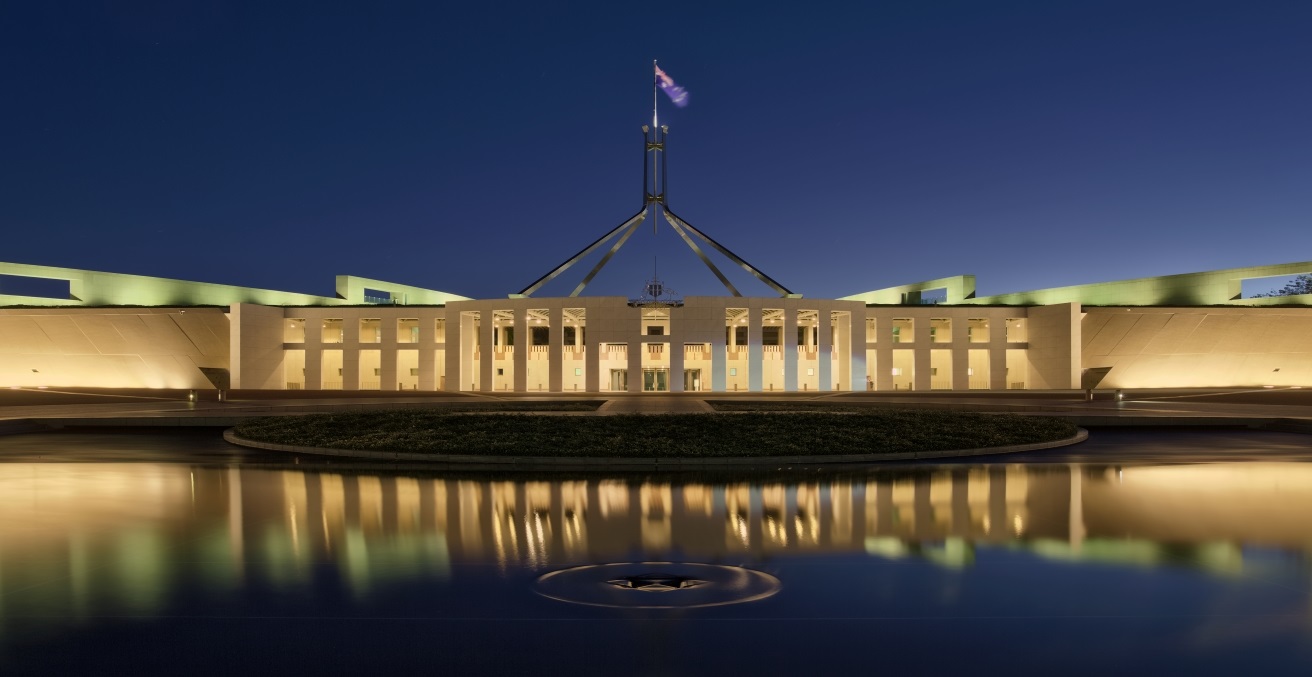
On 24 February, Prime Minister Anthony Albanese announced that Canadian Prime Minister Mark Carney will visit Australia from 3 to 6 March for his first visit as Prime Minister. During the visit, Prime Minister Carney will travel to Sydney and Canberra and address the Australian Parliament. The Government stated in a press release, “Prime Minister Carney’s visit is an opportunity to further strengthen cooperation on investment, economic security and critical minerals, defence, and links between our institutions and communities.”
On 25 February, Defence announced a three-year research partnership with DroneShield to accelerate the development of counter-drone technologies. Under the agreement, Defence’s Science and Technology Group will collaborate with industry to share data on emerging drone threats and conduct joint research using specialised facilities and testing ranges. Chief Defence Scientist Professor Tanya Monro, in a press release, said “Counter-drone technology is critical to keeping our ADF members safe, and that’s why Defence is committed to working with industry so that we can ensure our soldiers, sailors and aviators are provided with the most advanced technology available.”
On 26 February, the Australian Government welcomed the Pacific Islands Forum decision for Fiji and Tuvalu to host pre-COP climate events ahead of COP31. Fiji will host preparatory meetings, while Tuvalu will convene a special leaders’ component to ensure Pacific priorities are central to global climate negotiations. Australia said it would provide operational and logistical support for the events. Foreign Minister Penny Wong, in her press release, stated, “Through Pre-COP and our Negotiations Presidency, Australia and the Pacific will play a critical role in COP31. Australia will also provide operational and logistical support for the Pacific event.”
Akshit Tyagi is an intern at Australian Outlook at the Australian Institute of International Affairs. He is a postgraduate student in International Relations at the Australian National University in Canberra and holds a Bachelor’s degree in Business Administration and a Postgraduate Diploma in Journalism. He previously worked as a business reporter in New Delhi and has written for The Canberra Times, Woroni (ANU student media), The Hill, and other publications.
This article is published under a Creative Commons License and may be republished with attribution.
.