In February 2026, Australia and Indonesia signed a landmark bilateral Common Security Treaty. The deal enables Indonesia and Australia to consult each other in the event of unfavourable challenges to either country and, if appropriate, consider measures to be taken, either individually or jointly.
However, some critics of the treaty say that both countries are avoiding taking joint, concrete action to address shared unfavourable challenges. This is because of Indonesia’s traditional non-alignment, which encourages it to refuse joining binding security alliances that obligate it to assist other countries during an armed attack or a military crisis.
Nonetheless, Indonesia could favour a high-level bilateral peacekeeping partnership that provides both countries with a non-binding option to take joint, concrete action in potential UN peacekeeping operations in the Indo-Pacific. Therefore, Canberra should advocate for the Australia-Indonesia Peacekeeping partnership to be incorporated in the Treaty.
This would be in both neighbours’ national interest as regional cohesion falters under the weight of security challenges such as territorial disputes in the South China Sea, the Myanmar civil war, civil unrest in New Caledonia, the Thailand-Cambodia border conflict, the low-level Southern Thailand insurgency, tribal warfare and lawlessness in Papua New Guinea, and intermittent unrest in the Solomon Islands.
Furthermore, joint participation in regional UN peacekeeping aligns with common goals, a commitment to international law, the preservation of regional security and a rules-based order in the Indo-Pacific.
Stronger joint efforts in stability operations will also enable the sharing of expertise, resources and training, increasing each country’s effectiveness in complex environments. This would be welcomed in Canberra, as Indonesia has become highly experienced and efficient in the field. A strengthened capability in conflict-management operations, in cooperation with Indonesia, would serve Australia well if unrest broke out, for example, in a Pacific Island country (Australia’s immediate region) and demanded military intervention.
The Australia–Indonesia partnership should embed co-deployment of UN-mandated peacekeeping operations, in which one of the two countries, usually Indonesia, would take the lead on the ground. At the same time, the other played a supporting role. To this end, they would need to set up an Australia-Indonesia peacekeeping task force to assess the benefits of cooperation in conflict zones on a non-binding, case-by-case basis. The task force would focus entirely on current or future conflict zones in the Indo-Pacific. Mutual support would likely be welcomed by both the Australian Defence Force (ADF) and the Indonesian National Armed Forces (TNI), as these operations are often undertaken in extremely challenging and complex environments. Overall, the task force would institutionalise and operationalise cooperation and operations between Indonesia and Australia. In the future, it could also explore potential co-deployment under the auspices of regional bodies such as ASEAN and the Pacific Islands Forum (PIF).
The two countries announced their intention to co-deploy on a UN Peacekeeping mission in 2019, with the aim of strengthening military training cooperation. However, they provided no further information on how such a deployment would be managed and coordinated.
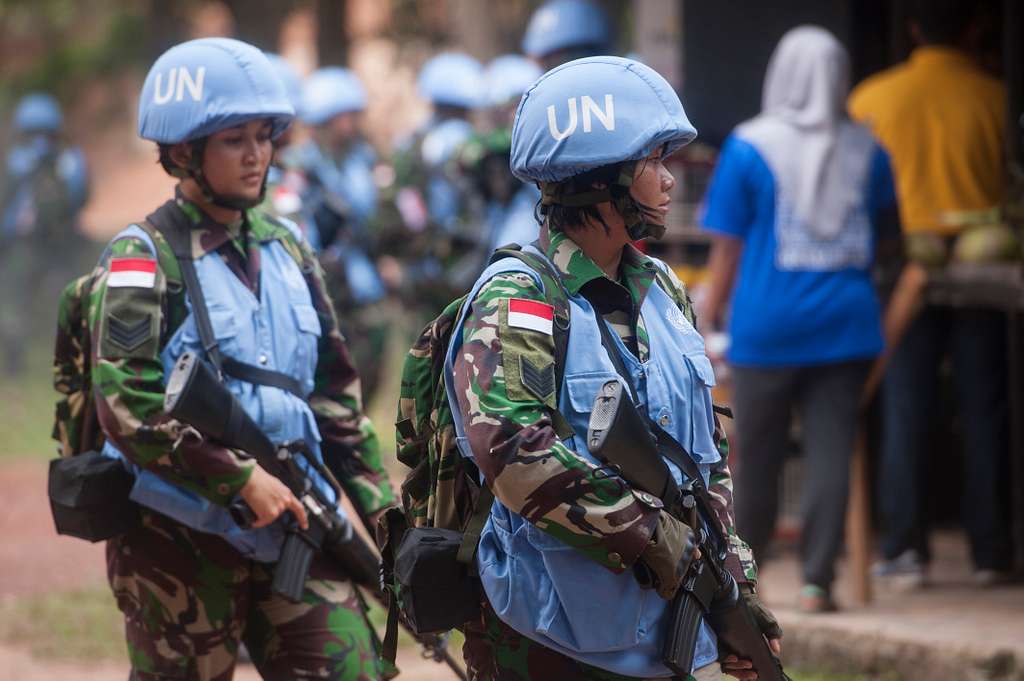
Indonesia and Australia have experience working alongside each other in conflict zones, as regular contributors to the UN Department of Peace Operations, for example, in Cambodia (1991 to 1993) and Namibia (1989 to 1990). In Cambodia, Australian-led communication allowed the UN to operate, while Indonesian personnel assisted with the security required for those operations to function. Under the UN, Peacekeepers from both countries were instrumental in monitoring the ceasefire, managing the repatriation of refugees, and facilitating free and fair elections. The Cambodia mission was highly successful in achieving its principal goal of overseeing the 1993 election, despite challenges from Khmer Rouge rebels.
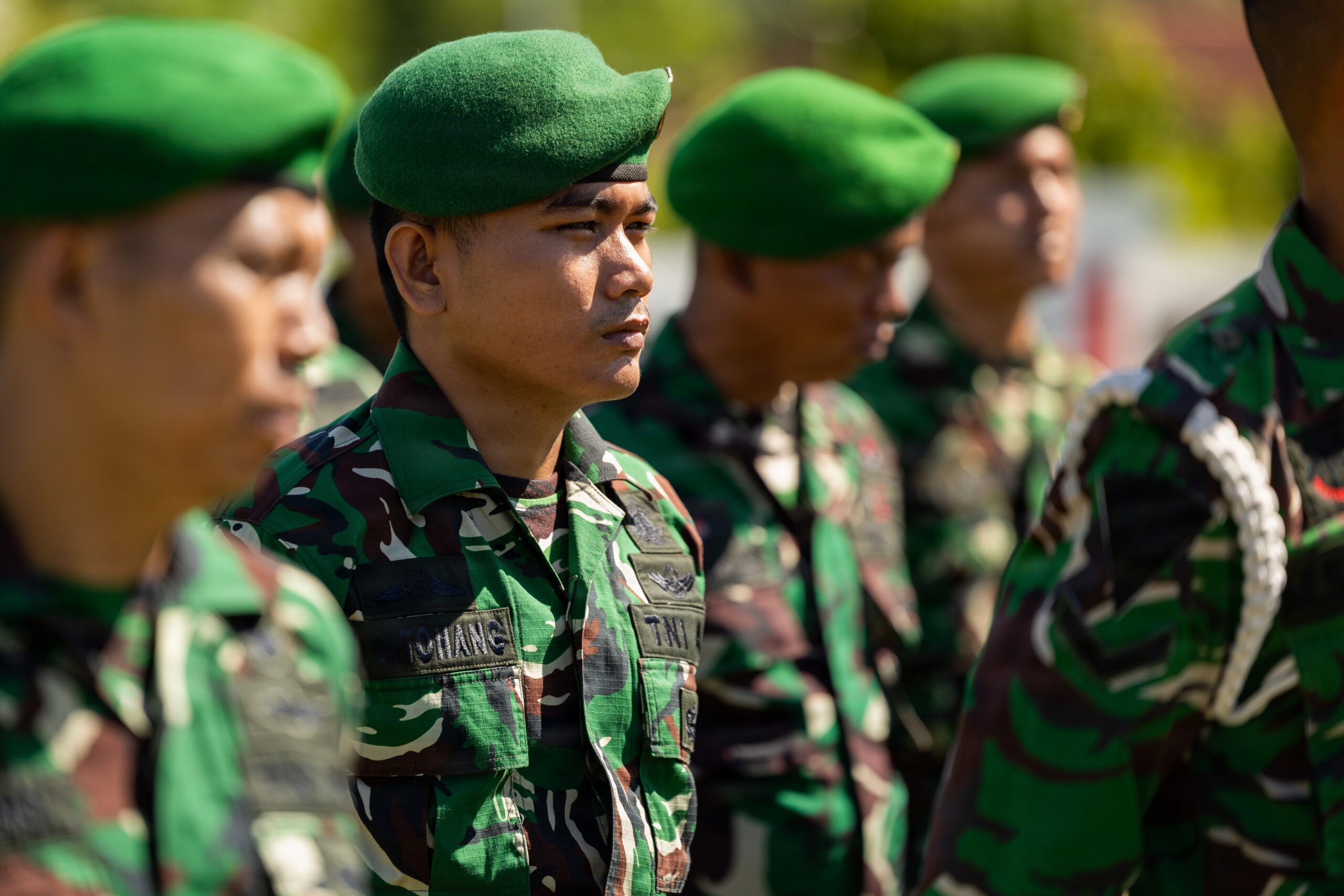
In the Philippines, Georgia and Nepal, the Indonesian National Armed Forces has much more experience in peacekeeping than the Australian Defence Force (ADF), whose stability operation efforts have dwindled. At present, the ADF has over 60 personnel deployed on UN peacekeeping operations. Whereas, today, Indonesia, through its Garuda Contingent (Konga), is one of the world’s leading contributors to UN Peacekeeping, with over 2,700 personnel currently deployed in eight conflict zones. And through the UN Security Council approved “Board of Peace”, in Gaza, Indonesia is set to deploy 1,000 troops by April. That number could increase to 8,000 by the end of June.
The value of Australia cooperating with Indonesia in this area has already been recognised. In 2023, at PMPP Sentul (Indonesia’s premier training facility for UN Peacekeeping operations), the Australian Army’s Major Matthew Breckenridge said, “Australia doesn’t have large contingents on UN peacekeeping missions, so working with the Indonesians, who send thousands of people yearly, provides the ADF valuable knowledge.” At the PMPP training centre, Breckenridge teaches and mentors up to 1200 Konga members at a time.
The bilateral relationship should also include regular joint exercises. Peacekeeping training centres in each country should frequently host defence personnel and cadets from the other. This should be possible, as both the ADF Peace Operation Training Centre (ADF POTC) and the TNI’s Peacekeeping Centre (PMPP Sentul) already host defence cadets from other countries. Canberra and Jakarta have already taken steps in this direction. At the 2019 Australia–Indonesia Foreign and Defence Ministers’ 2+2 meeting, the two governments agreed to establish a permanent Indonesian instructor position at the Australian Defence Force Peace Operations Training Centre (ADF POTC) to strengthen bilateral cooperation in such matters.
ADF personnel have taken part in over 70 peacekeeping operations in more than 60 countries. Moreover, Australians were among the first peacekeepers to be deployed under UN auspices, monitoring the ceasefire between Indonesian and Dutch forces in Indonesia in the late 1940s.
In recent years, the Indonesia-Australia defence relationship has reached unprecedented levels of strategic trust, highlighted by the Common Security Treaty. The Treaty lays the foundations for deeper cooperation in many military fields, including peacekeeping operations. The bilateral peacekeeping task force offers a non-binding course of action for co-deployment in such cases. This could represent a first realistic step and template for the neighbours to take joint action in other areas of military cooperation.
Ridvan Kilic holds a master’s degree in International Relations from La Trobe University. His research interests include Australian and Indonesian foreign policy, the Australia-Indonesia bilateral relationship, and ASEAN regionalism. Ridvan’s work has been published in the Lowy Institute Interpreter, The ASPI Strategist, Australian Outlook, The Diplomat, Papua New Guinea Post Courier, Indonesia at Melbourne, the East Asia Forum, South Asian Voices, 9DashLine and the ISEAS Yusof Ishak Institute Library.
This article is published under a Creative Commons License and may be republished with attribution.