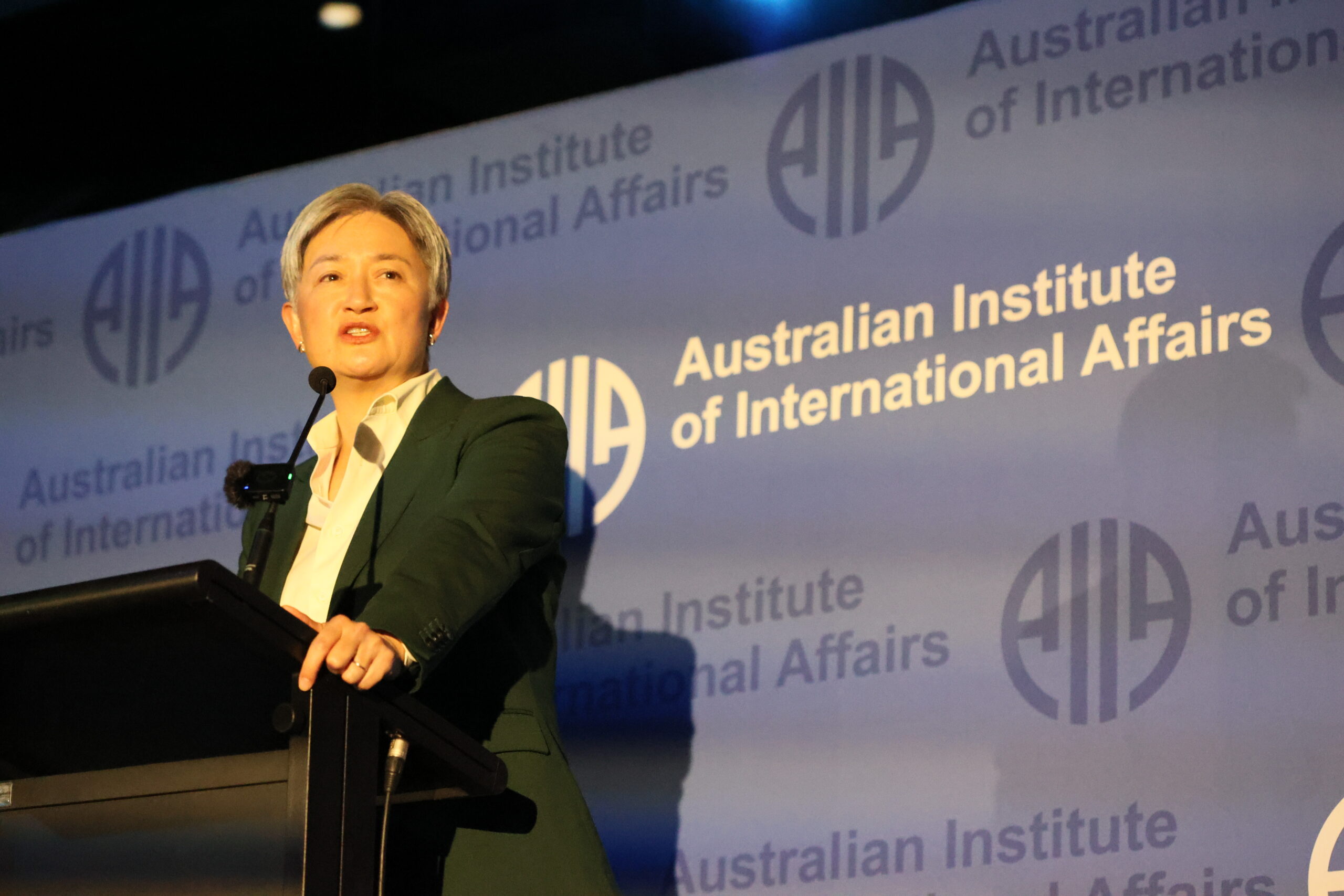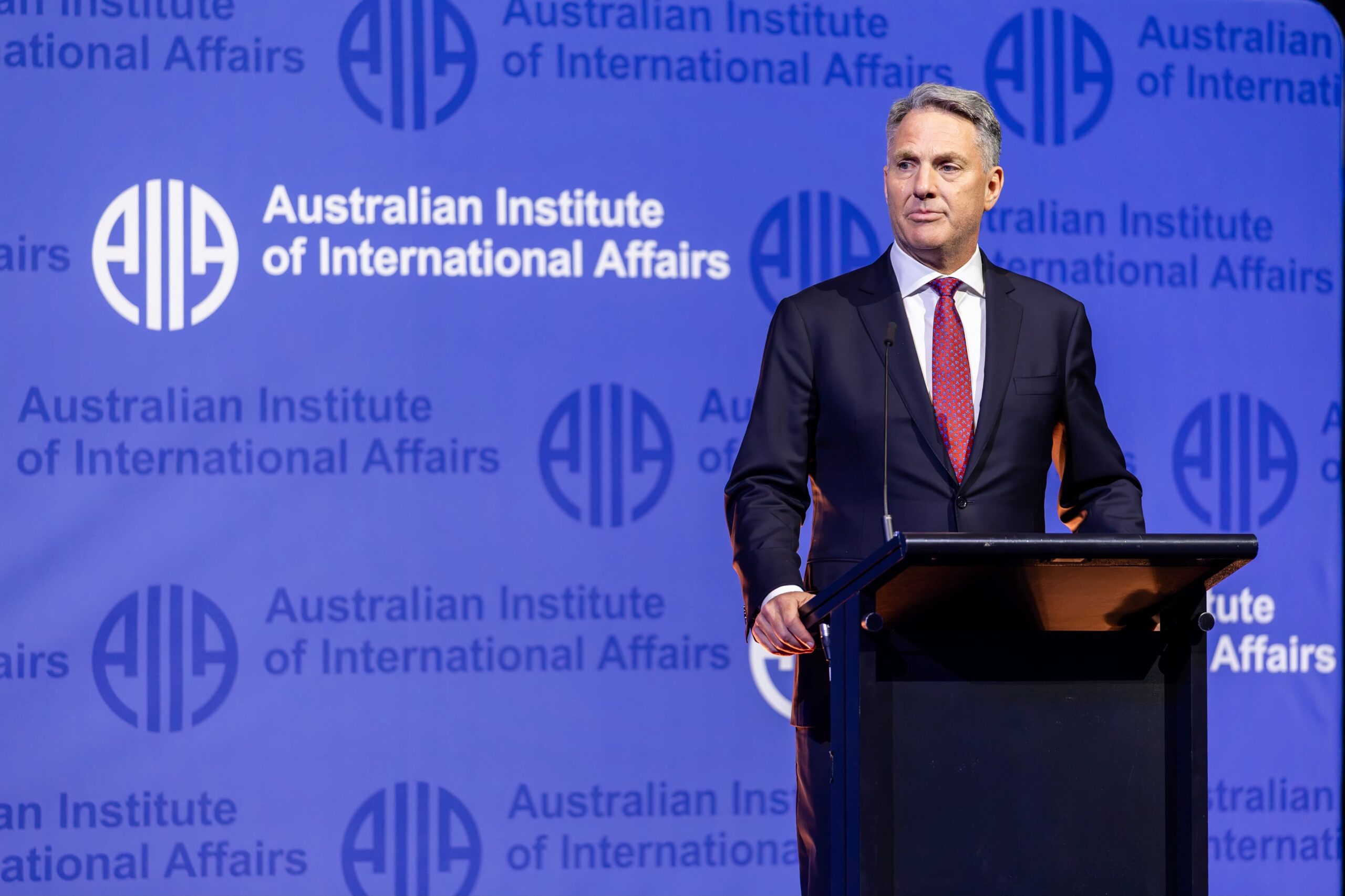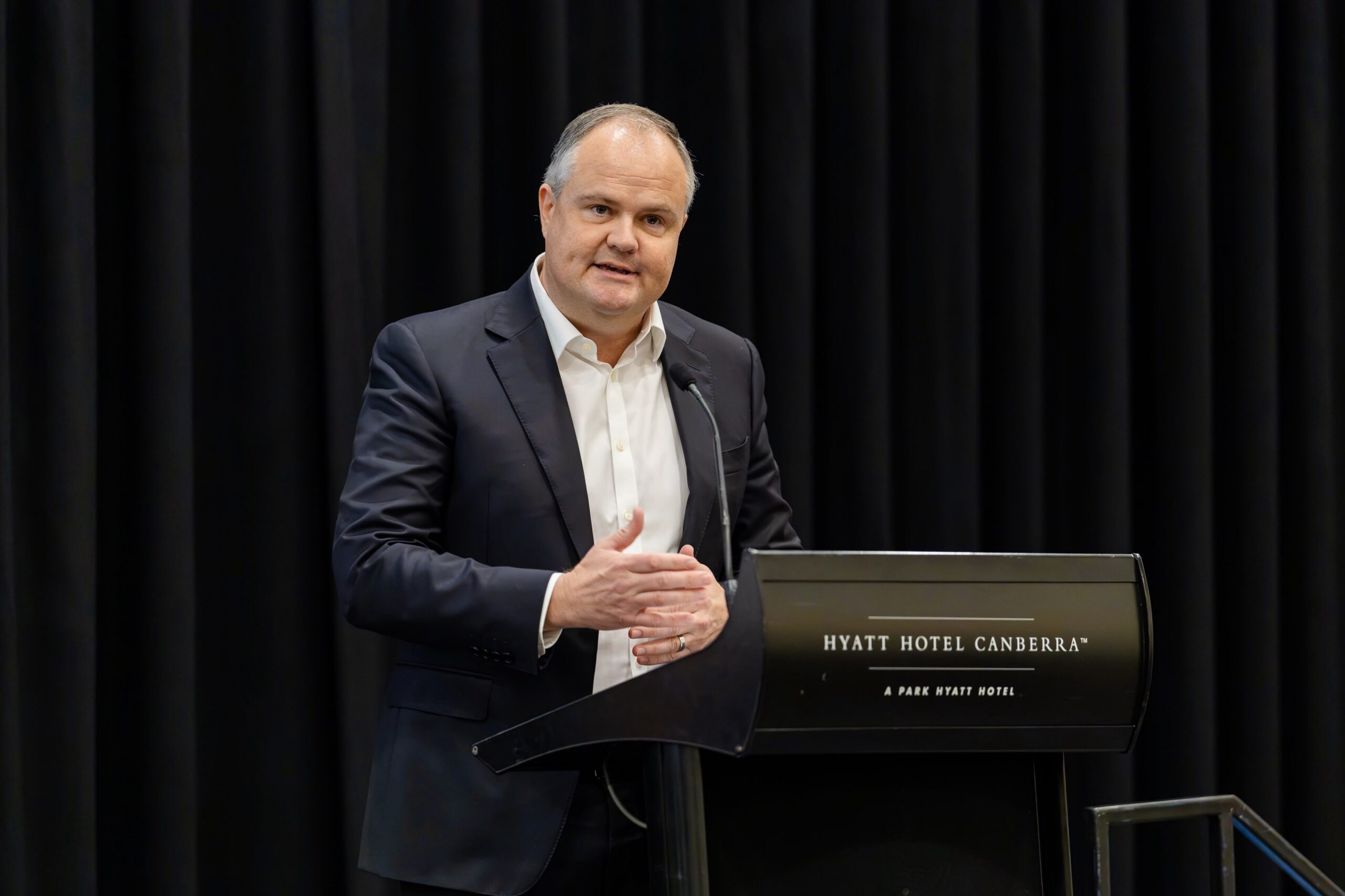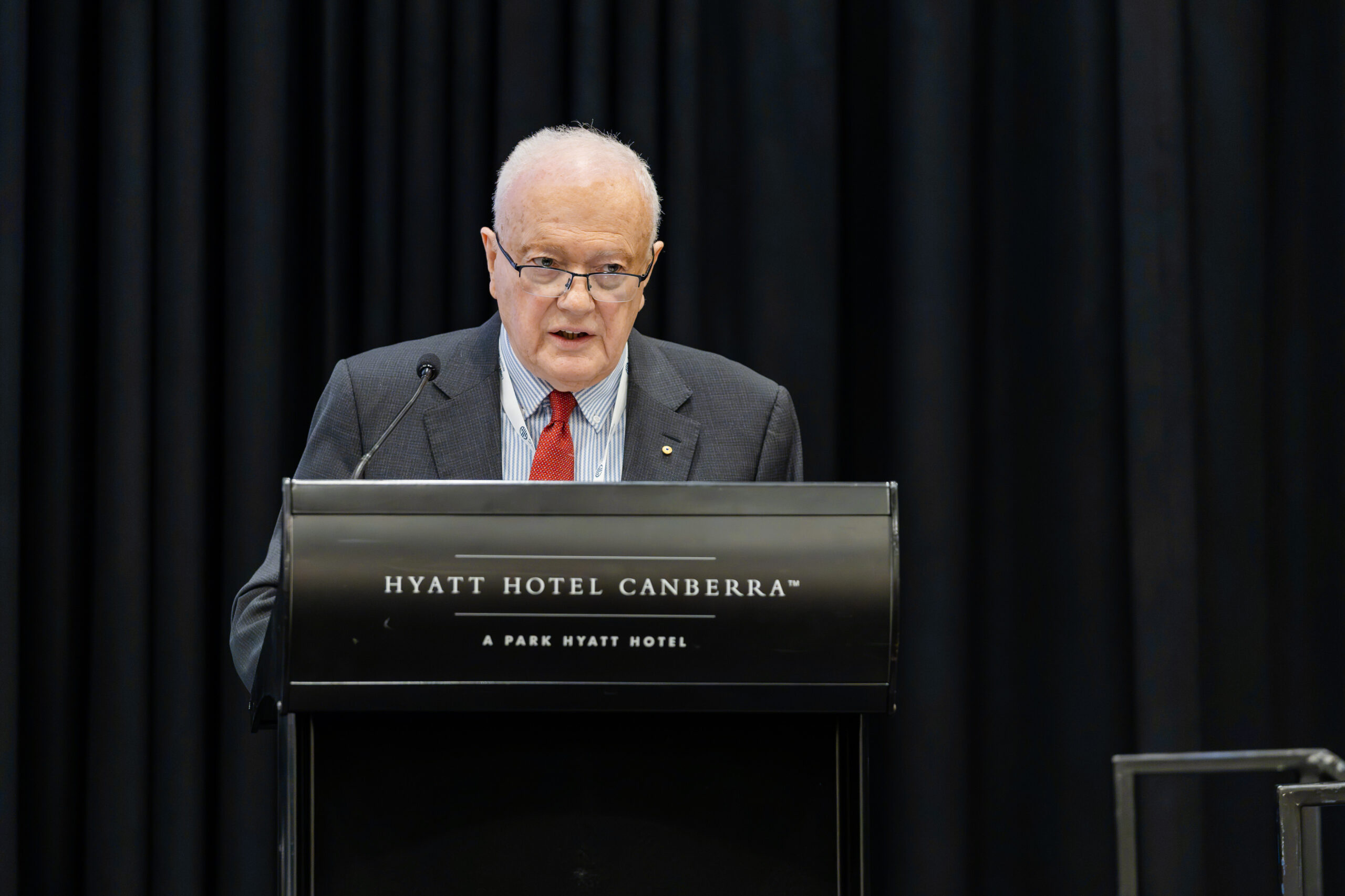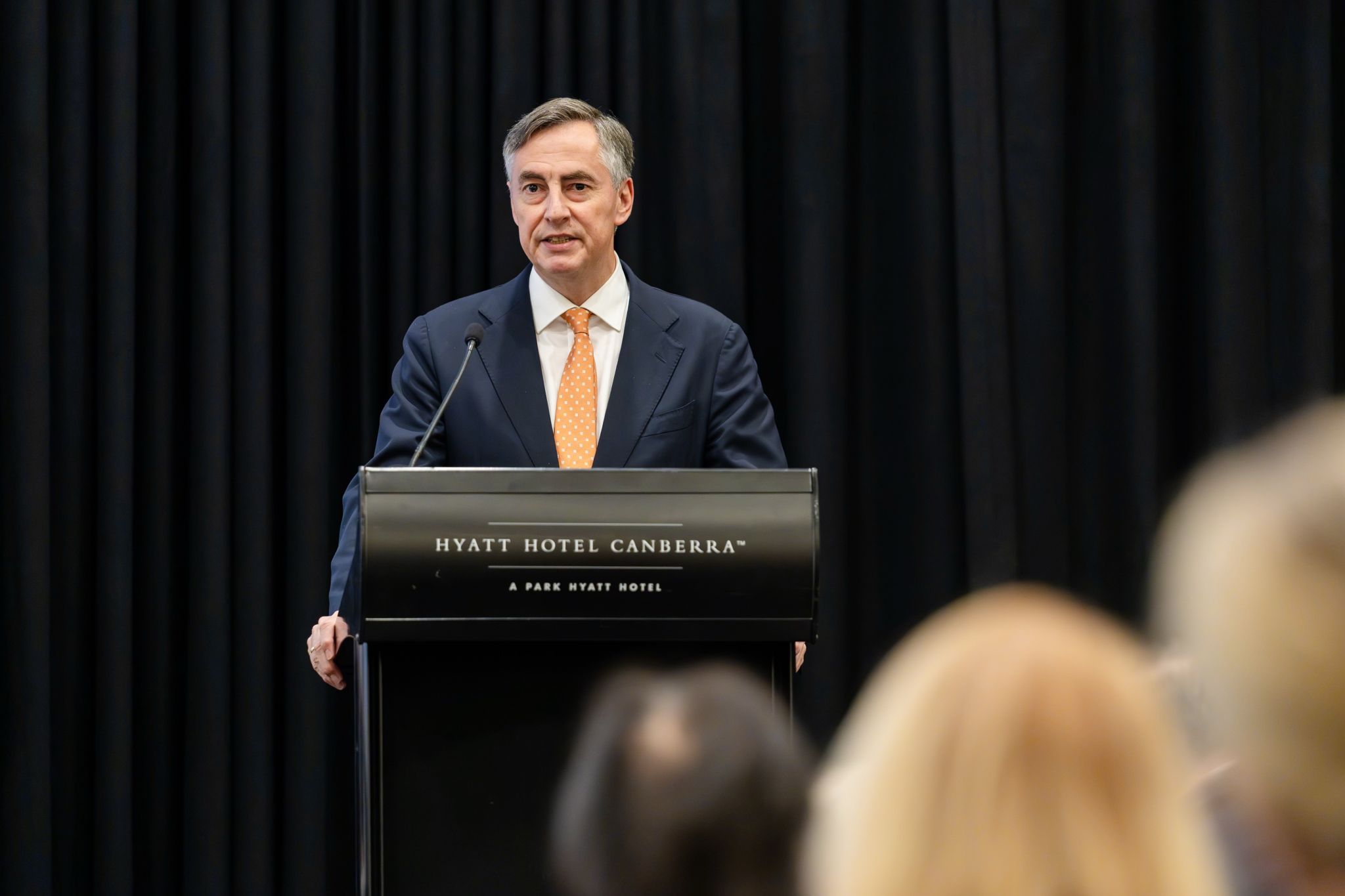
David McAllister MEP’s keynote to the 2026 AIIA National Conference argued that Europe must build its capacity to act collectively as Russia’s war, China’s rise and a shifting United States reshape its security environment. He emphasised that European sovereignty is not about isolation, and that deeper partnerships with like-minded countries such as Australia are essential to defending shared values and interests.
Australia and Europe are like-minded partners in defending democracy, the rule of law and the rules-based international order. At a time when these principles are increasingly challenged, our partnerships matter more than ever.
Indeed, we are living through a period of profound global disruption.
Geopolitical competition is intensifying, international rules and institutions are under pressure, technological change is reshaping societies, and economic dependencies are increasingly weaponised.
For us in Europe, this raises a very fundamental question: how can we protect our security, our prosperity and our democratic values in an increasingly unpredictable world, where respect for shared principles is declining?
The rules-based international order that has provided peace and stability for much of the past eight decades is under unprecedented strain. Russia’s full-scale invasion of Ukraine, the conflicts in the Middle East, the civil war in Sudan and growing instability across the Sahel illustrate the scale of today’s challenges.
These crises emerge in different regions, but their consequences are global. Conflicts in Europe and the Middle East, along with tensions in the Indo-Pacific, demonstrate how interconnected global security, trade and energy supplies have become, as well as cyber attacks, disinformation and economic coercion. All these geopolitical turbulences are increasingly having a direct impact on citizens in Europe, just as Australia.
The European peace and security order has been fundamentally shaken.
Russia’s war of aggression against Ukraine is well into its fifth year, and Moscow’s targeting of civilian and energy infrastructure has reached unprecedented levels of cruelty. This war is already taking longer than World War I and constitutes the most serious violation of international law in Europe for decades. It is not only an attack on Ukraine, but a direct challenge to European security, territorial integrity and national sovereignty. Ukraine’s security is ultimately Europe’s security, and our fundamental values of democracy and the rule of law are at stake.
Australia’s steadfast support for Ukraine and its contribution to the Coalition of the Willing are greatly appreciated.
Our response must remain clear and united: strengthen Europe’s defence capabilities, enforce sanctions against Russia, and continue to support Ukraine politically, financially and militarily, whatever it takes and for as long as it takes. Our support must match Ukraine’s needs, particularly in air and missile defence, ammunition, drones, electronic warfare and energy infrastructure.
I welcome the latest €90 billion loan for Ukraine for 2026 and 2027. Kyiv must maintain its reform momentum, particularly on the rule of law, public administration and the independence of anti-corruption bodies.
The European Union is Ukraine’s primary strategic ally. We will continue our assistance to Ukraine just as we have done so far. And as we pursue peace, the EU must actively use all available instruments to deter Russia. As European Commission President von der Leyen recently said, it is the “only language Moscow understands”.
Russia is not winning on the battlefield and is now lobbying for sanctions relief. The answer is no. We should further reduce Russia’s energy revenues, which directly finance its war, by targeting its shadow fleet, oil producers and sanctions circumvention.
I therefore welcome the European Union’s 22nd sanctions package, adopted last month, targeting 1,569 individuals and entities, particularly suppliers of components for missiles, drones and aircraft.
The sanctions are working. The Russian economy is in shambles. The Russian Federation is not bankrupt – yet. But how did Ernest Hemingway once respond to the question, “How did you go bankrupt?” He said: “Two ways. Gradually, then suddenly.”
The sanctions against Russia must remain in place until a comprehensive peace agreement has been negotiated and implemented.
I deeply regret that the EU Council was unable to agree on a more ambitious financing structure based on frozen Russian assets. I therefore salute the initiative by Sweden, the Netherlands, Poland and Spain to reopen this discussion. Russia, not European taxpayers, must pay for the damage it has caused.
The European Union will continue to work towards a sovereign and secure Ukraine that can defend itself and determine its own future. This includes supporting its path towards EU membership through a fair, credible and merit-based accession process. Ukraine’s EU integration is not only an investment in Europe’s peace and prosperity, but also in our own security and stability.
We all want a just and lasting peace that upholds Ukraine’s sovereignty and territorial integrity and ensures Russia does not renew its aggression.
Of course, the European Union needs a long-term approach to dealing with the Russian Federation, based on international law, respect for sovereignty and every state’s right to determine its own future. Beyond conventional military threats, Russia is targeting European security through cyber attacks, sabotage, disinformation and interference in democratic processes.
We must therefore combine credible military deterrence with stronger cyber defence, improved intelligence sharing and more resilient infrastructure. Defending Europe also means protecting its critical infrastructure, democratic institutions and public trust.
The Russian Federation is not the only actor challenging the existing international order. China poses an equally significant, though different, long-term strategic challenge to Europe.
The European Union is founded on democracy, the rule of law, respect for human rights and fundamental freedoms, and the principles of international law. We have to defend exactly these principles while recognising the complexity of our relationship with China. While the People’s Republic remains an important economic partner, its growing military capabilities, assertive behaviour in the South China Sea, tensions surrounding Taiwan and continued support for Russia raise serious security concerns.
At the same time, we know we need to cooperate with China in areas such as climate policy and technological development. A complete economic disengagement would be neither realistic nor serve European interests.
However, economic interdependence also creates strategic vulnerabilities.
Last year, the European Union recorded a trade deficit in goods with China of €360 billion. That is €1 billion per day. This reflects structural imbalances driven by unequal market access, unfair competition, industrial overcapacity and an artificially undervalued RENMINBI. All this seriously undermines the competitiveness of European companies.
The European Union’s response to China is one of de-risking rather than decoupling. This means reducing excessive dependencies in critical sectors such as raw materials, semiconductors, pharmaceuticals and digital technologies, while diversifying supply chains and strengthening Europe’s industrial capabilities.
Against this backdrop, China and the EU held their second trade and investment consultations in Beijing last month. Both sides agreed to work towards more balanced trade relations, to improve market access and to strengthen cooperation on export controls, particularly concerning critical raw materials such as rare earths. These discussions are welcome, but concrete progress on reciprocity, transparency and fair competition remains essential.
In this context, partnerships with countries such as Australia are becoming increasingly important. As a reliable supplier of critical raw materials and a partner committed to open, rules-based trade, Australia can help us in Europe diversify our supply chains and reduce exactly these strategic dependencies.
Another major challenge is the future of transatlantic relations, which are undergoing a profound transformation. Under President Trump, the United States has adopted a more unilateral, interest-driven approach to international affairs, increasingly prioritising the Indo-Pacific and expecting Europe to assume greater responsibility for its own security. Disagreements over trade, international institutions and fundamental political principles have strained relations.
The United States nevertheless remains indispensable for European security as our most important NATO ally and the EU’s largest trading partner in terms of goods and services. We must therefore maintain an open dialogue and cooperate wherever our interests converge. At the same time, Europe can simply no longer take the same level of American security support for granted.
These developments have been a wake-up call for Europe. We are strengthening our own defence capabilities, industrial base and military readiness, while assuming a greater European share of the burden within NATO. The commitment by NATO allies to increase defence and security-related investment to 5 per cent of GDP by 2035 reflects the scale of the effort required.
The priority now is to translate these political commitments into tangible capabilities.
The transatlantic relationship is equally important from an economic perspective. Trade tensions with the United States put additional pressure on European industries. Europe must defend fair competition, seek reliable agreements with Washington and diversify its international trade relationships.
A stronger Europe and a strong transatlantic partnership are not competing objectives. On the contrary, greater European responsibility is essential for a more balanced and sustainable partnership with the United States.
The security situation in the Middle East is deteriorating. The war with Iran remains unresolved and affects European security directly. The US-Israeli strikes, the closure of the Strait of Hormuz and the US blockade of Iranian ports have shaken energy markets.
Unfortunately, the Pakistan-mediated memorandum of June has not held, and continued attacks are happening in a very volatile context. The recent Houthi attacks on Riyadh airport are another example of the instability. In this regard, I share the deep concerns about recent developments in the Red Sea and the Bab el-Mandeb Strait. This threatens a vital route between Europe and Asia. A negotiated solution covering the nuclear programme and freedom of navigation has to be reached soon.
Alarming is also the continued development and use of Iranian drone capabilities, including possible technological support from external actors. The European Union is closely engaged with regional partners, notably with the Gulf countries, to address these challenges, including through enhanced cooperation on sanctions and in the field of security and defence.
The European Union has considerable economic power, technological expertise and diplomatic influence. However, economic power does not automatically translate into geopolitical influence. The central question is therefore: can we mobilise our resources and act collectively when our security and interests are at stake?
Too often, fragmented national approaches and competing priorities limit our ability to respond. European sovereignty must therefore mean more than the independence of individual member states. It must also ensure our collective capacity to make decisions, to defend our interests and to translate them into action.
This requires action in four interconnected areas.
First, Europe must invest in its defence industry, improve military mobility and streamline procurement. Cooperation with trusted partners such as Australia, particularly on emerging technologies, drones and cyber defence, can strengthen preparedness and interoperability.
In the Indo-Pacific, this should include maritime domain awareness, information sharing, cybersecurity and the protection of critical undersea infrastructure. Safeguarding submarine cables, merchant shipping and seafarers is essential for global communications and trade.
Second, the European Union must strengthen its economic and technological resilience. Dependence on critical raw materials, digital infrastructure and advanced technologies can limit our freedom of action. We need to diversify supply chains, invest in innovation and strengthen our industrial capacity, while making better use of the Single Market. Europe must also respond to unfair subsidies, dumping and economic coercion, by using its trade policy to defend fair competition, reciprocity and equal market access.
Third, we need to strengthen our democratic resilience. Foreign information manipulation and interference, disinformation and attempts to influence political processes threaten democratic institutions and public trust. Protecting our institutions and ensuring that citizens have access to reliable information are therefore essential to European security.
And fourth, Europe needs a more coherent foreign policy and more effective decision-making. A stronger European voice requires the political will to translate shared interests into collective action. This means improving coordination between the EU institutions in Brussels and the 27 member states, and ensuring that our diplomatic, economic and security instruments work together.
So, to conclude: European sovereignty is not about isolation. It is about the capacity to make independent choices, to fulfil our responsibilities and to cooperate with others on the basis of mutual respect rather than dependency. The more effectively we in Europe mobilise our own resources, the more credible and influential we will become internationally.
The challenges Europe is facing are profound. The Russian war against Ukraine, China’s growing influence, the changing transatlantic relationship, and emerging technological and hybrid threats are reshaping our security and economic environment. The Free Trade Agreement, the Security and Defence Partnership as well as Australia’s association to Horizon Europe are milestones.
Australia, and the European Union share a commitment to democracy, international law and international cooperation. Both recognise the importance of regional stability, diversified partnerships and resilient economies.
Geography may keep us oceans apart. However, our shared interests, values and responsibilities are bringing us closer together.
David McAllister is a Member of the European Parliament and Chair of the Parliament’s Committee on Foreign Affairs. This is an excerpt of his keynote speech to the 16 November 2026 AIIA National Conference. A full recording of the address is available here.
Australian Outlook occasionally publishes pieces by figures representing government or other bodies. As with all pieces published by Outlook, these are edited and checked for facts. They do not, however, represent the view of Outlook or the Australian Institute of International Affairs.
This article is published under Creative Commons License and may be republished with attribution.