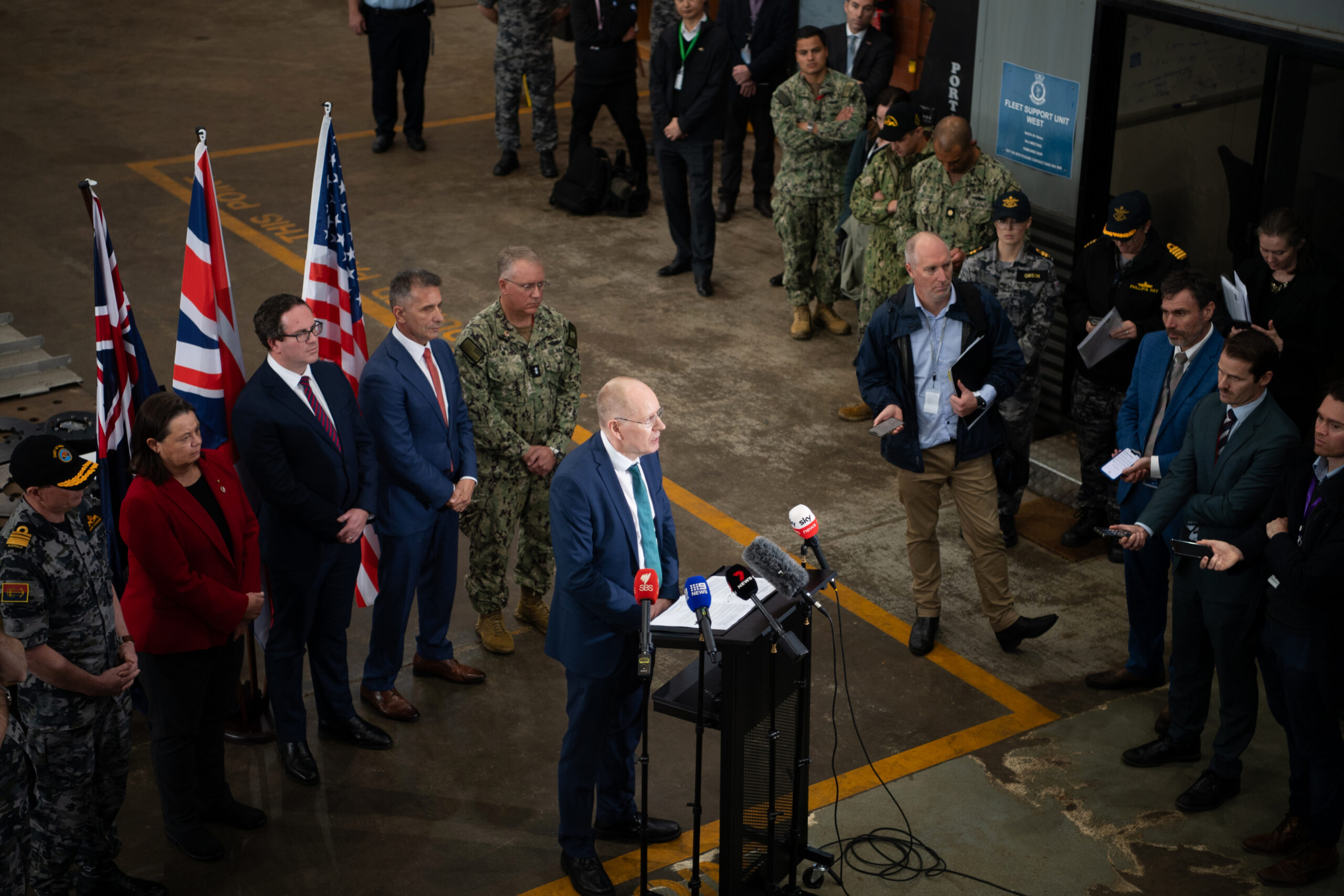
The IISS 23rd Shangri-La Dialogue in late May 2026 saw three notable ASEAN leaders: President Tô Lâm of Vietnam, President José Ramos-Horta of Timor-Leste, and ASEAN Secretary-General Kao Kim Hourn. Taken together, their perspectives offered a revealing window into how ASEAN’s leaders and institutions understand the meaning of ASEAN centrality at a moment of mounting geopolitical uncertainty.
Vietnam’s Tô Lâm: Centrality Must Be Earned
In Tô Lâm’s keynote address, he built his argument around three simultaneous crises — a crisis of international order, a crisis of development models, and a crisis of strategic trust. It is an unusually structured framework for a head of state to lay out at a security dialogue, and it was not merely rhetorical scaffolding.
The General Secretary of the Communist Party of Vietnam was making a case for why ASEAN centrality matters now in ways it did not in previous decades, because all three of these crises converge most visibly in the Asia-Pacific.
The argument lands because Vietnam’s own situation gives it weight. Hanoi has spent the better part of two years pushing through significant domestic restructuring — streamlining the party apparatus, pushing hard on private sector development — and Tô Lâm was at pains to stress that none of this disturbs Vietnam’s long-standing foreign policy of independence, self-reliance, and diversification.
The implicit logic runs in a direction that a Vietnam with better governance and stronger institutions becomes a more reliable partner to ASEAN, not a more assertive or disruptive one.
On the question of ASEAN’s centrality, Tô Lâm was direct, that it cannot be taken for granted, and it cannot be self-sustaining. The region has to earn it through unity and strategic autonomy, and the mechanism for doing so has to produce actual responses to actual challenges, not just consensus statements.
The same pragmatism informed his remarks on the South China Sea, or East Sea as it is known in Vietnam. Hanoi’s position on UNCLOS remains unchanged, but the emphasis was on how rules mean nothing without enforcement infrastructure and communication channels to prevent escalation before it starts. Coming from a country that sits at the intersection of South China Sea tensions and China’s southern border, the point carried particular weight once again.
Timor-Leste’s José Ramos-Horta: Centrality Through Dialogue
If the Vietnamese President spoke of a country managing great-power competition from within ASEAN, Ramos-Horta brought the perspective of someone who has watched ASEAN from its doorstep for fifty years and only just joined.
His special address was easily the most candid of the three. The Nobel Peace Prize laureate opened by describing the UN Security Council as “moribund, sclerotic, irrelevant”, a blunt assessment that immediately signaled where he stood on the state of the international order.
On ASEAN, Ramos-Horta acknowledged its shortcomings openly, outlining that consensus can be painfully slow, Myanmar remains an unresolved stain on the multilateral’s record, and ASEAN itself emerged from a region marked by war, insurgency, and Cold War rivalry.
In his view, ASEAN’s success was never that it erased differences. Its achievement was creating a habit of cooperation among states that had every reason to distrust one another. Through countless meetings, consultations, and incremental compromises, it built a framework for managing disagreement without allowing it to descend into conflict.
Interestingly, the founding figure of Timor-Leste’s independence struggle proposed to decouple the South China Sea from the sovereignty disputes that define it and declare it a zone of peace. He knew the idea would sound naive to many,but his argument was simply that there is nothing inevitable about the region’s militarization.
On the Myanmar issue, Ramos-Horta was less interested in new frameworks than in creating the conditions for dialogue itself. He suggested bringing the parties together informally, without preconditions, under the guidance of a respected regional mediator, but a proposal that unsurprisingly drew a public rebuke from Myanmar’s junta.
These arguments suggest that Ramos-Horta’s vision is that ASEAN’s centrality lies in its normative power, particularly in its ability to keep dialogue alive amid global chaos. A united ASEAN grounded in its founding charter can be a stabilizing force, but it must continually reaffirm those founding principles or risk losing its credibility.
ASEAN’s Kao Kim Hourn: Centrality as a Political Project
Unlike Tô Lâm and Ramos-Horta, Kao Kim Hourn was speaking not for a country but for ASEAN as an institution itself. Speaking in a panel, the ASEAN Secretary-General delivered a strategic blueprint for centrality as a matter of collective capacity-building and outlined five priorities for ASEAN’s strategic course.
First, he emphasized the importance of inclusive cooperation through the ASEAN Outlook on the Indo-Pacific (AOIP), describing it as a practical framework that engages all major powers on shared challenges such as connectivity, maritime cooperation, and sustainable development.
Second, he warned that centrality without unity is an empty claim and promise. For ASEAN, maintaining internal cohesion remains essential to preserving its influence in an increasingly competitive regional environment.
Third, he reaffirmed ASEAN’s commitment to a rules-based order, highlighting principles such as sovereignty, non-interference, and the peaceful settlement of disputes as critical safeguards, particularly for smaller states. These principles, he argued, provide the foundation for regional stability amid growing geopolitical tensions.
Fourth, he described the value of ASEAN-led mechanisms, including the East Asia Summit and ASEAN Regional Forum, which continue to provide channels for dialogue even when bilateral relationships become strained
Fifth, he pointed out that strengthening resilience, mainly in supply chains and infrastructure, should be viewed not only as an economic priority but also as a strategic imperative for the region’s long-term stability and security.
When discussing the ASEAN Community Vision 2045, Cambodia’s veteran diplomat argued that it represents ASEAN’s strategic agency, the ability of the region to define its own priorities and chart its own course. The point, as he saw it, is not just what ASEAN does, but that ASEAN chooses what it does.
Building on these arguments, it is clear that Kao sees ASEAN’s centrality as being preserved through unity, adaptability, and sustained political will. Most significantly, his intervention suggests that centrality is not a fixed status bestowed upon ASEAN by external powers, but a strategic condition that must be continually reproduced through regional cohesion.
What the three leaders addressed at the 2026 Asia’s premier defence summit collectively demonstrates is that ASEAN centrality is not a fixed object to be defended, but a political project that must be continually sustained. Tô Lâm provided its strategic architecture, Ramos-Horta gave it a human face, while Kao supplied its institutional spine. None of them alone is sufficient — and that, perhaps, is the most candid description of what ASEAN centrality actually is.
Geo Dzаkwаn Arshаli is Program Manager & Chair of Anti-Corruption Working Group at World Order Lab, and Emerging Leaders Fellow (Non-Resident) at FACTS Asia. He holds Bachelor’s Degree in International Affairs Management from the School of International Studies, Universiti Utara Malaysia. His research interests focus on Southeast Asia’s domestic politics and regional security affairs.
Vu Phuong Linh is Senior Analyst (Coordinator) with the Southeast Asia Desk at World Order Lab. She holds Bachelor’s Degree in International Law from the Faculty of International Law, Diplomatic Academy of Vietnam. Her research interests focus on international environmental law and sustainable development, ASEAN regional governance, and the protection of vulnerable communities under international law.
André Paulo do Carmo Barreto is Program Support Intern at The Asia Foundation in Timor-Leste, and Program Associate with the Division II (Publication) at World Order Lab. He holds Bachelor’s Degree in International Relations and Diplomacy from the Faculty of Political Sciences, Universidade Dili. His research interests include human rights frameworks, digital governance, gender equality, and climate justice in Southeast Asia.
This article is published under a Creative Commons License and may be republished with attribution.