This week in Australian Foreign Affairs: Australia and Singapore conclude trade negotiations, the Maldives takes delivery of an Australian Guardian-class Patrol Boat, Australia participates in a Maritime Cooperative Activity within the Philippines’ Exclusive Economic Zone and more.
On 17 April, the Foreign Minister announced that Australia and Singapore had concluded negotiations on the Protocol on Economic Resilience and Essential Supplies to the Singapore-Australia Free Trade Agreement (SAFTA). The Protocol enhances economic cooperation and resilience while holding the World Trade Organization at its core. As part of the protocol, both Australia and Singapore will aspire to not adopt export prohibitions or restrictions on essential supplies between the two nations.
On 19 April, the Republic of Maldives took delivery of the final Guardian‑class Patrol Boat provided by Australia under the Defence Cooperation Program. Under the Program, Australia seeks to enhance maritime security using a variety of methods, including the delivery of 24 new Guardian-class Patrol Boats to partner nations. An official handover ceremony took place at the HMAS Stirling base in Western Australia. In an official media statement, the Department of Defence said: “As island nations, Australia and Maldives both rely on sea-lanes for security and economic prosperity. This delivery demonstrates both nations’ shared commitment to enhancing maritime security across the Indian Ocean. The new vessel will enhance Maldives’ ability to conduct maritime surveillance, deter and respond to illegal activities within its vast exclusive economic zone, conduct humanitarian and disaster relief operations, and contribute to regional security and stability.”
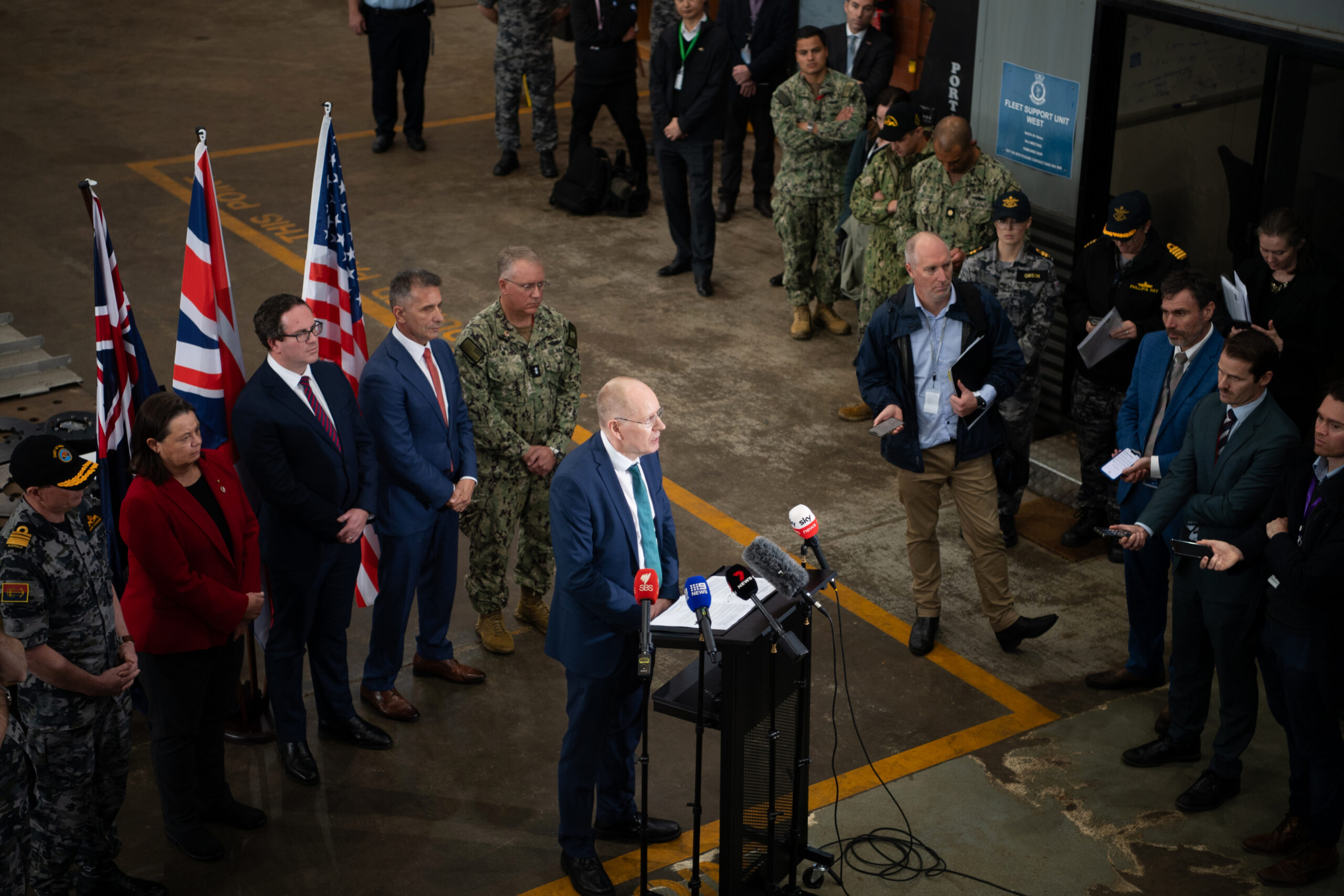
On 20 April, the Department of Defence announced that Australia, the Philippines and the United States recently conducted a Maritime Cooperative Activity (MCA) within the Philippines’ Exclusive Economic Zone. As part of the cooperative activity, The Royal Australian Navy Anzac class frigate, HMAS Toowoomba, and its embarked MH-60R Seahawk helicopter joined with the Philippine Coast Guard Teresa patrol vessel BRP Melchora Aquino; Philippine Air Force FA-50PH Fighting Eagle, A-29B Super Tucano aircraft and personnel from the United States Navy amphibious landing ship USS Ashland to participate in joint exercises aimed to enhance interoperability and readiness. In its announcement of the activity, the Department of Defence affirmed Australia’s commitment to upholding the United Nations Convention on the Law of the Sea as well as the legally binding nature of the 2016 South China Sea Arbitral Tribunal Award.
Also on 20 April, Defence announced that ships from the Royal Australian Navy, Royal Canadian Navy, and United States Navy had conducted a routine multilateral transit through the South China Sea. Several of the ships included in the transit were also involved with the Maritime Cooperative Activity in Philippine waters, such as the Royal Australian Navy Anzac-class frigate HMAS Toowoomba and the United States Navy Whidbey Island-class amphibious dock landing ship USS Ashland. In a statement, the Department of Defence said the transit was in accordance with international law and that “The Australian Defence Force has operated in the region for decades and our vessels and aircraft continue to uphold international law during freedom of navigation and overflight, particularly the United Nations Convention on the Law of the Sea.”
On 20 April, the Department of Defence announced it had joined international security partners for Balikatan in the Philippines. It was evidently a busy week for the HMAS Toowoomba, as in addition to its transit through the South China Sea and its involvement in the Maritime Cooperative Activity, it also took part in the Balikatan Exercises. Balikatan 2026 brings together more than 14,000 personnel from the Philippines, the United States, Canada, France, Japan, New Zealand and Australia. Defence confirmed that Czechia, Lithuania, the Netherlands, Poland and the United Kingdom will participate as international observers, in a move that is said to strengthen multinational collaboration further. The Department said, “Participating ADF elements will train alongside partners in key mission sets, including maritime security, targeting, air and missile defence, cyber defence, and humanitarian assistance.”
Alexandra Desailly is an Australian Outlook Intern at the Australian Institute of International Affairs National Office. She is one of thirty selected for the Young Australians in International Affairs (YAIA) Emerging Leaders Dialogues and the winner of the YAIA Policy Pitch Competition. She holds a Bachelor of International Studies with Distinction from UNSW; her work focuses on European current affairs, national security, and diplomacy.
This article is published under a Creative Commons License and may be republished with attribution.