Recent advocacy by UK Prime Minister, Andy Burnham, for strengthening ties between the United Kingdom and the European Union (EU) correlates with public opinion trends and underlines recalibrated priorities in a world of protracted conflict and uncertainty.
A decade after the 2016 Brexit Referendum, the question of European Integration is back on the table and MPs debated the impacts of the decision on the country and the question of rejoining the European Union in Parliament’s Westminster Hall on 12 October.
It follows two years of growing political will on the issue. The UK was a member of the EU for nearly half a century before it formally exited on 31 January 2020 and a new trade and cooperation agreement with the bloc ensued in 2021, with the years since marked by new restrictions on UK citizens travelling, working, living and conducting trade with most countries on the continent.
Former prime minister Sir Keir Starmer, made the case for ‘resetting’ relations with the EU in 2024 and this year his successor, Andy Burnham, elevated rhetoric about forging a new relationship at last month’s Labour Party Conference. It is significant that this month’s debate was triggered by a public petition, requesting the government take action toward rejoining, containing 111,687 signatures. British public opinion has shift substantially away from the ‘leave’ position in recent years, even among those who originally voted for it. Yet any swing at all was likely to have an impact, given that the Brexit referendum delivered a marginal win for the ‘leavers’ who secured 51.9 percent of the vote, compared to 48.1 percent who wanted to remain. By 2025, 66 percent of respondents in a survey commissioned by the Best for Britain civil society network believed there was urgency to progressing closer relations with the EU. And last month public support for this goal had reached 73 percent, with 59 percent wanting Britain to regain full membership of the bloc and 27 percent of those who had originally voted to be out changing their minds, reported Yougov. Rejoining the EU is also supported by 25 percent of Reform UK voters, according to research by King’s College London.
Brexit’s Economic Costs
There was a large attendance in the Westminster Hall venue with a major turnout of Labour and Liberal Democrat members. Most speeches focussed on the ramifications of Brexit for the British economy, businesses, farmers, the creative industries and youth opportunities. Repeatedly, the increased costs of running a British business, the bureaucratic burden of exporting to the EU and income losses were raised. The UK Office for Budget Responsibility estimates that leaving the EU will contribute to a decline in UK productivity of about 4 percent with imports and exports declining by 15 percent. Liberal Democrat MP Caroline Voaden also highlighted the scale of EU investment in the UK before Brexit, citing “billions of pounds” supporting projects ranging from Cornwall’s Eden Project and Newquay Airport to infrastructure, regeneration and university research.
Conservative MP Sir Bernard Jenkin , offered a counterargument, pointing to growth in UK trade with non-EU markets and arguing that the economy had expanded since 2021. The UK signed a substantial new trade deal with Australia in 2021, for instance, paving the way for British exports worth GBP16 billion in UK exports to Australia in the four quarters to Q3 2025 and, a year later, finalised a new trade agreement with India with British exports totalling GBP20.2 billion last year. Overall, there was a rise in exports to non-EU countries from 57.8 percent of all UK exports in 2015 to 59 percent this year. But EU countries, as a bloc, still represent Britain’s largest core market, accounting for 41 percent of all exports in the 12 months to June this year. And while the UK’s GDP growth rose from 0.3 percent in 2023 to 1.4 percent in 2025, according to the World Bank, there was an overall decline from 3 percent prior to the referendum in 2014.
A Changed Strategic Environment
Speakers were also vocal about the implications of Russia’s escalating war against Ukraine and threats to the global rules-based order. ‘Given the need to reindustrialize our nation, the economic challenges that we face, the need to address irregular immigration and, most fundamentally, the need for democratic and rule-of-law respecting states to pull together and stand up for our values… [we] cannot afford to keep taking small steps away from the disastrous Brexit settlement that we have now,’ Tony Vaughan, Labour MP for Folkestone and Hythe railed. ‘In the minds of many voters, we are in a new world,’ the European Council on Foreign Relations reported two years ago. ‘On issues ranging from Ukraine to China, Brits are reluctant to follow Trump’s lead. They look more to Europe than to America, not just for their economic future and migration, but also for their security,’ stated the report, which also claimed that the sentiment was not all one way with 45 percent and 44 percent of people surveyed in Germany and Poland welcoming closer ties with the UK.
The Road Back to Europe
Former prime minister Tony Blair has also argued that the UK should seek to rejoin the EU within the next decade, while contributing to reform in the Union. A September report by the Tony Blair Institute for Global Change argues ‘The politics that shaped the Brexit debate belong to a different strategic era,’ and that today’s geopolitical environment requires a new approach to how Europe builds the collective capability needed to compete and act strategically.
Britain’s debate reflects a broader tendency for states to rely more heavily on regional institutions amid geopolitical and economic uncertainty. More on what the options could be to pursue that will be revealed by Burnham’s government next month ahead of the next UK-EU summit to be held in Brussels on 20 November.
Catherine Wilson is an Australian independent writer and journalist reporting on current affairs, global issues, politics and geopolitics for the international media with a focus on Europe and the Pacific regions. She has contributed news and analysis to, among others, Al Jazeera, The Diplomat, The Guardian, IPS (Inter-Press Service) news agency, World Politics Review, The Interpreter at the Lowy Institute for International Policy and Responsible Statecraft at the Quincy Institute in Washington. She lived in the United Kingdom throughout the New Labour years from the mid-1990s. Website: https://catherine-wilson.com/
This article is published under a Creative Commons Licence and may be republished with attribution.
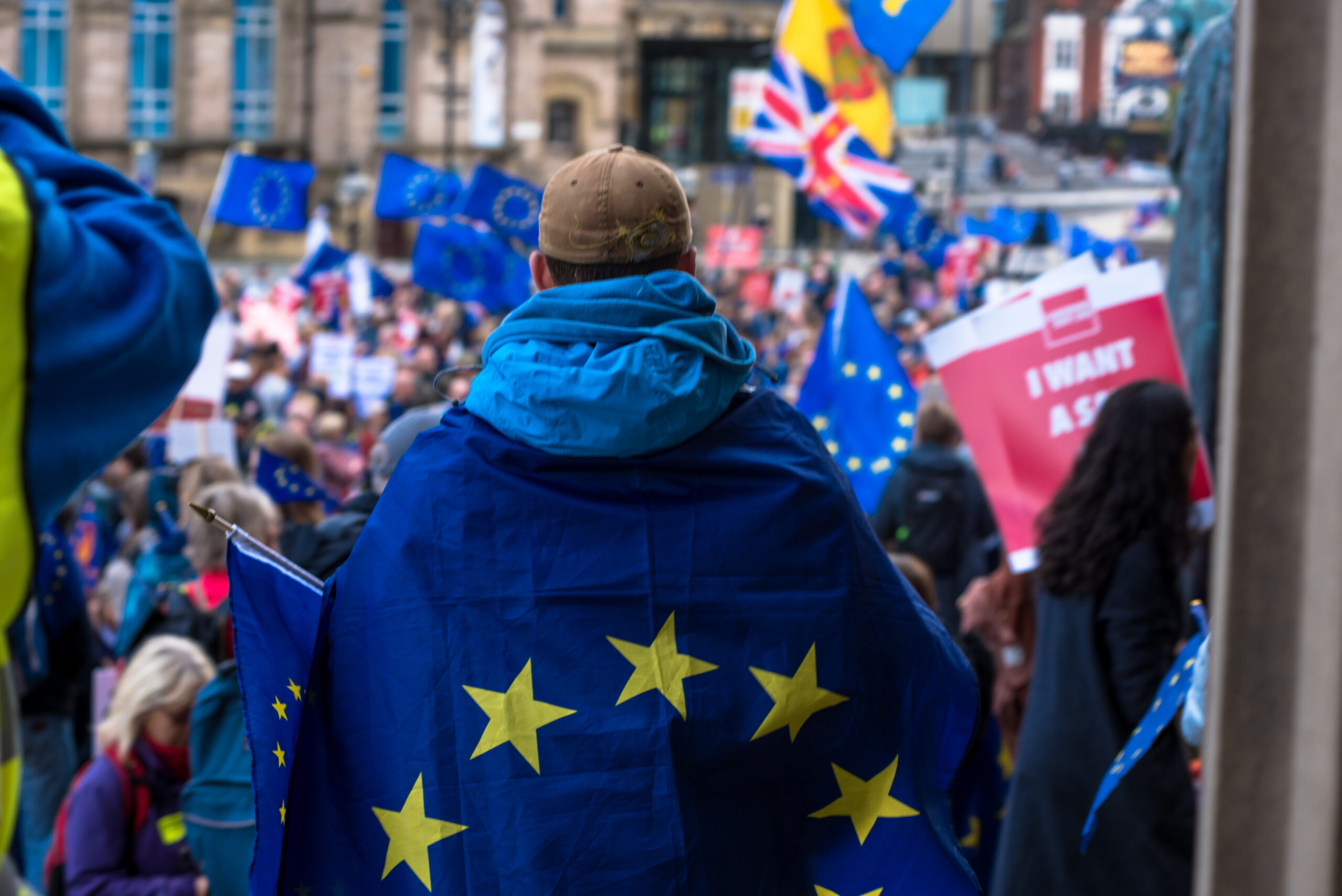
Photo: “Golden stars” by Tim Jokl, CC BY-NC 2.0