Indonesia spends millions fighting fires but almost nothing helping families recover from them. Redirecting a fraction of that money into a ready-made recovery fund could protect livelihoods and reduce future burning at the same time.
This year’s fire season is not over, but its damage is already clear. On 3 October, satellites counted more than 20,000 hotspots across Indonesia in one day. A hotspot is a place much hotter than the land around it, and it often means fire. Much less is said about what happens to families after the fire goes out.
The Cost to Families
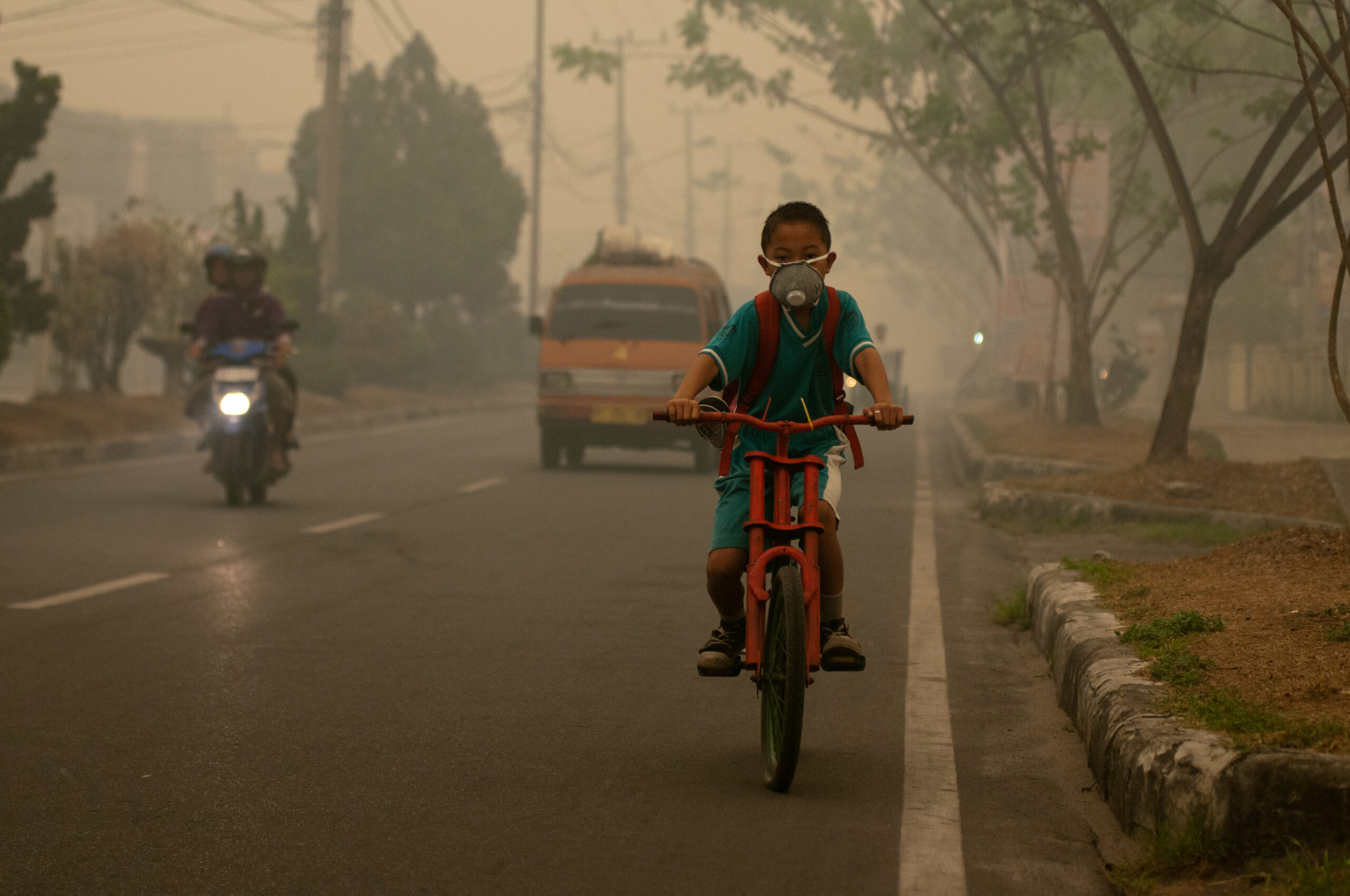
Start with health. In August, the Health Ministry warned that more than 3 million people in 37 districts and cities were breathing the smoke directly. By early September it had recorded more than 50,000 cases of acute respiratory infection linked to the haze, including 12,600 children under five. Reporting by Mongabay found that remote villages often lack access to health services and that Kalimantan has no dedicated specialist lung hospital.
Then count the money. The research group Celios estimated that fires from January to August cost Indonesia between about 2.2 billion and 6.8 billion US dollars, much of it in health costs and lost work. After the 2019 fires, the World Bank put the cost at 5.2 billion dollars. Behind these numbers are a burned rubber garden, a lost rice harvest, and savings spent on medicine.
What happens next matters most. A family that loses its crop and its savings has few choices. Fire is often the cheapest way to clear land and plant again. A study in West Kalimantan found that burning costs about 3 to 5 US dollars per hectare, while clearing by machine costs 150 to 180 dollars. Clearing land by burning is banned under Indonesia’s environmental law, with one exception: families may burn up to two hectares under traditional practice, with firebreaks. So the fire that made them poorer can push them to light the next one. This is a poverty trap, a cycle in which being poor leads to choices that keep people poor.
Three Ways to Help
Help should come in three forms, and it must arrive fast. The first is quick cash. Within weeks of a fire, affected households should receive a simple payment to replace lost income. Indonesia already has the pipes. Its main cash transfer programme for poor families, the Program Keluarga Harapan (PKH), targets 10 million families this year, chosen from the national social and economic database, known as DTSEN. Research shows that PKH has helped poor farming households cope with disasters. Two changes would let it reach fire victims. First, PKH families in districts under a fire emergency should get an automatic extra payment. Second, fire-affected households not yet in the database should be added for a limited time, using lists checked by village heads and social workers.
The second is health care. Mobile health teams should visit burned areas, and treatment for smoke-related illness should be free for people who live there. Children and older people should receive follow-up care when needed, because the effects can last. A study of the 1997 fires found that children exposed to the haze had lower lung capacity at age 10.
The third is paid restoration work. Burned land and dried peat need repair. Peat is deep, wet soil that can burn for weeks once it is drained. Restoring it means blocking drainage canals so water stays in the ground, and planting again. Local people can be paid to do this work. In 2021 the national peat restoration agency involved more than 1,100 community groups in building structures to keep peat wet. Paid restoration turns a loss into income, and it matters because cash alone is not enough. A trial that paid West Kalimantan villages to stay fire-free did not reduce fires, partly because burning is so cheap. Families also need affordable ways to clear land without fire.
Funding Recovery Before the Next Fire
All of this needs money that is ready before the fire, not money that is argued about after it. Indonesia already has a tool. Established under a 2021 regulation, Indonesia’s Disaster Pooling Fund is managed by the Environmental Fund Management Agency under the Finance Ministry and is designed to finance disaster preparedness, emergency response and recovery. By 2026 it had mobilised about 460 million dollars, mostly from the state budget. So far, its reported spending has gone to a preparedness pilot of about 570,000 dollars across four ministries and to insurance premiums for state-owned assets. The Finance Ministry’s latest update on the fund does not mention forest fires or payments to households.
The government should create a standing post-fire recovery window inside this fund. Standing means the money is set aside and ready every year. When fires in a district pass a set level, payments to households would start on their own, without waiting for long approvals. The fund can draw on the state budget, on fines paid by companies whose land burned, and on climate money from abroad. A share of income from forest carbon credits should go here too.
The cost is modest compared with the damage. The Forestry Ministry has estimated that leasing 12 aircraft for fire patrols and water bombing would cost about 86 million dollars a year. A recovery window of the same size could pay about 85 dollars to each of one million affected households, and it would equal less than 4 percent of the lowest estimate of this year’s fire losses. It is also fairer. The families who suffer most from the smoke are often the ones who did least to start it. A family that can recover quickly is under far less pressure to burn. Ahead of COP31, the United Nations climate summit in Antalya next month, Indonesia can show the world that caring for fire victims is part of its climate plan.
Dr Muhammad Zulfikar Rakhmat is a researcher focusing on China-Indonesia-Middle East relations. He holds a B.A. in International Affairs from Qatar University and a M.A. and Ph.D. in Politics from the University of Manchester.
Bhima Yudhistira Adhinegara is Executive Director of Center of Economic and Law Studies (CELIOS).
This article is published under a Creative Commons Licence and may be republished with attribution.
Photo: “Cycling with a mask” by Landscape Alliance, CC BY-NC-ND 2.0