The deadly strike on King Khalid International Airport marks a dangerous turning point in Yemen’s war. With airlines suspending flights and a second energy chokepoint under threat, the conflict’s consequences now reach far beyond the Gulf.
The attack on King Khalid International Airport should not be treated as another missile episode in a conflict that has dragged on for years. According to reports, 12 people were killed and 309 injured when Riyadh’s principal international gateway came under attack on October 10. The death toll included Saudi nationals as well as foreign nationals from seven countries, including an American, adding an international dimension to the tragedy beyond the Saudi-Yemen conflict. The number of casualties among civilians and the international response highlights the gravity of the incident.
The attack also reflects the dangerous return of major fighting in Yemen. Saudi-backed Yemeni government forces have recently advanced around strategically important territory near Bab-el-Mandeb, while Houthi forces have responded through strikes extending beyond Yemen’s borders. The fighting in Yemen and the Iraqi Hejaz’ march are illustrative of how quickly a domestic battle can escalate into a wider regional security issue with international effects.
An Airport Becomes a Strategic Target
The latest strike is even more alarming because it did not occur in isolation. Riyadh airport had already experienced attacks during the preceding days, including incidents that caused casualties and damaged a commercial aircraft. During the previous attacks on Saudi aviation infrastructure, the Houthis said their aim was to shut down the kingdom’s airspace, and international carriers including Lufthansa and Air India suspended flights to Riyadh. Their subsequent warning to airlines and travellers against using Saudi airports made the intent clear.
Civil aviation depends on risk being minimised to an extraordinary degree. When missiles and drones start landing near commercial terminals, the airlines, insurers and regulators react fast. International aviation guidance lists ballistic missiles and surface-to-air weapons among the threats States and airlines must assess before operating civilian aircraft in or near conflict zones. An airport doesn’t need to be utterly destroyed to become strategically vulnerable.
Yemen’s War Goes International
The attack also is significant because of its location. Airports are places where civilians’ movements, confidence and national interests are intertwined. King Khalid International Airport is not a military outpost. It is one of the main access points to a Saudi Arabia which is striving to become a worldwide hub for investment, tourism, aviation and diplomatic activities. By striking it, the Houthis are targeting not only Saudi Arabia but the international travellers, airlines and investors that this hub is meant to attract. Once missile risk becomes a factor for passengers and airlines using a major airport, the implications extend beyond Saudi Arabia. The attack had significant consequences for the functioning of the airport and also for the security of civil aviation in general.
It is a fight that is of global significance, with Bab-el-Mandeb playing a major role in this. The Strait is a narrow channel connecting the Red Sea and the Gulf of Aden, and continues to be a vital trade route. Some 4.2 million barrels of oil and petroleum products transited Bab-el-Mandeb each day in the first half of 2025. Earlier Houthi attacks on Red Sea shipping, which began in November 2023, pushed vessels onto longer, more costly routes around the Cape of Good Hope. The Yemen conflict therefore carries consequences well beyond the Red Sea, including for global energy markets. With Iran’s closure of the Strait of Hormuz already disrupting energy markets, a second chokepoint under threat would compound the strain on global oil supply.
The Economic Cost Cannot Be Ignored
The first financial signals are already visible. Stocks in Saudi fell after the attack in Riyadh. One day of market movement does not set an economy’s direction, but it shows how quickly security events can shift investor sentiment. Under Vision 2030, Saudi Arabia has been working to build stability over the years, all while growing the tourism, logistics, entertainment and international business sectors.
Each attack on Riyadh tests that perception, and the stakes extend well beyond the kingdom. As one of the Arab world’s largest economies and the world’s biggest crude oil exporters, Saudi Arabia’s stability shapes global energy prices, while its investment flows and the remittances sent home by its millions of foreign workers support economies across the Middle East, Africa and South Asia. The kingdom enters this test from a position of relative strength. The IMF has credited Saudi Arabia’s diversification progress and resilient non-oil activity, pointing to strong fundamentals and reform momentum, though it also projects non-oil growth easing. Regional conflict remains a persistent economic risk. This is why protecting Riyadh is now about more than military prestige: security is directly tied to the credibility of Saudi Arabia’s economic transformation and its ambition to become a global hub.
What Comes Next Matters
Pakistan’s response reflects growing international concern. A day before the deadliest strike, Prime Minister Shehbaz Sharif condemned the Houthis’ repeated attacks on Saudi airports, expressed solidarity with Saudi Arabia and called for attacks on civilians to cease. Pakistan’s support for Saudi security is significant because Islamabad has deep political, economic and security ties with Riyadh.
The response has also reached well beyond the region. US President Donald Trump called the attack unacceptable, and Secretary of State Marco Rubio confirmed an American was among the dead. And less than two weeks ago, France deployed military assets in Saudi Arabia to help defend against the Houthis, citing the threat to region’s energy security as a principal concern.
The Riyadh attack should therefore be understood as a warning that the Houthi conflict now has global reach. Missile defence can intercept threats, air strikes can destroy launch sites, and military operations can change territorial control. But none of these alone can restore the confidence on which Riyadh’s economic ambitions and regional security depend.
Sahibzada Usman holds a PhD (Italy) in geopolitics and is currently doing a Postdoctoral Fellowship at Shandong University, China. Dr Usman is the author of a book titled ‘Different Approaches on Central Asia: Economic, Security, and Energy’, published by Lexington, USA.
This article is published under a Creative Commons Licence and may be republished with attribution.
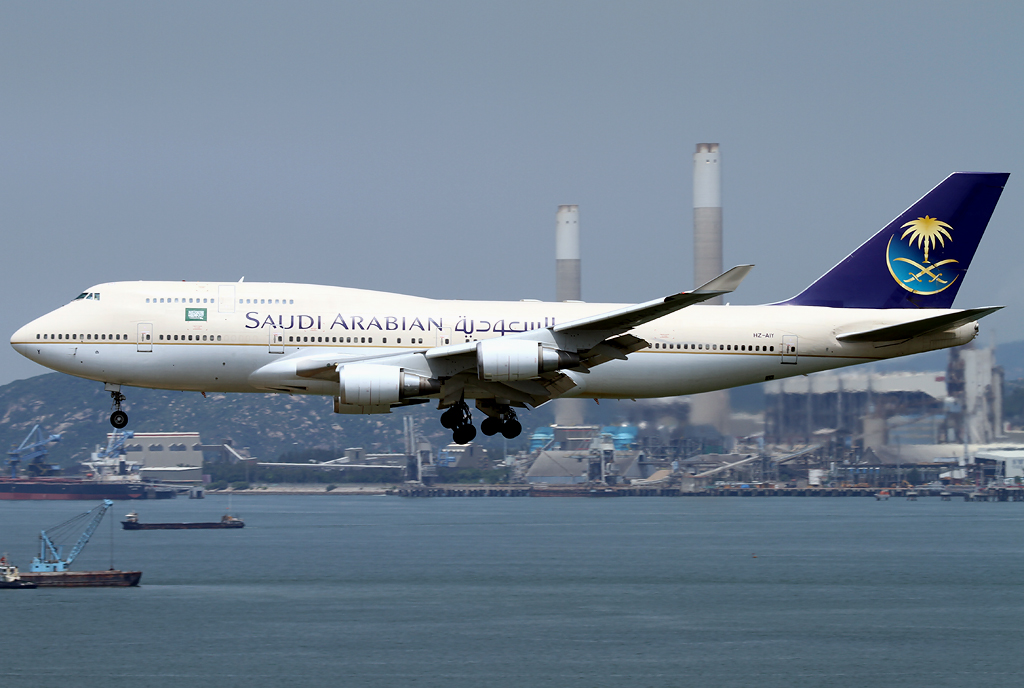
Photo: “B747-400 | Saudia | HZ-AIY | VHHH” by Christian Junker | Photography, CC BY-NC-ND 2.0