India’s place in both BRICS and the Quad looks contradictory only if every relationship is expected to follow one strategic logic. Seen as partnerships with different functions, India’s foreign policy is more coherent than it appears, and easier to engage on its own terms.
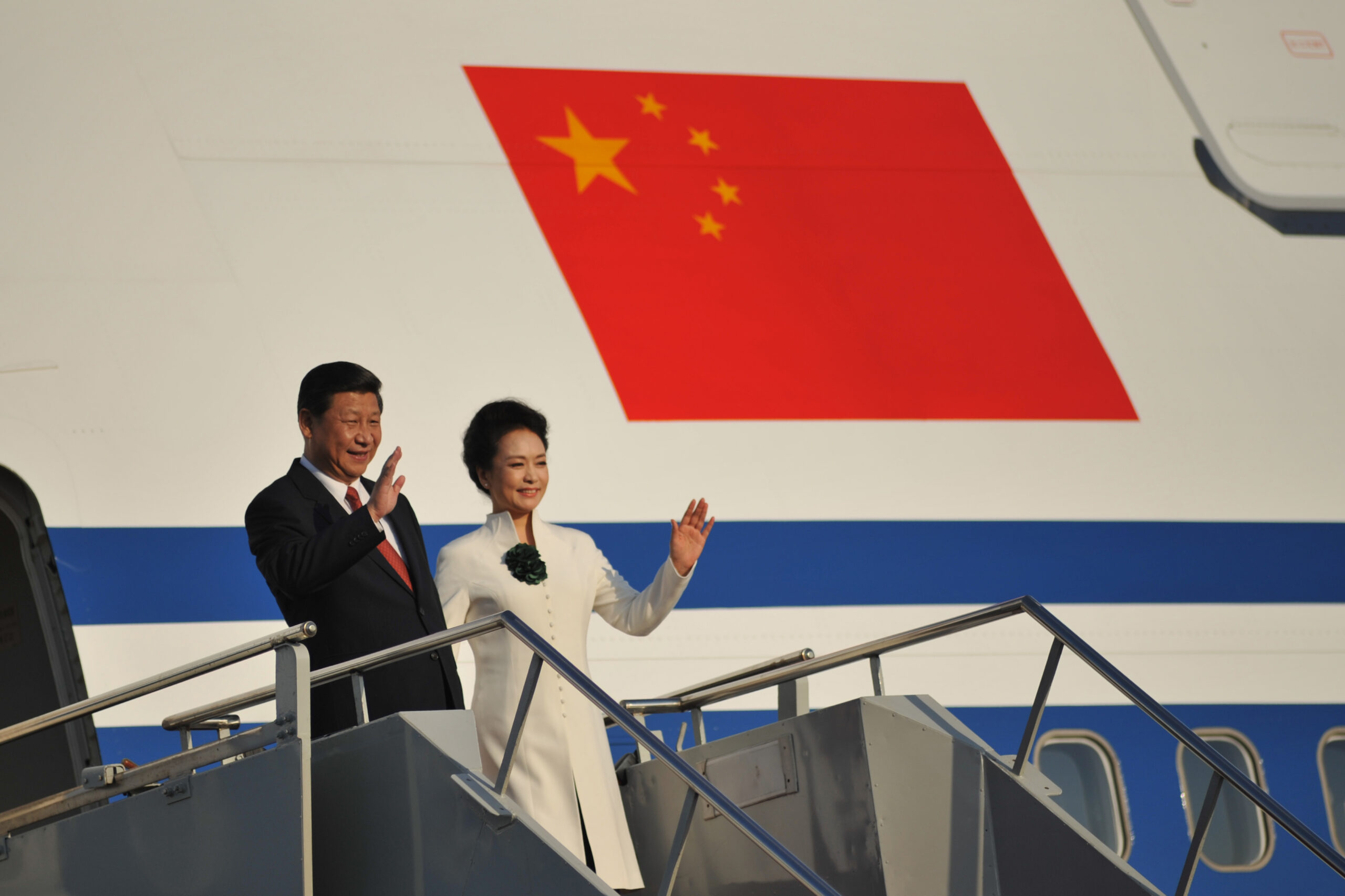
In September 2026, New Delhi hosted the BRICS Summit, bringing together leaders including Vladimir Putin and Xi Jinping. Just months earlier, in May, India’s external affairs minister had met with his American, Japanese, and Australian counterparts at the Quad Foreign Ministers’ Meeting. There, they reaffirmed cooperation on a free and open Indo-Pacific and announced new initiatives on critical minerals and maritime security. To many observers, India’s simultaneous engagement in these two forums appears difficult to reconcile. BRICS seeks to give emerging powers a greater voice in global governance, while the Quad has become an important forum for strategic cooperation among Indo-Pacific democracies concerned about China’s rise.
This apparent inconsistency has become a recurring theme in debates about Indian foreign policy. India is variously described as non-aligned, strategically autonomous, or hedging – labels that each capture something real in its conduct but leave unexplained why its partnerships take such different forms. If India’s choices keep looking contradictory, the problem may lie in the frameworks used to interpret them.
Non-alignment helps explain India’s historical reluctance to join formal alliances, but it is less useful in explaining India’s growing participation in multiple and overlapping security partnerships. Hedging captures India’s desire to keep its options open and avoid excessive dependence on any single partner. Yet it tends to portray Indian behavior as primarily reactive, driven by uncertainty rather than strategic purpose. Strategic autonomy, meanwhile, explains India’s determination to preserve independent decision-making, but says little about the choices India makes with that freedom. Multi-alignment, a term often used in discussions of Indian foreign policy, comes closest, but it describes the breadth of India’s partnerships without explaining the role each one plays. Despite their differences, these frameworks tend to share an assumption that India’s external relationships should ultimately reflect a single organising logic. India’s foreign policy suggests something more complicated.
India’s foreign policy becomes easier to understand once we stop expecting every relationship to perform the same function. The more useful question is whether a particular relationship serves the strategic purpose India assigns to it. With Japan, India has invested heavily in societal ties, historical affinity, and long-term strategic trust. The purpose is not simply security cooperation but the creation of a durable relationship capable of surviving changes in government and shifts in the wider geopolitical environment.
Pakistan calls for a very different set of instruments. Here, Indian policy has increasingly relied on calibrated pressure, strategic denial, and conditional engagement, with deterrence at the center of the relationship. The Quad operates differently again. It relies on flexible coordination rather than formal alliance commitments. Its value lies in strategic signaling, practical cooperation, and capacity-building across areas such as maritime security, critical technologies, and resilient supply chains. BRICS plays a fourth role. It gives India a voice in forums where the Global South negotiates the rules of global order, and a channel to Beijing and Moscow that the Quad cannot offer.
Much of this apparent inconsistency dissolves once we recognise that India is not applying one strategy inconsistently across all of its relationships. It is pursuing a broader foreign-policy purpose through different instruments, each matched to the function India assigns to a particular relationship. Indian foreign policy holds together through consistency of purpose, even as its behavior varies from relationship to relationship. That purpose is preserving India’s freedom to shape its own regional and global position, which is why no single partnership is allowed to define it. India is hardly unique in differentiating among relationships. The difficulty arises when India is judged against alliance-based expectations that assume strategic coherence requires convergence across relationships. That assumption can obscure the logic behind Indian diplomacy and lead policymakers to misread both India’s commitments and its constraints.
Analysts should begin by assessing India’s relationships one by one rather than against a single strategic benchmark. Asking why India does not act like a treaty ally misses what its partnerships are for. A better test is whether each relationship does the job India gave it. A partnership built on long-term trust, as with Japan, should not be judged mainly by how well the two militaries work together. With Pakistan, where India relies on pressure, the test is whether it deters attacks, not whether the two governments get along.
Cooperation also works better when it is designed around the function India assigns to each relationship. Initiatives that assume India will accept binding commitments across multiple domains are likely to encounter limits. The U.S.-India Initiative on Critical and Emerging Technology shows this in practice. Launched in 2023, it succeeded by targeting specific functional domains, including semiconductors, defense co-production, and artificial intelligence, rather than demanding a binding, alliance-style commitment across the board. Aligning expectations with India’s strategic logic does not necessarily narrow the scope for cooperation. It can make cooperation more durable by focusing it on areas where interests and expectations genuinely overlap.
Success, in turn, should be judged by whether the intended function is being achieved rather than by whether India behaves uniformly across institutions or partners. Sustained coordination, reliable signaling, and incremental capacity-building are meaningful outcomes in their own right. The Quad illustrates the point. If its members continue to coordinate on critical minerals, maritime domain awareness, emerging technologies, and other areas of practical cooperation, the grouping can succeed without developing into a formal collective-security arrangement. Expecting it to resemble NATO applies the wrong standard to a different type of institution.
The BRICS Summit and the Quad Foreign Ministers’ Meeting therefore need not be read as evidence of an incoherent foreign policy. India assigns different strategic functions to different relationships and selects diplomatic instruments accordingly. The result is a foreign policy that can look inconsistent when judged by expectations of alignment and convergence, but considerably more coherent when viewed in terms of purpose. Understanding that distinction can make India’s behavior less surprising and cooperation with New Delhi easier to design around what India is actually prepared to do.
Arijit Mazumdar is Professor of Political Science and Director of the International Studies Program at the University of St. Thomas, Minnesota, USA. He is the author of Indian Foreign Policy in Transition: Relations with South Asia (Routledge). His research focuses on Indian foreign policy, soft power diplomacy, Indo-Pacific affairs, and South Asian politics. LinkedIn.
This article is published under a Creative Commons Licence and may be republished with attribution.
Photo: “215461” by Press Information Bureau on behalf of Prime Minister’s Office, India GODL