As global governance becomes increasingly polycentric, Australia has an opportunity to become an institutional connector – linking alliances, minilateral groupings and multilateral institutions across an increasingly distributed international order.
Debate about the changing international order has become preoccupied with multipolarity. The relative power of the United States, China, India, Russia and Europe is shifting, and with it the geopolitical balance that shaped much of the post-war era.
But another transformation is taking place alongside the redistribution of power. Governance itself is becoming more distributed. The international system may therefore be moving towards what I describe as a Polycentric International Order (PIO), an order in which governance operates through multiple, interconnected institutions and coalitions performing distinct or overlapping functions rather than under a single institutional hierarchy.
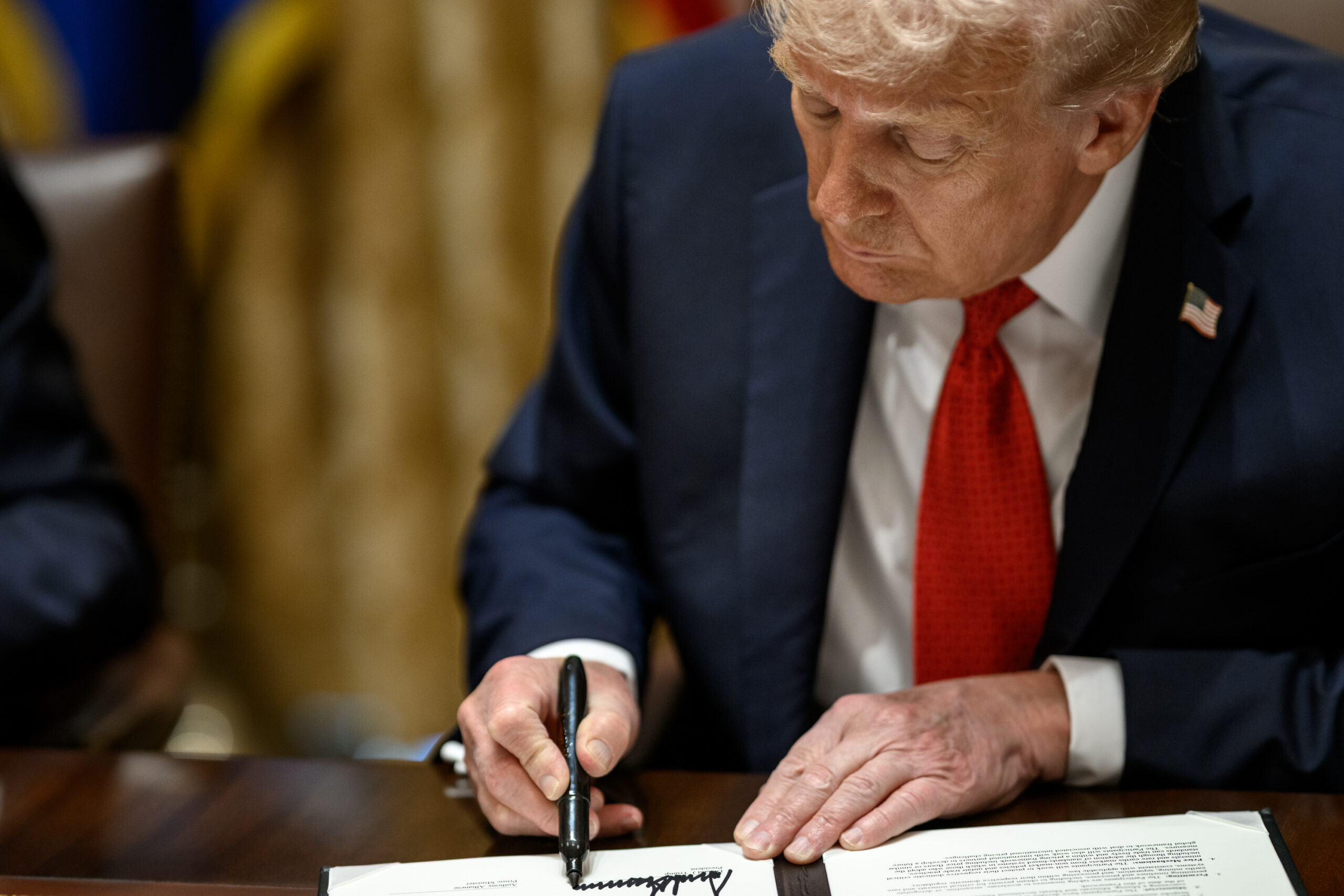
The tensions evident at the 2026 United Nations General Assembly underline the point. Argentina’s President Javier Milei sharply criticised the UN’s effectiveness, questioning its ability to fulfil important responsibilities. US President Donald Trump similarly criticised the organisation’s bureaucracy and challenged international institutions, including the International Criminal Court. Yet both chose the United Nations itself as the platform from which to make their arguments.
This apparent contradiction reveals something important about the emerging international order. The UN remains an important source of legitimacy, diplomacy and universal representation. But when states confront specific problems—from security and critical technologies to supply chains and climate change—they increasingly turn to specialised institutions and smaller coalitions capable of coordinating action around particular objectives.
The result is not necessarily the abandonment of multilateralism, but its diversification.
Power Is Multipolar; Governance Is Polycentric
Polycentricity should not be confused with multipolarity.
Multipolarity describes the distribution of power among states. Polycentricity describes the distribution of governance across institutions.
A world can become more multipolar geopolitically while simultaneously becoming more polycentric institutionally.
The idea draws from Elinor Ostrom’s work on polycentric governance, which demonstrates how multiple centres of decision-making can operate within a common system without requiring a single hierarchical authority.
It also shares some ground with Amitav Acharya’s conception of a multiplex world order, characterised by multiple consequential actors, overlapping institutions and diverse centres of influence. The distinction here is one of analytical focus. Multiplexity offers a broader account of a changing international order, while PIO focuses specifically on how governance is distributed across institutions and coalitions performing different, sometimes overlapping functions—and how states navigate and connect these arrangements.
Consider security. The UN has retained important humanitarian, diplomatic and normative roles in Ukraine, while military assistance and training have been organised through NATO, the European Union and individual governments. Different institutions address different dimensions of the same crisis.
Artificial intelligence presents another example. The UN’s Global Digital Compact provides a framework for international cooperation, while the OECD’s AI Principles influence national policy approaches. Governments, regulatory bodies and technical organisations develop their own standards and implementation mechanisms. Governance is consequently distributed across institutions with different memberships, responsibilities and instruments, rather than being directed by a single global authority.
Climate governance operates similarly. The Paris Agreement establishes a universal framework, but implementation depends upon nationally determined commitments, domestic policies, development finance, private investment and regional initiatives. Different centres of authority undertake complementary responsibilities rather than relying upon a single institution to deliver every outcome.
States are not abandoning multilateralism. They are diversifying it.
Australia Is Already Operating Polycentrically
Australia provides a clear example of how this emerging order works.
For universal diplomacy and legitimacy, Canberra operates through the United Nations. Its core security relationship remains its alliance with the United States. AUKUS provides a specialised mechanism for advanced defence capabilities and technology cooperation. The Quad connects Australia with India, Japan and the United States across maritime security, technology and regional public goods.
ASEAN-led institutions provide a broader architecture for engagement with Southeast Asia, while the Pacific Islands Forum performs a different regional function. Five Eyes occupies another specialised space in intelligence cooperation.
These arrangements are sometimes viewed as overlapping, or even competing, expressions of bilateralism, minilateralism and multilateralism. A polycentric perspective suggests another interpretation: they perform different functions within an increasingly distributed governance system.
Australia therefore does not need to choose between multilateralism and minilateralism. It needs to become more deliberate about how the two interact.
This is particularly important for middle powers. Countries such as Australia cannot shape the international order through military or economic weight alone. Their influence also derives from the ability to operate across institutional networks, build coalitions around particular problems and connect institutions that might otherwise function separately.
India offers an instructive parallel. New Delhi simultaneously participates in the Quad, BRICS, Shanghai Cooperation Organisation, G20 and United Nations while promoting specialised initiatives such as the International Solar Alliance.
This is usually interpreted as strategic autonomy or multi-alignment—maintaining relationships with different, sometimes competing, powers and groupings without exclusive dependence upon one strategic bloc. But it also reflects an international environment in which different institutions increasingly serve different strategic purposes.
Australia and India approach international politics from different strategic traditions, yet both demonstrate the value of institutional flexibility.
Australia as an Institutional Connector
The policy implication for Canberra is not simply to join more groupings.
Australia should increasingly position itself as an institutional connector.
This means using its membership across different organisations to link their priorities, resources and initiatives, allowing specialised coalitions and broader multilateral institutions to reinforce rather than duplicate one another.
Australia’s role in preparations for COP31 provides a practical illustration.
Under the COP31 arrangements, Türkiye will host the November 2026 summit, while Australia serves as President of Negotiations. Working with Pacific Island countries, Canberra is seeking to elevate Pacific climate priorities within the global negotiating process.
The Pacific Pre-COP meeting in Fiji in October 2026, co-hosted by Fiji, Tuvalu and Australia, brought together representatives from more than 50 countries to advance discussions on climate finance, clean energy and the concerns of vulnerable states.
This illustrates institutional connectivity in practice: Australia is helping bring priorities developed through Pacific cooperation into the UN’s universal climate-negotiating framework.
A similar opportunity exists in regional security and infrastructure.
At their May 2026 meeting, Quad foreign ministers announced cooperation with Fiji on port infrastructure while reaffirming support for the Pacific Islands Forum and Pacific-led regional institutions.
Australia’s participation in both the Quad and Pacific regional arrangements creates an opportunity to connect these initiatives more deliberately. Quad resources and technical capabilities could be aligned with Pacific-defined infrastructure priorities, ensuring that specialised partnerships complement rather than bypass established regional mechanisms.
The broader principle is straightforward: institutional connectivity requires more than simultaneous membership. It requires coordination between institutions possessing different capabilities, constituencies and sources of legitimacy.
Australia could apply this approach more systematically by connecting AUKUS and Quad technology cooperation with wider Indo-Pacific priorities, strengthening links between Pacific regional institutions and global governance mechanisms, and working with countries such as India, Japan, Indonesia and South Korea to bridge smaller coalitions with broader multilateral frameworks.
There are risks. Polycentricity can produce institutional duplication, competing standards and geopolitical fragmentation. Minilateral arrangements can also become exclusive blocs rather than complementary mechanisms.
The objective should therefore not be to replace universal institutions with smaller coalitions. It should be to improve interoperability between different centres of governance—ensuring that their policies, standards and initiatives can work together where interests converge, while preserving the particular advantages each provides.
The UN remains essential precisely because no minilateral grouping can replicate its universal legitimacy. But universal legitimacy does not automatically provide operational effectiveness. Smaller institutions and coalitions can supply specialised capabilities and focused cooperation that universal bodies may struggle to deliver.
Australia’s advantage lies in being deeply embedded in both worlds.
Beyond a Monolithic International Order
The debate about international order therefore needs to move beyond the question of whether the future will be unipolar, bipolar or multipolar.
Those concepts tell us where power resides. They tell us less about how an increasingly complex world will actually be governed.
The international system is not becoming post-state or post-multilateral.
It is becoming post-monolithic, meaning governance is no longer expected to operate predominantly through a single institutional centre, but increasingly through multiple institutions and coalitions with different functions, capabilities and memberships.
For Australia, the strategic opportunity lies not in choosing one institutional centre over another, but in becoming better at connecting them.
Parag Amalnerkar is an independent strategic affairs analyst and a Master’s candidate in Defence and Strategic Studies at Rashtriya Raksha University, India’s National Security University. His research interests include conflict and deterrence, emerging military technologies, and the evolving global security order. His work has been published by the Vivekananda International Foundation and The Eastern Strategist.
This article is published under a Creative Commons Licence and may be republished with attribution.
Photo: “London 11-08-2012” by Karen Roe, CC BY 2.0