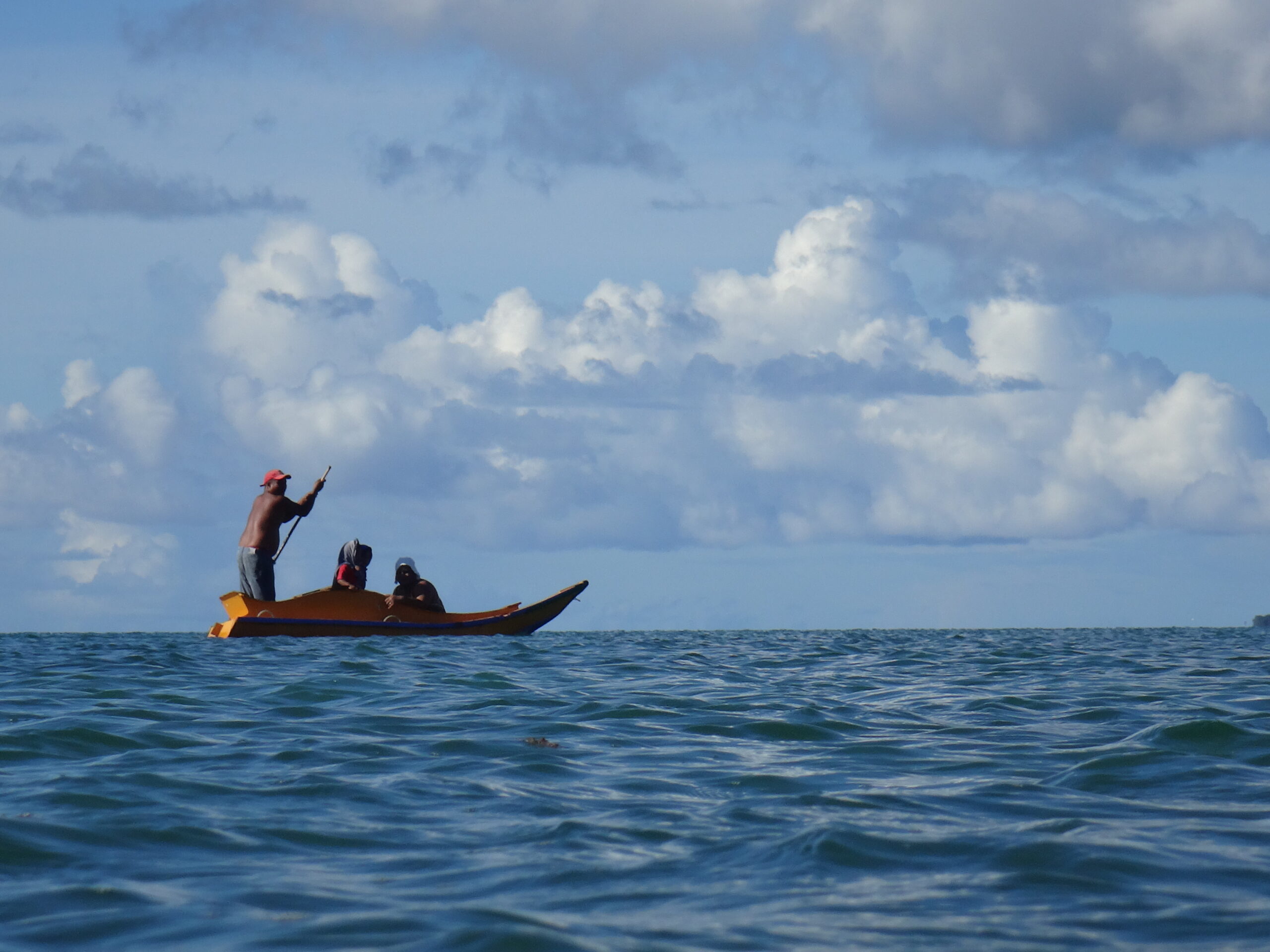
The Palauan saying “The land is our mother and the ocean is our father” offers a way to rethink climate responsibility. Its emphasis on care and intergenerational relationships invites a broader understanding of environmental loss and how countries should share the burden of responding.
In mid-October, Palauan President Surangel Whipps Jr. visited Australia for the official opening of Palau’s embassy. During his visit, he delivered a speech at the Australian National University titled “The Blue Pacific: Leadership in a Changing World”. Describing the Pacific as a region of “big ocean states”, he emphasised the importance of their ocean stewardship for the wider world. Drawing on the Palauan saying “The land is our mother and the ocean is our father”, he spoke of responsibility towards nature and future generations. His calls for stronger climate action, accessible climate finance and respect for Pacific sovereignty invite us to consider what this relationship with nature means beyond Palau.
Learning to Care for Land and Sea
Former First Lady Debbie Remengesau invoked this proverb in an interview about the Palau Pledge, connecting visitors’ behaviour with environmental protection and responsibility towards future generations. Kenley Rudimch-Kenneth, a former fellow of the Alliance of Small Island States, has also discussed how this worldview informs his engagement with climate diplomacy. Expressed in Palauan as “A daob a demad ea beluu a delad”—the ocean is our father and the land is our mother—the saying offers a way of understanding the relationships that sustain life and the responsibilities they carry.
These relationships can also be understood through Palauan traditions of child-rearing. Palau’s initial report to the United Nations Committee on the Rights of the Child, published in 2000, identifies respect, or omengull, as a fundamental cultural value encompassing other people, the land, the sea and all living things. Former Speaker of the House of Delegates Noah Idechong has similarly described how Palauans learn from childhood to care for the sea, which sustains their food, traditions and identity. These accounts show how environmental care can be embedded in family and community life. They invite us to understand land and sea through relationships of belonging and responsibility.
Three Lessons for Climate Responsibility
This worldview may not be shared by every culture or tradition, but it offers three useful starting points for thinking about climate change.
First, it draws attention to our dependence on nature. We inhabit different lands, but the ocean connects our world. Even those who live far from the coast depend on the ecological systems that sustain life across land and sea. Together, these systems provide food and oxygen, regulate the climate and support our livelihoods. Describing land and ocean as parents expresses this dependence in familiar terms of kinship: our lives are sustained by something beyond ourselves. Environmental protection therefore concerns the conditions that allow us to live and flourish.
Second, recognising this dependence invites us to consider how we should respond to what sustains us. The idea of omengull offers a starting point for thinking about respect as a responsibility expressed through action. If we draw nourishment and support from land and sea, we should also consider whether our activities allow them to continue supporting other people and other forms of life. Care requires restraint, including a willingness to limit exploitation even when further extraction might bring immediate benefits. This responsibility also extends across generations. How we use land and sea today shapes whether our descendants can continue to depend on them and maintain their own relationships with them.
Third, this kinship perspective can inform how we understand international climate responsibility, including responses to loss and damage. Where land and sea sustain livelihoods, identity and relationships across generations, environmental destruction involves losses that cannot be fully captured by financial valuations. Damage to a coastline, for example, may affect both the resources available to a community and its ability to maintain practices and connections associated with that place.
Our shared dependence on nature does not mean that climate responsibility should be distributed equally. Countries differ in their contributions to climate change, their exposure to its consequences and their capacity to respond. Small island states such as Palau face serious risks despite their limited contribution to global emissions. Countries that have contributed more to the problem and have greater resources should therefore carry a larger share of the response. Reducing emissions and supporting affected communities can be understood as responsibilities arising from harm and capacity. Kinship language helps explain why these losses matter, even to audiences who do not themselves regard land and sea as parents.
Kinship Across Communities
Similar expressions appear in other Indigenous contexts, although their meanings remain rooted in particular histories and traditions. On Australia’s southern coast, the Mirning community’s account of the Yinyila Nation describes yoola, the land, as mother and billia, the sea, as father, within a relationship guided by traditional law, customs and Dreaming knowledge. In Honduras, Garifuna activist Alfredo Lopez has connected the same parental imagery with Garifuna identity, farming, fishing and collective relationships with land.
Research on traditional fishing knowledge among elders in Kiribati also records parental understandings of nature, with the parental roles reversed: the sea is described as mother and the land as father. An event description for the 13th Festival of Pacific Arts and Culture likewise used parental imagery in a discussion of climate change and the Torres Strait, which included the Torres Strait 8’s climate advocacy. These examples do not establish a single shared Indigenous worldview. They do, however, show that understanding nature through kinship resonates across different communities and can give environmental responsibility a deeply personal meaning.
If the land and ocean are our parents, what does it mean to care for them when they are unwell? As COP31 approaches, this question offers a way to reflect on what countries bring to climate negotiations. Shared concern must be expressed through action, with responsibilities that reflect countries’ contributions to harm and their capacity to respond. Stronger emissions reductions, accessible climate finance and support for affected communities are practical ways to fulfil those responsibilities.
Environmental harm continues while negotiations proceed. The value of those discussions will depend on whether they enable people to care for the places and relationships that sustain them. The Palauan proverb asks us to recognise what land and sea have given us, and what we owe to those who will depend on them after us.
Stephen Hiu-fung Kei is a Hong Kong-born researcher and communications practitioner based in Sydney, with academic backgrounds in international relations and Asia-Pacific affairs from The University of Queensland and National Sun Yat-sen University. His research focuses on Pacific diplomacy, decolonisation, identity politics, and Taiwan–Pacific relations. He currently works in governance research and has written on Pacific naming politics, climate diplomacy, and regional sovereignty.
This article is published under a Creative Commons Licence and may be republished with attribution.
Photo: “fishing” by sandwich, CC BY-NC-ND 2.0