The principle of differentiated responsibilities was designed to protect the vulnerable, not shield the profitable. Extending it to fossil fuel production is the next test of whether climate architecture can match the climate reality and ascertain those most responsible.
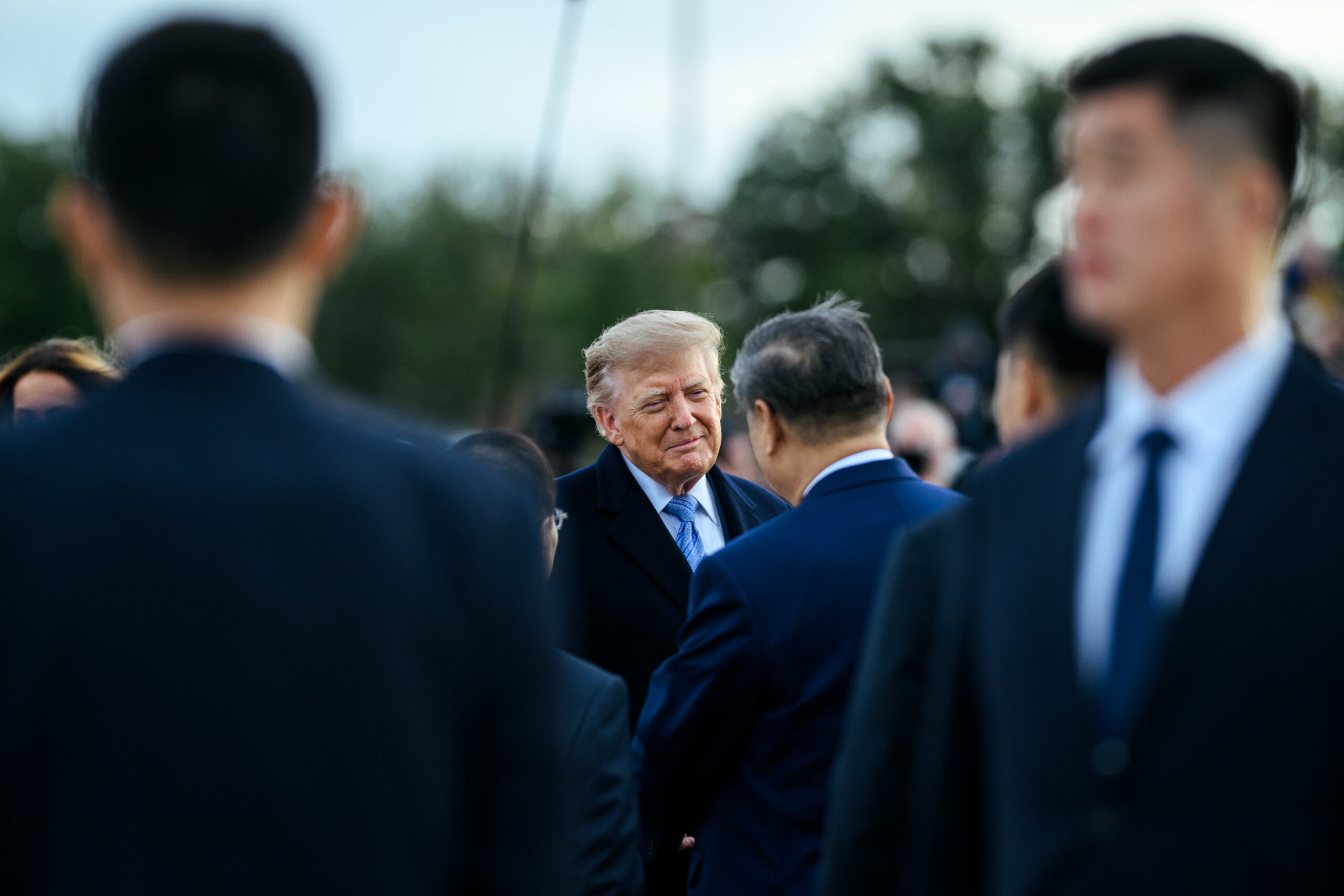
President Donald Trump recently directed $425 million in upgrades to 13 coal-fired power plants, aimed at shipping coal to Asia. His Energy Department also finalised up to $350 million in previously announced funding for four coal facility projects.
The US under President Trump has not only slashed climate finance but it has also vacated its seat on the Green Climate Fund. At the outset of his term, Trump declared “drill, baby, drill,” a slogan that captures his administration’s broader posture: climate change is not a serious threat, and fossil fuel extraction is a matter of national security. The latest coal funding package reflects this logic directly, framed around electricity demand for AI data centres and reducing reliance on other countries.
Implications Globally
For the Global North, this is indeed a worrying sign. The US along with the rest of the developed world is responsible for the highest historical emissions. These industrialised countries developed on the back of carbon emissions generated and caught in the environment as the result of the industrial development powered by burning fossil fuels. Today the climate crisis the world is confronted by, especially the Global South, is courtesy of these historical emissions. The US alone has been responsible for roughly a fifth of all cumulative CO2 emissions since 1850, with the EU adding another 12 percent, making the developed world responsible for the overwhelming share of emissions now driving the climate crisis.
At a time in history when the world is increasingly becoming hotter, with erratic weather patterns, floods, hurricanes and droughts devastating the world especially the countries in the global south, the move by developed countries like the US to expand fossil fuel production reflects not only historical ignorance but a complete and utter disregard for humanity and the planet. A recent study found that a single day of extreme heat causes about 3,400 excess deaths across India, while a five-day heatwave causes nearly 30,000. These are the costs being borne by countries that did the least to cause the crisis.
Fossil fuel phase outs are now the only way forward if we wish to keep the planet safe for disadvantaged people in the Global South. But the way these phase outs will be carried out is debatable and calls for discussion.
Fossil Fuel Producers and Their Phase-Out Governance
Fossil fuel producers can be broadly classified in three categories. First are rich developed OECD countries like the US. Their per capita and historical emissions are the highest and they used fossil fuels to reach this stage of development.
Norway, which holds the world’s largest sovereign wealth fund built on oil revenues, awarded 53 new offshore exploration licenses in early 2025 and has refused to adopt a phase-out target, committing instead to expanded drilling in its offshore Arctic region. The 23 developed countries responsible under the UN climate convention for providing climate finance to the developing world spent $378 billion supporting fossil fuels in 2023. For these countries, a credible governance strategy means setting firm deadlines to stop issuing new coal, oil, and gas licenses rather than vague promises; redirecting the $378 billion currently spent supporting fossil fuel production and consumption toward renewable infrastructure at home; and scaling up climate finance commitments, including the long-delayed Loss and Damage Fund, to levels that match their historical responsibility.
Second are petrostates which have two categories. There are rich Gulf petrostates whose economies are dependent on oil revenues, with high per capita emissions compared to a global average of 4.7 tonnes per capita. For example, Qatar’s per capita emissions stand at around 45 tonnes with Saudi Arabia at 17 tonnes and UAE at around 19 tonnes. Moreover, these countries have substantial sovereign wealth funds built on hydrocarbon revenues. Saudi Aramco alone was responsible for 1.7 billion tonnes of CO2 in 2024. Gulf sovereign wealth funds — Saudi Arabia’s Public Investment Fund, Kuwait’s Investment Authority, among them — collectively manage trillions of dollars built on hydrocarbon revenues. An overnight halt to production is economically unrealistic given their heavy reliance on oil and gas revenues. However, these revenues and financial buffers give them both the capacity and the obligation to do more. While diversification efforts are underway, including Saudi Vision 2030, significant gaps remain: continued approval of new oil and gas projects, including ADNOC’s $150 billion expansion targeting 5 million barrels a day by 2027 alongside high overall production levels and insufficient alignment with global 1.5°C pathways. A credible contribution from rich Gulf petrostates should include accelerating economic diversification away from fossil fuel dependence, halting new expansion, and ramping up domestic renewable energy deployment.
The second category are oil-dependent developing economies for whom oil revenues are crucial to sustain basic governance and public services. Countries like Nigeria, with per capita emissions around 0.5 to 1.5 tonnes, face a fundamentally different situation. From a climate justice and economic angle, their phase outs and transition cannot be treated the same way.
And then there are countries which are not dependent on fossil fuel revenues to run the country, but fossil fuels play an important role in their development goals. Countries like India or Pakistan for example cannot be expected to halt the use of coal or gas at the same pace as wealthy economies as they are still in their early development stages and fossil fuels remain central to their near-term growth and development trajectory. For example, coal alone still provides almost 79 percent of India’s domestic energy supply. For them, it is vital to gradually phase out fossil fuels and the developed world must fund the transitions in these countries to invest in cleaner production and renewables.
China occupies a distinct category as the world’s largest annual emitter, but also the world’s largest investor in renewable energy. In 2025 alone, it installed a record 315 gigawatts of solar power and 119 gigawatts of wind power. Yet coal remains central to its energy security, in part because it is the one major fuel China does not need to import. Given its economic scale and technological capacity, the same expectation applied to other major emitters should apply here too: halt further coal expansion and use its position as the world’s leading renewable energy investor to fund clean energy transitions both at home and abroad.
Hence, what we need is a climate justice lens based on equity and fairness for phasing out fossil fuel production. The principle of Common But Differentiated Responsibilities and Respective Capabilities (CBDR-RC), formalised in Article 3 of the 1992 UN Framework Convention on Climate Change at the Rio Earth Summit has long governed consumption-side obligations. But it is largely silent on production responsibility.
New International Frameworks
One promising framework for this is the Fossil Fuel Non-Proliferation Treaty (FFNPT). Modelled on the nuclear non-proliferation framework, it proposes three pillars: ending new expansion, managing the orderly decline of existing production, and financing a global just transition. Crucially, it embeds equity by sequencing commitments according to capacity, historical responsibility, and development needs. For lower-capacity ones, it provides a structured transition rather than sudden disruption.
The world cannot afford expansion of fossil fuels especially by the Global North, especially when the adverse impacts are increasingly being borne by countries in the Global South. A just climate transition must have differentiated responsibilities, and the onus for that transition must not lie disproportionately on the global south. It is time for the US and the developed world to take that responsibility.
Jawad Khalid is a climate finance and policy specialist based in Pakistan. He has written on geopolitics, climate justice and the political economy of the global south, with articles appearing in the South China Morning Post, Lowy Institute’s Interpreter, Asia Times, among others.
This article is published under a Creative Commons license and may be republished with attribution.