Indonesia’s 2026 fire season was forecast months in advance, yet the haze still caught the state unprepared. When smoke crosses borders, ASEAN can no longer treat accountability as a purely national matter.
Smoke does not respect sovereignty. Neither should accountability. When forest and land fires in Indonesia send hazardous haze across national borders, the consequences are no longer confined to Indonesia. They are borne by neighbouring societies whose citizens breathe the pollution, whose schools are disrupted, and whose economies absorb the costs.
Yet Southeast Asia continues to approach this recurring crisis as though it were an unavoidable feature of the dry season. It is not. The risks are predictable, the warnings are available, and the tools for prevention exist. What remains in question is whether the political will to act exists before the fires begin.
This year, the warning could hardly have been clearer. Indonesia’s Meteorology, Climatology, and Geophysics Agency (BMKG) had already warned months in advance that 2026 would bring an unusually challenging dry season. Its March forecast predicted that 64.5 per cent of Indonesia’s seasonal zones would experience below-normal rainfall, while 61.4 per cent were expected to reach their dry-season peak in August. By June, BMKG was also warning of increasingly significant El Niño conditions.
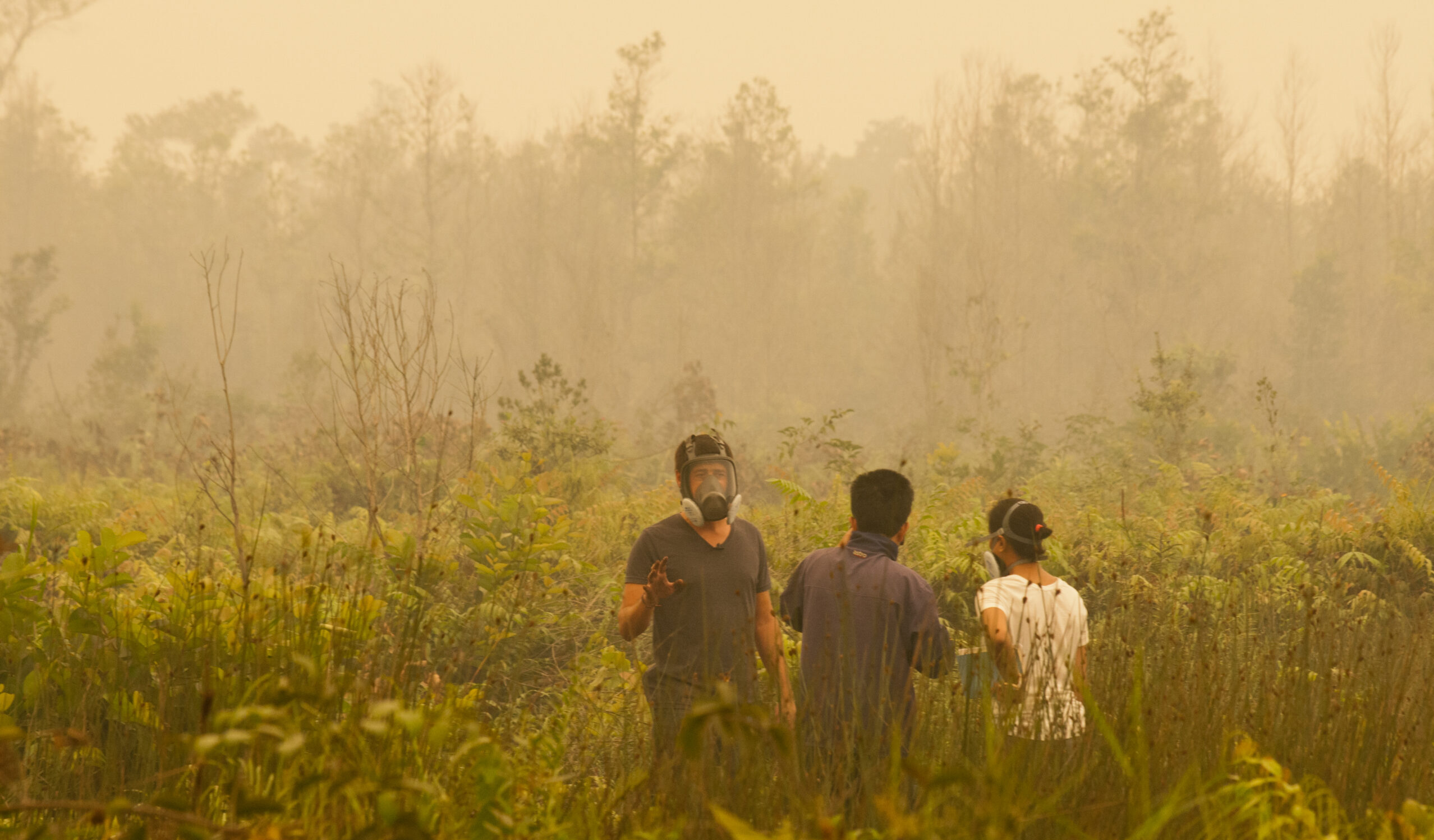
By late August, those warnings had materialised. National Disaster Mitigation Agency (BNPB) reported hundreds of high-confidence hotspots across Kalimantan, with particularly sharp increases in West and Central Kalimantan. Smoke was already being detected across several provinces, with winds capable of carrying it beyond the immediate fire zones. ASEAN’s own haze-monitoring centre subsequently activated Alert Level 3, the highest transnational alert that can be issued, after detecting widespread moderate-to-dense haze originating from hotspot clusters in Kalimantan and drifting northward across the region.
The scale is no longer trivial. Nearly 95,000 hectares were reported burned in July alone, while more than 9,000 hotspots were detected in August—exceeding the number recorded during the same period in 2015. Satellite-based estimates also put Indonesia’s fire-related carbon emissions at 19.7 million metric tons in a single week.
This is precisely why I find the government’s response so frustrating. The problem was not invisible. The risk was not unknown. The warnings existed. Yet the state still appeared to behave as though the fire had arrived without an appointment. That is a failure of preparedness, not simply a failure of weather.
Particularly concerning is the apparent willingness to preserve normal administrative routines even when the air itself becomes hazardous. A controversy erupted in Central Kalimantan after a school-official meeting discussed the consequences of closing schools because of haze, including the possibility that MBG—Indonesia’s Free Nutritious Meals programme—and school canteens would stop operating. Eventually, schools in affected areas were shifted to remote learning; by September 2, approximately 1.4 million students across six provinces had moved to online learning because of hazardous air quality.
There is something profoundly concerning about allowing administrative considerations to delay measures intended to protect children from hazardous air. When public policy begins treating the continuity of a programme as more important than the lungs of children, priorities have become inverted. A meal programme can be postponed. A school schedule can be rearranged. Damaged lungs are not so easily rescheduled.
And then comes the spectacle of firefighting itself. Indonesia has deployed thousands of military personnel to support fire detection, patrols, and suppression. In Way Kambas, 40 members of the TNI’s Tim Alfa were actually parachuted into difficult-to-reach fire zones. Meanwhile, firefighters on the ground have sometimes had to rely on remarkably basic equipment. In one operation, officers reportedly used portable spray tanks and wooden beaters because the terrain was difficult and nearby water sources were unavailable.
You can’t help but wonder if this what a modern state’s disaster-management capacity is supposed to look like. Soldiers descending from the sky while people on the ground beat flames with pieces of wood sounds almost surreal. It would be almost comical if the consequences were not so serious.
To be fair, the soldiers and police deserve recognition for doing dangerous work under extreme conditions. The criticism should therefore be directed upward, toward the system that places frontline personnel in situations where courage is expected to compensate for inadequate preparedness, equipment, infrastructure, and prevention.
The ASEAN dimension makes the matter even more serious. ASEAN members signed the ASEAN Agreement on Transboundary Haze Pollution precisely because forest and land fires can create consequences beyond national borders. The agreement seeks to prevent, monitor, and mitigate transboundary haze through national action and regional cooperation, and every ASEAN member has ratified it.
If Indonesian fires repeatedly produce hazardous pollution across borders, neighbouring countries should not be expected merely to issue polite statements and wait for the wind to change. ASEAN needs stronger mechanisms for accountability: transparent attribution of pollution sources, mandatory disclosure of responsible companies and concessions, emergency cooperation, liability for negligent actors, and a credible framework for compensation when transboundary damage can be demonstrated.
This is not about humiliating Indonesia. It is about making sovereignty come with responsibility. A country should have the right to manage its own territory, but it should not have the right to export the consequences of that mismanagement to its neighbours without accountability.
And while Indonesia was confronting a domestic environmental crisis, President Prabowo Subianto travelled to Vladivostok on September 1 to attend Russia’s Eastern Economic Forum as its principal guest of honour. International diplomacy is certainly important. But leadership is also about demonstrating that when your own people are choking on smoke, the crisis at home commands your attention.
The strongest criticism is that Indonesia’s leaders appear not to have acted with the urgency the situation demanded. The warnings were there. The dry season was predicted. The hotspots multiplied. The smoke crossed borders. Children were forced out of classrooms. Firefighters struggled on the ground. And still, the response often seemed reactive rather than anticipatory.
ASEAN can no longer treat transboundary haze as an annual inconvenience. Surrounded by an enormous crisis, it has too often acted as if the problem were limited to what lies within its own borders. When the smoke crosses borders, responsibility must cross borders too.
Alek Karci Kurniawan is an environmental policy analyst with over seven years of professional experience. Delegate to the International Youth Forum on Sustainable Development at the United Nations. Completed specialized studies in Sustainable Development of Rural Communities in Wuhan, China, and a short course in Environmental Economics at the University of Michigan. Published analytical articles in international media outlets, including The Japan Times, Asia Times, New Europe, Diplomat Magazine, The Independent Observer, and The Daily Californian. Currently pursuing a master’s degree at Khon Kaen University, with a research focus on the intersection of international affairs, environmental economics, and sustainable development.
This article is published under a Creative Commons License and may be republished with attribution.