Singapore and Thailand are preparing a multi-year agenda for their successive ASEAN chairmanships. An undertaking from the incoming chair could affect which negotiations its predecessor begins, although the public agreement does not establish that this has happened.
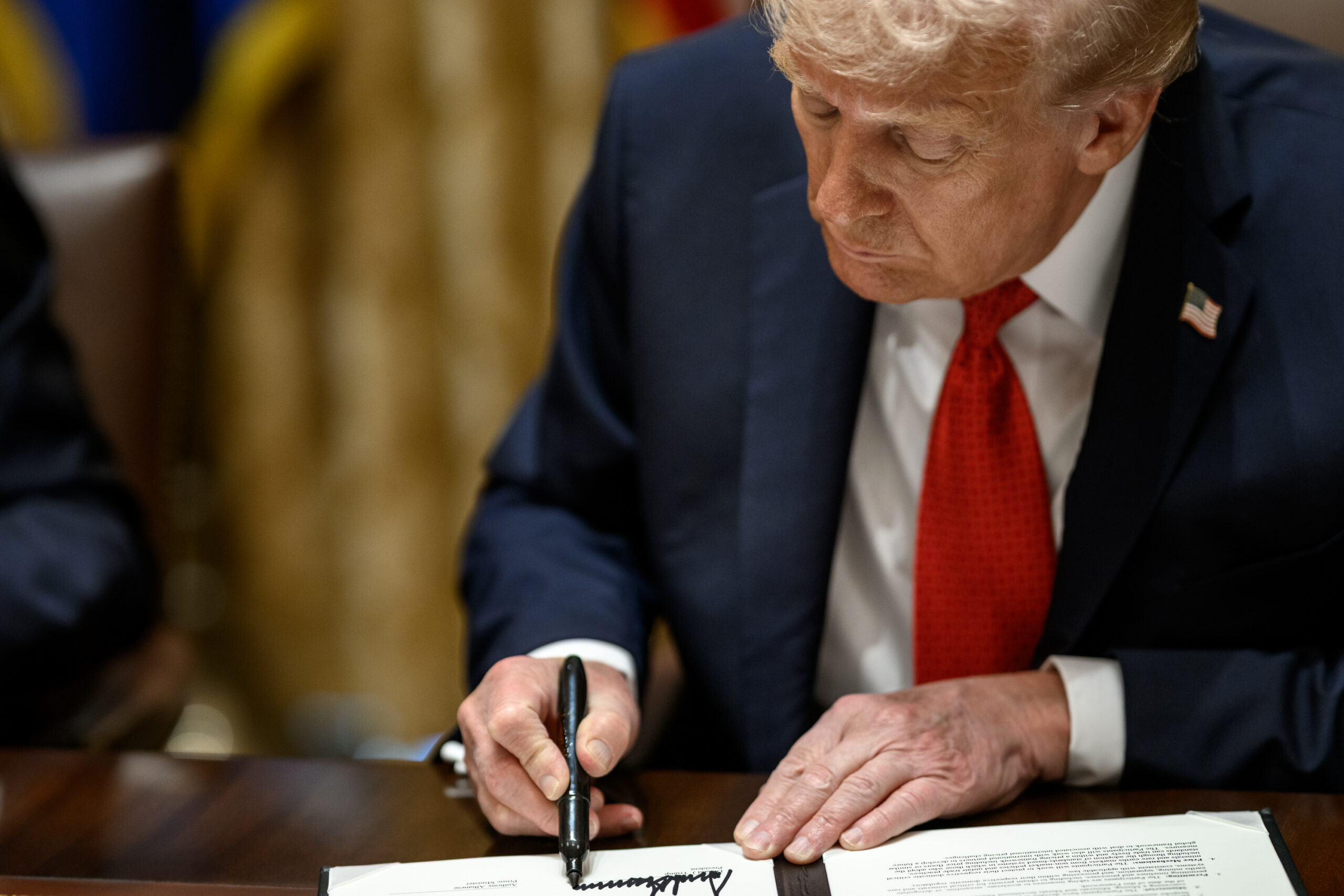
Singapore and Thailand agreed at their 2 September leaders’ retreat in Bangkok to prepare a multi-year ASEAN agenda for their chairmanships in 2027 and 2028 respectively. Prime Minister Lawrence Wong linked the arrangement to initiatives requiring sustained effort. For Singapore, the significance could begin before the handover: knowing in advance what Thailand will continue in 2028 could change what Singapore chooses to start in 2027.
That matters because the ASEAN chair presides over the grouping’s principal meetings and, under the Charter, has responsibilities for policy initiatives, coordination and consensus-building. The effect would still require a more specific commitment than the public announcement currently provides. A common agenda might simply gather projects both governments already support. An agreement on who will pursue the next stage of unfinished work could instead give Singapore information it can use when deciding what to begin. The important difference is whether advance coordination changes Singapore’s 2027 choices, rather than simply ensuring that existing work continues in 2028.
Continuity Across ASEAN Chairmanship Is Not New
ASEAN already has ways to sustain cooperation beyond a single year. A member state can continue championing an initiative without holding the chair, while an incoming chair can organise follow-through. In November 2018, for instance, Singapore offered to continue shepherding the ASEAN Smart Cities Network after its chairmanship ended. Thailand, its successor, had indicated that it would convene the network’s meetings in 2019. Annual rotation does not, by itself, mean that initiatives lose their support.
Nor did joint planning begin at September’s retreat. Ministers Indranee Rajah and Ekniti Nitithanprapas discussed using the consecutive chairmanships for a medium-term financial agenda in April, including artificial intelligence in finance and the ASEAN Power Grid. September broadened that endorsement to regional integration, connectivity, resilience and external partnerships. The significance of September’s announcement therefore lies not in the phrase “multi-year agenda” itself, but whether the two governments assign work across their two chairmanships.
Why Advance Coordination Could Matter
Those chairmanship responsibilities are what make succession potentially consequential. A specific Thai commitment to pursue work in 2028 could affect the attention given to an issue and the chair’s ability to convene further negotiations, roles Singapore cannot exercise in the same capacity after its own chairmanship ends.
Consider, for example, work under the ASEAN Power Grid to establish regulatory, policy, commercial and technical frameworks for cross-border electricity trading. If a defined stage were unlikely to finish in 2027, Thailand could commit in advance to carrying the next stage forward in 2028. Knowing the work would continue, Singapore might then choose to convene preparatory work it would otherwise postpone or set aside. This is illustrative, not a description of an agreement already reached. Any effect would depend on Singapore treating Thailand’s undertaking as credible despite the possibility of changing priorities.
The ASEAN Power Grid as a Test Case
The ASEAN Power Grid is a long-term regional effort to connect national electricity networks and expand cross-border power trading. Singapore and Thailand already participate in the Lao PDR-Thailand-Malaysia-Singapore Power Integration Project (LTMS-PIP), which the September statement identifies as a step towards the wider Grid. The project spans Lao PDR, Thailand, Malaysia and Singapore and uses existing interconnectors across the four countries. The ASEAN Plan of Action for Energy Cooperation (APAEC) 2026-2030 and the ASEAN Power Grid Financing Initiative also support implementation beyond a single chairmanship.
In a May commentary, Laura Britt-Fermo of the ASEAN+3 Macroeconomic Research Office and ASEAN Centre for Energy researchers Ambiyah Abdullah and Ignatius Primadi Limin identified difficulties in developing projects that can attract financing and coordinating implementation across jurisdictions. They also pointed to differing regulatory frameworks, technical standards and market structures. Their account places the obstacles within continuing regional and national work. It supplies no basis for treating the annual handover as the Grid’s principal constraint.
Continued chair-level attention could matter where ministers need to remain engaged in a negotiation across both years. In that case, an undertaking about a particular next stage would be relevant to the earlier chair’s preparations. It would not settle participating regulators’ decisions, utilities’ operating arrangements or commercial terms with project sponsors and financiers. These issues can be political in their own right. An additional year of chair-level sponsorship does not confer authority over them, or over every decision required for implementation.
What Would Show the Arrangement Is Working?
A further limit is ASEAN’s consensus rule. Consultation and consensus remain the Charter’s basic decision-making principle. A bilateral plan gives Singapore and Thailand a common starting point for discussion with other members, but it does not settle those members’ positions. Collective deliberation could alter the sequence or scope of the work. If other ASEAN members changed the plan, that would not make the earlier preparation irrelevant. Equally, eventual adoption would not prove that Singapore-Thailand coordination caused the outcome.
To show that advance coordination actually influenced Singapore’s choices, there would need to be evidence of two things: that Thailand made a specific commitment before Singapore set its 2027 agenda, and that Singapore adjusted its programme in response. Similar language in the two chairmanship programmes would not be enough; both governments may already have intended to pursue the initiative, or a sectoral workplan might explain its continuation. A record showing what Thailand committed to pursue, when it did so and how Singapore used that information would be more informative. Without such records, public silence would leave the question unresolved.
The public September documents commit the governments to coordination and establish a planning process, with follow-up assigned to ministers and agencies. They do not assign particular tasks to the 2027 and 2028 chairmanships. The question is whether Thailand’s commitments will become specific enough to change what Singapore chooses to begin in 2027. If they do, that would be the real innovation: advance coordination shaping the agenda before the handover, instead of simply keeping projects alive afterwards.
Dennis Phua is pursuing an MSc in Strategic Studies at the S. Rajaratnam School of International Studies, Nanyang Technological University, Singapore. His professional background includes energy policy, infrastructure project development and international consulting.
This article is published under a Creative Commons Licence and may be republished with attribution.
Photo: “Singapore Flag” by Vince WYP (CC BY-NC-ND 2.0)