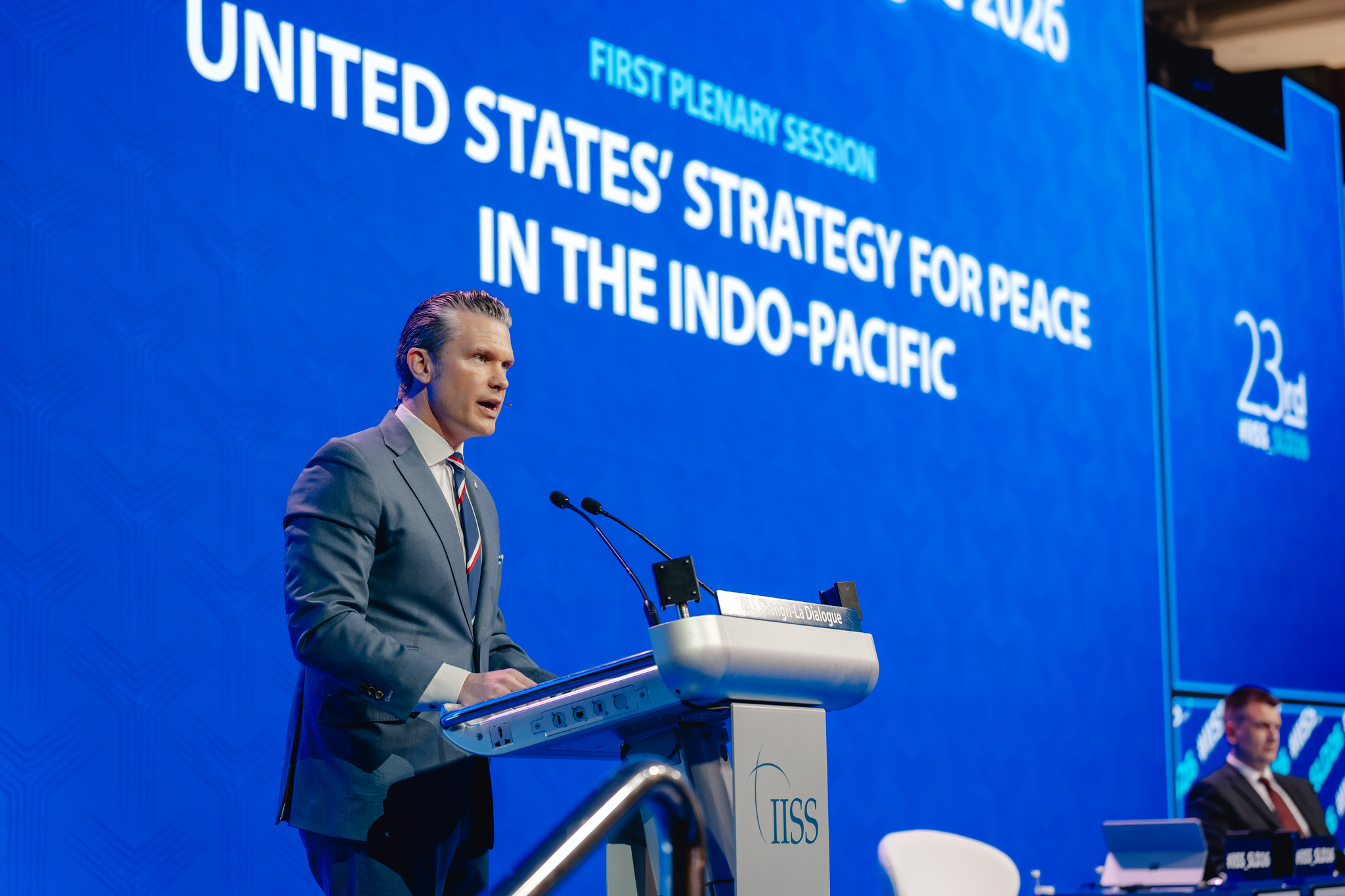
Washington insists that peace in Asia depends on bigger defence budgets and stronger deterrence. But as Southeast Asian delegates whispered in the corridors of this year’s Shangri-La Dialogue, can an arms race really deliver the stability the region values most?
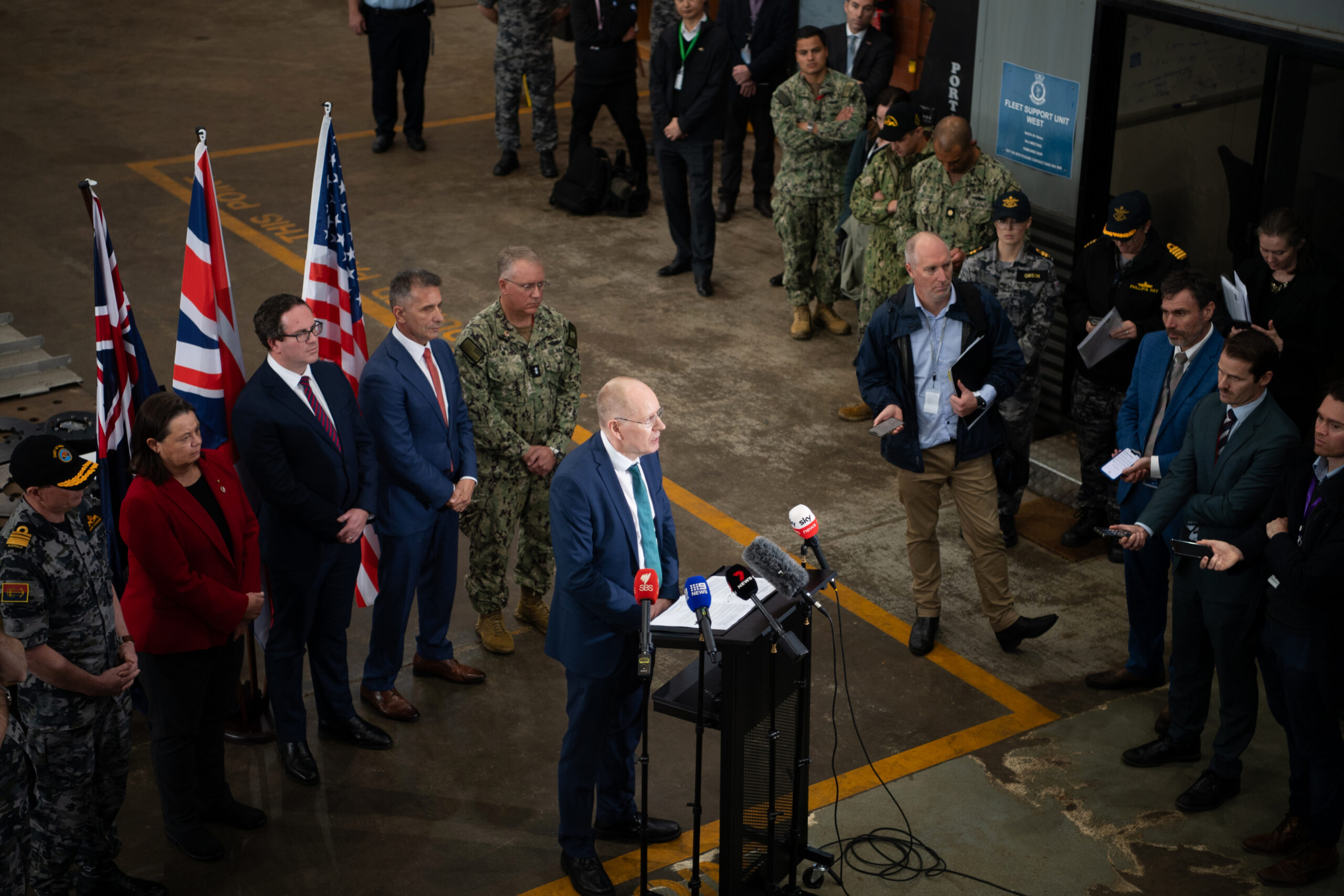
At the 23rd Shangri-La Dialogue late last month, the spotlight fell almost exclusively on the United States, and Secretary of War Pete Hegseth in particular. China, probably tired of being cornered at the dialogue, kept its senior leaders home for the second year running. Hegseth kicked off the dialogue, organised each year by the International Institute of Strategic Studies, with a by-now familiar call: countries across Asia and the Pacific should raise their defence budgets to 3.5 per cent of GDP, up from the previous 3 per cent standard.
In Washington’s view, such spending would build deterrence strong enough to dissuade any power, China included, from imposing hegemony on the region. Hegseth cast this as realism, since a rules-based order was “not worth the paper it is written on” unless backed by credible military power.
The call came with both carrots and sticks. Hegseth praised model partners across Asia, Southeast Asian prominent among them: Singapore, Indonesia, Malaysia, Thailand and Vietnam all earned a mention, even though the region spends on average less than 2 per cent of GDP on defence. But the praise was quickly followed by a warning: those who fail to meet these expectations would “face a clear shift in how we do business.” Borrowing the motto of his first platoon – who in turn took it from Vegetius – he closed by telling his Pacific partners that “those who long for peace must prepare for war.”
Similar bromides ran through much of the conference. US-allied countries, many already pressed by Washington to spend more, lined up so eagerly that one observer likened it to “an audition for a new hierarchy of burden-sharing.” Australia called the request understandable. New Zealand, which had pledged to reach 2 per cent of GDP by 2029, swallowed the sting of being branded a “freeloader.” The Netherlands’ Dilan Yesilgöz-Zegerius borrowed from Canadian Prime Minister Mark Carney’s speech this year at Davos in framing the choice as being “either on the menu or at the table.” Japan, citing China’s military build-up, vowed to strengthen its alliance with the US.
On stage the support looked overwhelming, but the corridors told a different story. Among delegates from the region’s smaller states, one could hear a subtle unease with the whole logic of an arms race. If a country does not, or simply cannot, prepare for war, does that mean it does not want peace? For all that Southeast Asia featured in Hegseth’s speech, no leader from the region took up his call or echoed his vision of deterrence-led peace. And this mattered, because Hegseth was not only addressing the allies in the room but speaking to Southeast Asia too.
Southeast Asia’s reticence reflects a fundamentally different view of how peace is secured. Where Hegseth equated security with firepower, the region locates its safety in stability, development and the careful tending of relationships, the instinct of states that have spent decades living beside powers they could never out-gun. At the dialogue, Vietnamese President To Lam accepted that great-power competition may be inevitable, but insisted it be bound by rules and self-restraint, and warned that the defence industry should serve legitimate defence rather than become the engine of an arms race. ASEAN Secretary-General Kao Kim Hourn struck the same note on dialogue, rules, and shared norms. For states with little leverage over either great power, those rules are less an “utopian ideal” than a practical necessity. Washington does not dismiss them outright; its officials argued at the dialogue that norms still matter, only insisted they be backed by hard power. Yet for a region that depends on rules being honoured even when they are inconvenient, an order enforced selectively, at the discretion of the strongest, offers thin reassurance.
The arms race Hegseth is urging also carries specific dangers for this region. Analysts have warned that a pan-Asian build-up risks spiralling into the very contest it claims to prevent, a dangerous prospect, in one assessment, “for a region riddled with historical enmities and overlapping territorial claims.” Geography is the heart of the issue. Many of the allies cheering Washington on, among them Australia and the Netherlands, do not share land or maritime borders with the rivals they are arming against whereas Southeast Asia does.
The arithmetic also makes the demand unrealistic. Most of the region spends under 2 per cent of GDP on defence, so Hegseth’s 3.5 per cent benchmark would require Indonesia, Malaysia, the Philippines and Thailand to more than double their budgets. Even Singapore and Vietnam would face considerable gaps. In developing economies, spending on that scale has to be carved out of something else, usually the health systems, infrastructure and social investment that determine whether a society can weather the next shock, from a climate disaster to a financial crisis. That kind of resilience is the security Southeast Asia actually needs. The call also came at the wrong time, with the region still absorbing protectionism and energy shocks, much of it driven by Washington itself, which only last year imposed some of its steepest tariffs on these partners. The US is squeezing Southeast Asian economies with one hand while asking them to bankroll the American defence industry with the other.
Part of the gap is simply that Washington and Southeast Asia are answering different questions. The Trump administration’s priority is to deter China and preserve a balance of power in America’s favour, and it increasingly weighs cooperation by whether it serves US security and helps check Beijing. By that measure, asking partners to spend more is reasonable enough. But it also raises the cost of alignment, and those costs fall unevenly. For treaty allies, higher spending is a familiar negotiation over burden-sharing. However, for most Southeast Asian states, the same request looks less like shared defence and more like helping to underwrite a strategy that is not really their own.
None of this means Southeast Asia will not raise defence spending or modernise their militaries. The question is the pace of increase, and whose logic decides it. Malaysia’s defence minister framed that as well as anyone at the dialogue: “We respect the call by the United States… they play a very strategic role to create a balance in the Indo-Pacific. But they must also understand every country faces different circumstances… If America asks NATO and Europe to increase their spending, we can understand. But for a country like Malaysia, a developing country, we have other sectors we need to develop.”
This is the everyday test of strategic autonomy for the region. It is not a grand choice between Washington and Beijing, but the prerogative and wisdom for each nation to determine what its own security requires. Southeast Asia can and will spend more on defence when its own circumstances demand it; what it will not do is mistake an arms race for peace, or let someone else’s threat perception write its budget.
Minh Phuong Vu is a PhD candidate at the Australian National University, where her research focuses on Vietnamese foreign policy, territorial disputes, and Southeast Asian security. She has interned at the Australian Institute of International Affairs (AIIA) and is a member of the Indo-Pacific Cooperation Network, organised by the AIIA in partnership with the Japan Foundation. She is a Shangri-La Dialogue Young Leader, and her trip to the dialogue was supported by the International Institute for Strategic Studies.
Image source: Flickr, IISS
This article is published under a Creative Commons license and may be republished with attribution.