The UN Security Council’s resolution 2803 (2025) dated 17 November 2025 adopting President Trump’s 20-point peace plan to end the war in Gaza faces multiple challenges to deliver Gazan peace anytime soon. It is also a case of lost opportunity to advance a peace plan across the whole of Palestine-Israel generally.
Trump’s 20-point peace plan, titled President Donald J. Trump’s Comprehensive Plan to End the Gaza Conflict. released on 29 September 2025 and subsequently adopted as Annex 1 to UNSC resolution 2803, comprises two phases.
Phase One is fundamentally about a temporary ceasefire to enable the return of Israeli hostages, alive and dead. It involves the partial withdrawal within Gaza of the Israeli Defence Force (IDF) to agreed “battle lines”, a suspension of all military operations during hostage-prisoner exchange arrangements and the resumption of full humanitarian aid to Gaza. Importantly, a supplement detailing implementation steps released subsequently on 9 October, added a task force with core members representing the US, Egypt, Qatar and Turkiye to manage implementation arrangements. Representatives of Middle East core members, and those of both Hamas and Israel, signed this supplement.
Phase Two of Trump’s plan seeks the political and economic redevelopment of a “New Gaza” that is “deradicalised and ….. does not pose a threat to its neighbours”. Specifically, it establishes a transitional technocratic apolitical committee comprised primarily of Palestinians to be responsible for the day-to-day administration of Gaza. It also provides for a “Trump economic development plan” to “facilitate investments…to create jobs, opportunity and hope for future Gazans.” A temporary International Stabilisation Force (ISF) is also proposed whose responsibilities include training and supporting a “vetted” Palestinian police force responsible for law and order in Gaza. However, Israel retains responsibility for Gazan perimeter security and joint control of border crossings.
The above will be supervised by a “Board of Peace” (BoP) chaired by Trump himself, and comprising other prominent international people. Its mandate runs until 31 December 2027, when its future will be reviewed by the UNSC. Factors determining its future will include the Palestinian Authority (PA) having “satisfactorily completed its reform program as outlined in various proposals including President Trump’s peace plan in 2020, initially unveiled by Trump on 28 January 2020, and the Saudi-French proposal”, formally titled the New York Declaration on the Peaceful Settlement of the Question of Palestine and the Implementation of the Two-State Solution, released by the UN on 6 August 2025.
Phase Two does not require Hamas to disband, but states Hamas will have no role in any form in the future governance of Gaza. Hamas is to be disarmed and Gaza progressively demilitarized. It also states no-one will be forced to leave Gaza, those that do are free to return, and “Israel will not occupy or annex Gaza”.
UN Resolution 2803 is a heavily negotiated hybrid of the above documents, with the exact composition and role of its many organisations vague, and contestable. However, passing the resolution was ultimately agreed, because the two-state supporters assessed it the only option to facilitate an immediate ceasefire, and take forward any form of peaceful settlement in Gaza, and potentially Israel-Palestine more generally.
Contributing to the contestabilities, and unlikelihood of their resolution anytime soon, are the fundamentally different objectives of key stakeholders.
The PA, most Middle East and Westen states including Turkiye and EU members, an increasing majority of UN members overall and even the Pope, want peace within Gaza as part of a broader Israel-Palestine peace plan incorporating a two-state solution.
The current Israeli government, led by Prime Minister Benjamin Netanyahu, as for most past governments, oppose any two-state solution, and are committed to a Greater Israel comprising all of Palestine – Gaza, West Bank and East Jerusalem – and parts of neighbouring states. Whether a majority of Israelis and Jewish people internationally support him is unclear, but sources claim the number who support a two-state solution, in a secure environment, is increasing.
Other state and non-state stakeholders include Iran and its proxies (excluding Hamas, dealt with in Phase Two). Their neutralization, while still a work in progress, has hopefully sidelined them as major disruptors in the immediate future.
Finally, there is US President Donald Trump himself. He is the one individual with the power and influence to make, shape or break any peace plan. He is pro-Israel, close to and has been highly influenced by Netanyahu, but any deal can be transactional, and Saudi Prime Minister, Mohammed bin Salman (MbS) is an increasing influential stakeholder. Successful incentives and tactics used by stakeholders to shape his thinking to deliver or resist change, must also accommodate his ego and interest in related economic viability and investment attractions.
Specific areas of contestability which raise significant challenges include UN involvement. Supporters of the two-state solution sought the legitimacy of a UN mandate, the involvement of UN agencies, and obligation by all stakeholders to abide by international law and international humanitarian law. This includes respecting the jurisdiction of the International Court of Justice (ICJ), a core element of the UN, and compliance with the independent International Criminal Court (ICC).
Israel opposed UN involvement, as did Trump initially, and neither are members of the ICC. Technically, the UN resolution provides UN-endorsed direct outreach over Israeli activities in Gaza. However, Israel has limited tolerance of the UN, especially UNRWA, and will simply continue to ignore, or challenge, the UN when it suits.
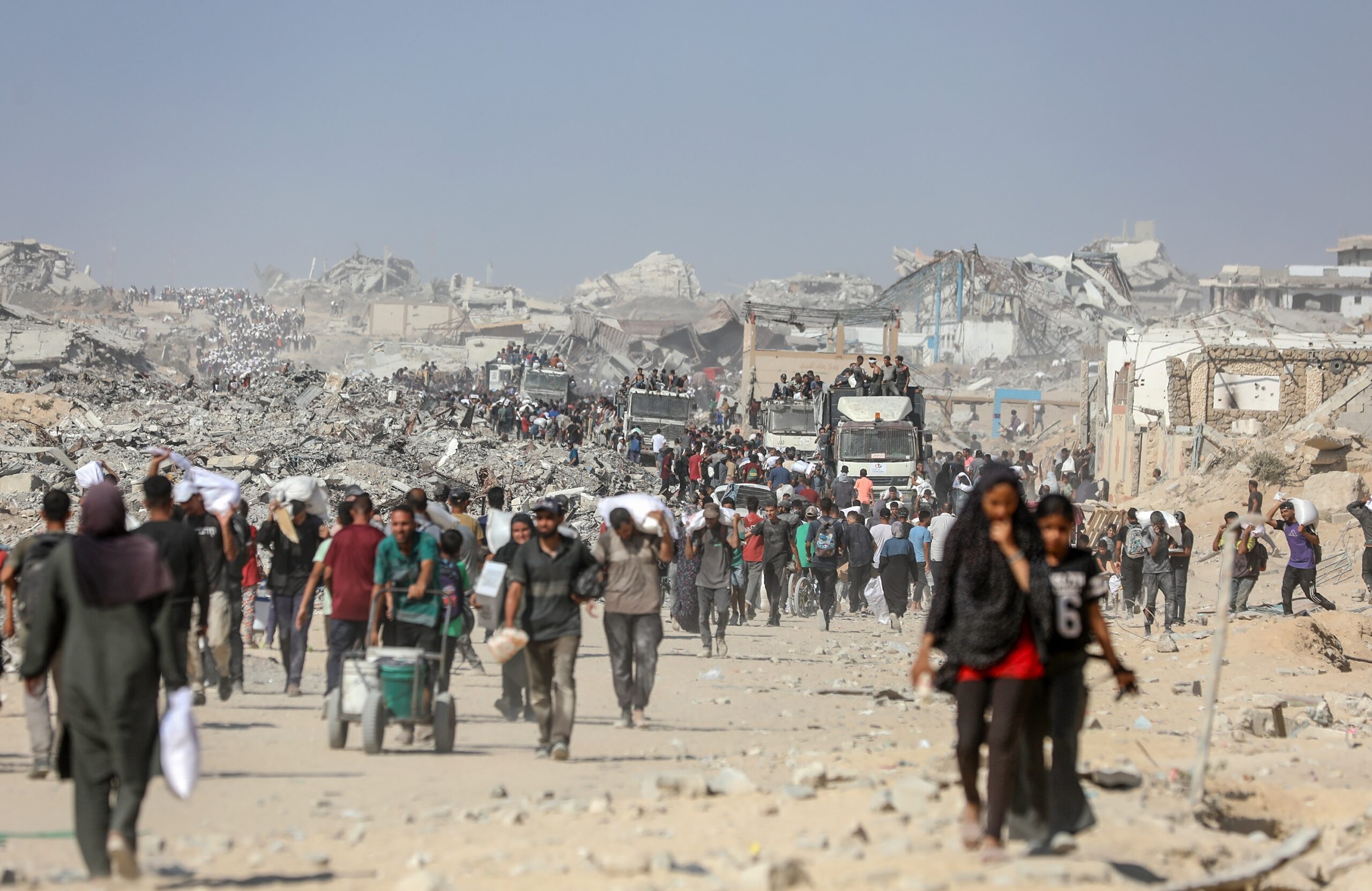
Israel has the right to self defence, and has always preempted or reacted forcefully to any security threat. However, their actions in Gaza since 7 October 2023 especially, involving the disproportionate killings of Gazan civilians, destruction of Gaza infrastructure, findings and allegations of genocide, ethnic cleansing and war crimes, are widely seen as consistent with their Greater Israel objective.
The limitations of the UN resolution were also challenged. It refers only to Gaza, and makes no reference to West Bank and East Jerusalem, or a two-state solution. The opportunity to extend the peace plan across the whole Palestine-Israel conflict, and defining Palestine territory, was lost.
The only allusion to this in Trump’s plan is “while Gaza redevelopment advances and when the PA reform program is faithfully carried out, the conditions may finally be in place for a credible pathway to Palestinian self-determination and statehood….” However, in response to a deliberate provocation by Israel’s Knesset on 21 October approving the annexation of illegal West Bank settlements, Trump announced he would not allow that, but said nothing about the increase in illegal settlements and settler violence.
Other important issues include what happens if Hamas refuses to disarm? Is its disarming a role for the ISF? Would they want that role? And critically, is the PA up to meeting the high-level expectations of its reform program, including effective PA democratic political outreach across Gaza? And if not? Netanyahu made it very clear in September he opposed any PA role in Gaza.
The ball is in Trump’s court to facilitate what must inevitably be changes in the political leadership of both Palestine and Israel, and replacing them instead with politicians who are willing to and capable of delivering peaceful coexistence. In investment terms, peace is dependent on the White House ensuring Trump Boulevard offers a positive destination for the people of both Palestine and Israel.
Ian Dudgeon is a former president of AIIA’s ACT branch.
This article is published under a Creative Commons License and may be republished with attribution.