Forged in the twin tragedies of 2011, the Japan-New Zealand disaster partnership has now entered its institutional phase. Each has hard-earned lessons the other can benefit from, and both have much to offer the Pacific.
Fifteen years have passed since two devastating earthquakes struck Japan and New Zealand. The Christchurch earthquake struck on 22 February 2011, which caused 185 deaths. Only 17 days later, on 11 March 2011, the Great East Japan Earthquake struck, causing the triple tragedy of an earthquake, a tsunami, and a nuclear power plant explosion. Approximately 20,000 people lost their lives, and over 2,500 are still officially reported as missing. In September 2026, Japan and New Zealand signed a memorandum of cooperation (MoC) on emergency management, committing to learn from one another and improve preparation, response, and recovery for future events.
Japan-New Zealand Commitment to Disaster Resilience Before the MoC
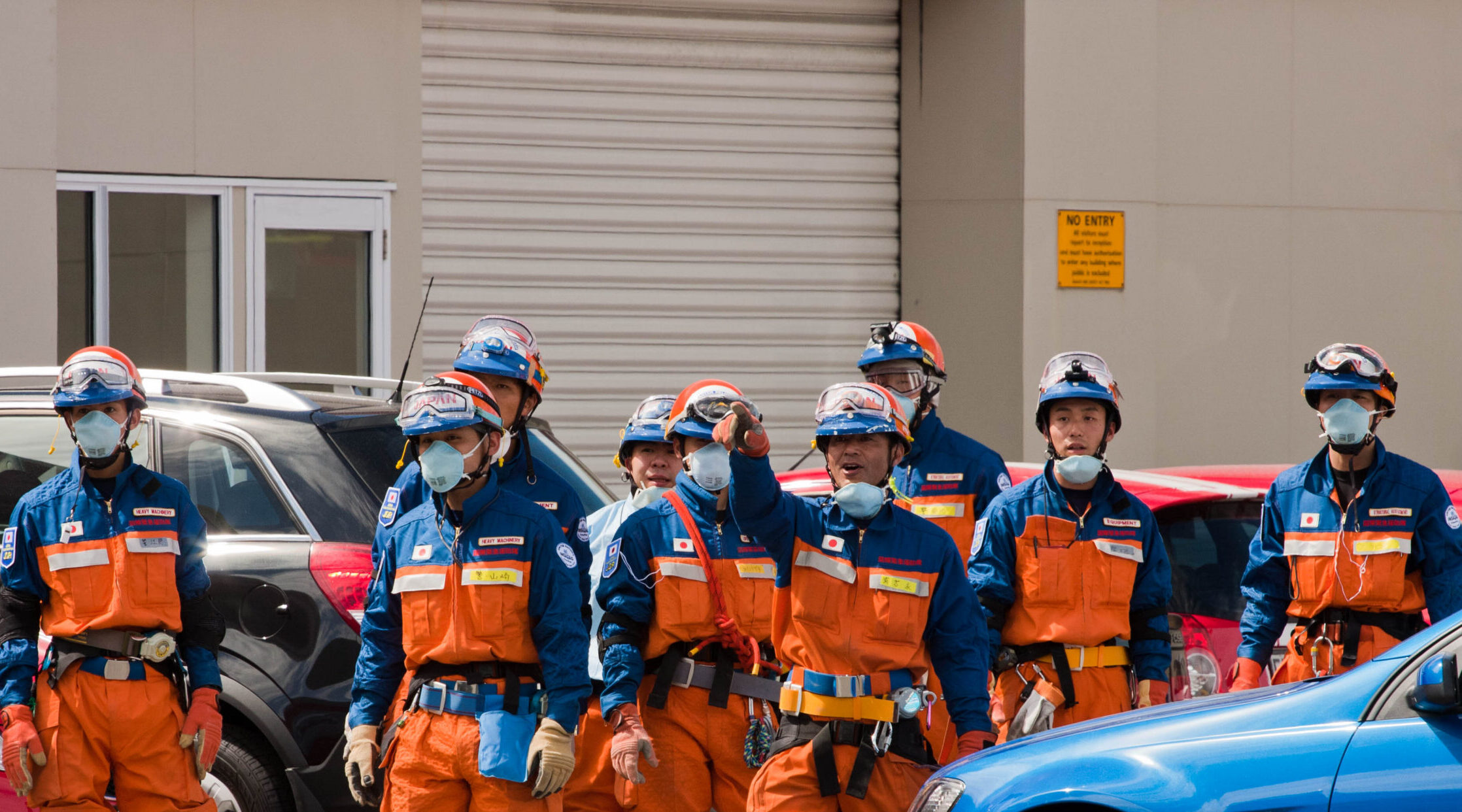
The Japan–New Zealand commitment to disaster resilience began long before the current MoC. After the Christchurch earthquake, the New Zealand Embassy in Japan requested emergency response support from the Japanese government, and the Ministry of Foreign Affairs of Japan decided to deploy the Japan Disaster Relief Team (JDR) only one day after the disaster. Less than a month later, when the Great East Japan Earthquake struck, New Zealand was among the first countries from which the Japanese government requested help, and the New Zealand government decided to send rescue teams to the earthquake’s epicentre. The commitment for disaster management is not limited to dispatching rescue teams to each other. Science cooperation between New Zealand and Japan started in October 2009 with the Science and Technology Cooperation Agreement. More recently, in 2025, several New Zealand research teams studying natural disasters received funding from the New Zealand government to work with Japanese research institutions. These examples show that Japan and New Zealand already had two layers of collaboration for disaster management, one at the practical level and one at the research level. The current MoC can add a third layer of collaboration at the institutional level.
Japan’s Preparedness Best Practice
When the MoC was signed, New Zealand’s Emergency Management and Recovery Minister, Mark Mitchell, said it would help both countries share best practice and build capability. He also singled out Japan’s expertise in “disaster risk reduction, preparedness and early warning systems”. Indeed, Japan has operated an earthquake early warning system since 2007. Under the Meteorological Service Act, the Japan Meteorological Agency (JMA) became legally obliged to issue forecasts and warnings of earthquake ground motion. This act also prohibits anyone other than JMA from issuing earthquake warnings, and JMA must immediately notify the National Police Agency, prefectural governments, NTT (the national telecommunications carrier), NHK (the public broadcaster), and other designated bodies. Under this system, when JMA issues a warning, it reaches people within seconds through loudspeakers in every municipality, on television and radio, and on mobile phones. Japan Railway and other train companies also utilise the early warning system to stop trains when strong shaking is forecast. In New Zealand, Google started to provide an earthquake early warning system for Android phones in 2021. However, a later survey found that most respondents knew little about the system, and those who took no action said they lacked time, did not understand the message or did not know what to do. These examples show that disaster risk reduction and preparedness, including early warning systems, require not only technical systems but also the operational rules and public education built around the warning, which are best practices worth borrowing.
New Zealand’s Recovery Best Practice
Japan can also learn from New Zealand’s advanced approach to disaster recovery. In Japan, a new agency dedicated to disaster risk management, the Disaster Management Agency of Japan, will launch on November 2, 2026. This agency will be a command centre through peacetime, response, and recovery from disasters. When it comes to recovery, the National Emergency Management Agency of New Zealand (NEMA) has a unique approach that Japan can learn from. In New Zealand, recovery does not wait for the response to finish. In the recovery schedule guide issued by NEMA, a recovery manager sits on the incident management team from the first day of activation under the country’s Coordinated Incident Management System. This is to make sure that decisions taken in the heat of the response consider their long-term consequences for recovery, and that the transition from response to recovery is planned from the outset. This early involvement of a recovery perspective may also improve Japan’s disaster management. For example, when the 2024 Noto Peninsula earthquake struck, about 84,000 houses were damaged. Public funds were available to demolish damaged houses for which a Risai-Shomeisho (Disaster Victim Certificate) had been issued. However, the number of applications for this certificate exceeded municipal governments’ expectations, and delays in issuing the certificates became one of the obstacles to completing the demolition of the houses. If a recovery perspective had been involved from the early response phase, and the extent of the damage had been well understood, the transition to recovery could have been smoother in the disaster-affected areas.
Sharing Best Practice for Both Countries and the Region
Japan and New Zealand face similar natural disaster risks, and so far the two countries have strengthened their relationship at the field and science levels for disaster management. The current MoC may add another pillar for their collaboration at the institutional level. Both countries have addressed disaster preparation, response, and recovery so far. Exchanging knowledge and best practices from each country could strengthen the countries’ disaster risk management. Moreover, the Asia-Pacific is one of the most disaster-prone regions in the world, and many Pacific Island countries face earthquakes, tsunamis, and cyclones with limited capacity to prepare for and recover from them. As close partners of the Pacific, Japan and New Zealand could jointly share their experience, from early warning systems to recovery planning, with neighbouring countries. With Japan set to host the Asia-Pacific Ministerial Conference on Disaster Risk Reduction in 2027, that exchange could also offer lessons for the wider region, and the MoC could become a model of bilateral cooperation that contributes to regional resilience.
Dr Misa Tomono is a member of the 2026 Indo-Pacific Cooperation Network. She is a medical doctor and PhD candidate specialising in multi-sectoral preparedness and crisis coordination. With experience across disaster response, public health research, and international institutions, her work focuses on strengthening evidence-based, resilient systems for all-hazards emergency preparedness and response.
This article is published under a Creative Commons Licence and may be republished with attribution.
Photo: “20110224-IMG_9637.jpg” by Gabriel Goh, CC BY 2.0