Australia’s economic resilience and national security are closely tied to the stability of maritime routes connecting Europe, the Middle East, and the Indo-Pacific. Understanding how ongoing conflicts are reshaping these routes, and the wider supply chains that depend on them, is therefore essential.
Geopolitical developments in 2024 and 2025 have shown that disruptions to global supply chains are rarely isolated events. As the centre of global energy flows and critical maritime logistics, the Middle East has become a focal point of this instability. For Australia, these developments carry significant implications. The country’s economic resilience and national security are closely tied to the stability of maritime routes connecting Europe, the Middle East, and the Indo-Pacific. Understanding how ongoing conflicts are reshaping these routes, and the wider supply chains that depend on them, is therefore essential.
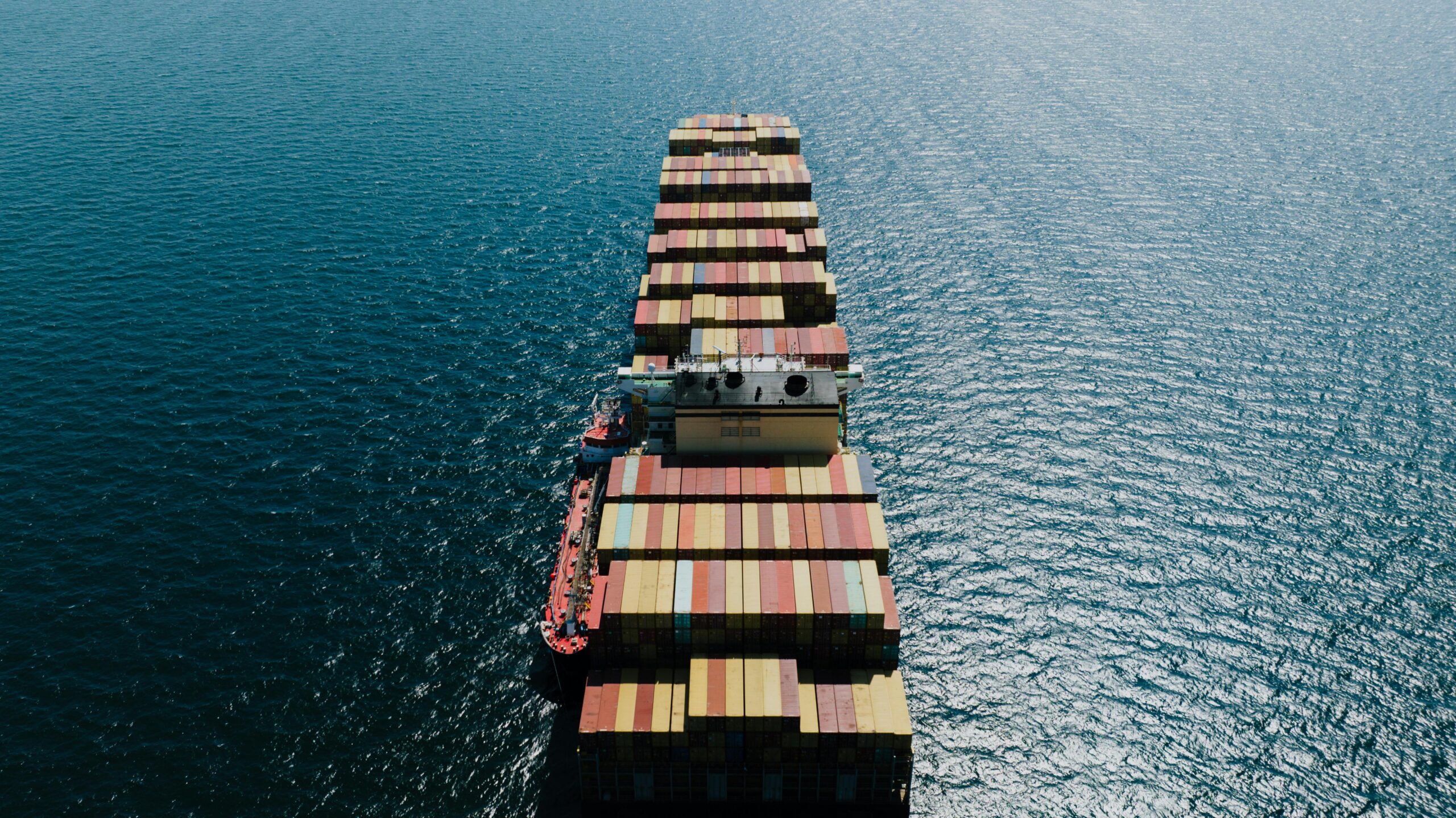
One of the clearest examples is the crisis in the Red Sea. The Red Sea and the Bab al-Mandeb Strait, which previously handled 12 per cent of global seaborne crude oil shipments and 30 per cent of global container traffic, entered a state of relative paralysis in late 2023.
The nature of threats in this region has evolved from rudimentary drone attacks to sophisticated, coordinated operations involving Unmanned Surface Vessels (USVs) and even Unmanned Underwater Vehicles (UUVs). This represents a paradigm shift in asymmetric maritime warfare, where non-state actors can blockade vital trade arteries for extended periods. For Australia, this manifests as higher prices for European imports and disruptions to exports bound for Western markets.
By 2025, the spike in war‑risk exposure around the Red Sea had pushed underwriters to raise premiums sharply: war‑risk cover for transits rose from about 0.3 per cent of a vessel’s value to roughly 0.7 per cent, with some quotes reaching 1.0 per cent, effectively more than doubling insurance costs for many voyages. The security shock also precipitated a dramatic fall in Suez Canal traffic — ship transits declined by roughly 50 per cent and tonnage by about 70 per cent during 2024, a slump that persisted into early 2025 and forced most major lines to reroute around the Cape of Good Hope, typically adding 10–20 days to voyages and substantially raising fuel and operating expenses. Those higher costs and restricted cover have contributed to a bifurcated market: mainstream operators now favour longer, insured routes, while a growing “shadow fleet” of vessels with opaque registration or insurance arrangements continues to operate through high‑risk waters — a trend that increases the likelihood of environmental incidents and complicates enforcement.
The Strait of Hormuz: A Strategic Vulnerability
The Strait of Hormuz remains the most critical energy chokepoint. In 2024, roughly 20 million barrels per day of crude oil and condensates transited the strait—about 20 per cent of global petroleum liquids consumption—and nearly one‑fifth of global LNG trade (mainly exports from Qatar and the UAE) depends on the waterway. Saudi Arabia’s East–West pipeline can move roughly 5 million barrels per day to the Red Sea, and UAE bypass routes add only a few million barrels per day of capacity; together, these alternatives cover only a minority of the roughly 20 million barrels per day that normally transits Hormuz. If the strait were fully closed, well over 60 per cent of the region’s seaborne energy flows would lack a direct export route, with major implications for prices, supply security and regional diplomacy.
A major conflict that closed the Strait of Hormuz would trigger an unprecedented energy price shock. Barclays analysts warn that even limited strikes on Iranian leadership or military infrastructure could push Brent into the $80–$100 range, while a full closure could drive prices well above $130 per barrel in severe scenarios. For the Gulf Cooperation Council (GCC) states, such a conflict is an existential threat to their economic diversification plans. Non-oil growth in these nations relies heavily on regional stability and access to global capital markets. Any conflict threatening infrastructure, such as the Abqaiq processing facility, would jeopardise not only current production but also the ability to ramp up future capacity.
Economic modelling by KPMG in 2025 suggests that an escalating conflict in the Middle East could shave 0.15 per cent to 0.20 per cent off Australia’s GDP. If oil prices double due to the closure of the Strait of Hormuz, the impact could reach a 0.4 per cent reduction in economic growth. This places the Reserve Bank of Australia (RBA) in a difficult position, balancing the fight against fuel-driven inflation with the need to support weakening growth. Australia’s petrochemical and agricultural industries are particularly vulnerable due to their high reliance on diesel and petroleum derivatives. Furthermore, airfreight costs have risen as flights detour away from Middle Eastern conflict zones, negatively affecting Australia’s exports of perishable goods.
Strategic analyses for 2026 increasingly focus on the possibility of structural shifts in Iran’s political system. The collapse or severe weakening of central authority in Tehran could trigger a “geopolitical vortex”. This scenario would not necessarily lead to immediate stability, but rather to the potential for proxy networks in Iraq, Syria, and Lebanon to achieve autonomy.
Proxy Networks and Border Security
In a scenario involving an “abrupt exodus” of the Islamic Revolutionary Guard Corps (IRGC) from the power structure, extremist elements might seek sanctuary in the porous border regions of Iraq and Syria. This could threaten the security of recently established overland routes bypassing the Red Sea, such as the UAE-Saudi-Jordan-Israel land bridge. Conversely, a weakened Iran could provide an opportunity for nations like Iraq to reclaim full sovereignty, provided state institutions can fill the power vacuum.
In the long term, Iran could emerge as a new gravity centre for Eurasian trade. The reintegration of Iran into the global community would allow for the full activation of the International North-South Transport Corridor (INSTC), integrating Iranian port infrastructure into global logistics networks.
The competition to establish new trade corridors has become a central axis of Middle Eastern geopolitics. The India-Middle East-Europe Economic Corridor (IMEC), introduced in 2023, aims to connect India to Europe via the UAE, Saudi Arabia, Jordan, and Israel, promising a 40 per cent reduction in transit time. However, progress has been stalled by the ongoing conflicts in Gaza and Lebanon, which have frozen the “diplomatic cornerstone” of Saudi-Israeli normalization
In contrast to IMEC, the INSTC places Iran at its centre. This 7,200 km multimodal route connecting India to Russia and Europe via Iran is estimated to be 30 per cent cheaper and 40 per cent shorter than the traditional Suez route. In 2024, cargo volumes on this route grew by 19 per cent . Russia, facing Western sanctions, has invested heavily in completing the Rasht-Astara railway to make this a permanent artery .
In a “Post-Iran War” scenario, this corridor could transform from a political tool for bypassing sanctions into a standard commercial route linking India and the Gulf states to Central Asian and Russian markets. Competition between IMEC and INSTC may eventually yield to logistical synergy if regional tensions subside.
Australia’s Vulnerability and Strategic Response
For Australia, Middle Eastern security is not a peripheral concern; it is tied to national fuel security and economic stability. Australia imports over 90 per cent of its liquid fuel. While only a small portion of Australia’s refined products comes directly from the Middle East, most of the rest comes from South Korea and Singapore, which are heavily dependent on Middle Eastern crude. Analysis indicates that approximately 30 per cent of Australia’s imported refined oil transits through the Strait of Hormuz before being processed in Asian hubs. Any disruption in this region immediately inflates petrol, diesel, and jet fuel prices in Australia, driving inflation across all economic sectors.
In response, the Australian government is establishing a “Maritime Strategic Fleet” comprising up to 12 privately owned but Australian-flagged and crewed vessels. These ships can be requisitioned by the government during national emergencies to ensure the movement of critical cargo, such as fuel and medicine, when foreign vessels may avoid high-risk zones.
Strategic Outlook
The short-term future of Middle Eastern supply chains is defined by ambiguity and high risk. However, a transition to a “Post-Iran War” era (characterised by structural power shifts) could offer a historic opportunity to rebuild Eurasian trade routes.
Several priorities should guide Australian policymakers. First, accelerate the establishment of the Maritime Strategic Fleet by swiftly operationalising Australian-flagged tankers to help secure critical fuel imports during disruptions. Second, diversify transport corridors by supporting multimodal routes that reduce reliance on vulnerable maritime chokepoints. Third, develop regional refining partnerships with stable partners such as Vietnam and India to reduce Australia’s dependence on a narrow set of refining hubs. In 2026, the Middle East is no longer just an energy source; it is a laboratory for global supply chain resilience. The nations that succeed will be those that strike a sustainable balance between economic efficiency and national security.
Abolfazl Hosseini Nik holds an M.A. in Political Science from Kharazmi University, with a focus on geopolitics, geoeconomics, economic corridors, sustainable security, and sustainable development. His research and professional experience are centred on the Middle East region.
This article is published under a Creative Commons License and may be republished with attribution.