Across the world, political figures are using insults to appear honest, courageous and close to the people they claim to represent. Prabowo Subianto and Pauline Hanson show how this rhetorical phenomenon is happening in the Indo-Pacific across multiple political positions.
Whether it’s the nicknames Donald Trump uses to mock political rivals or Nigel Farage’s jibe that EU Council President Herman Van Rompuy had “the charisma of a damp rag,” insults have become a staple of far-right populists across the world, signalling authenticity and defiance of elite norms to supporters. In the Indo-Pacific, Prabowo Subianto and Pauline Hanson continue this thread; showing how this style of politics can work from a presidential palace or a Senate crossbench.
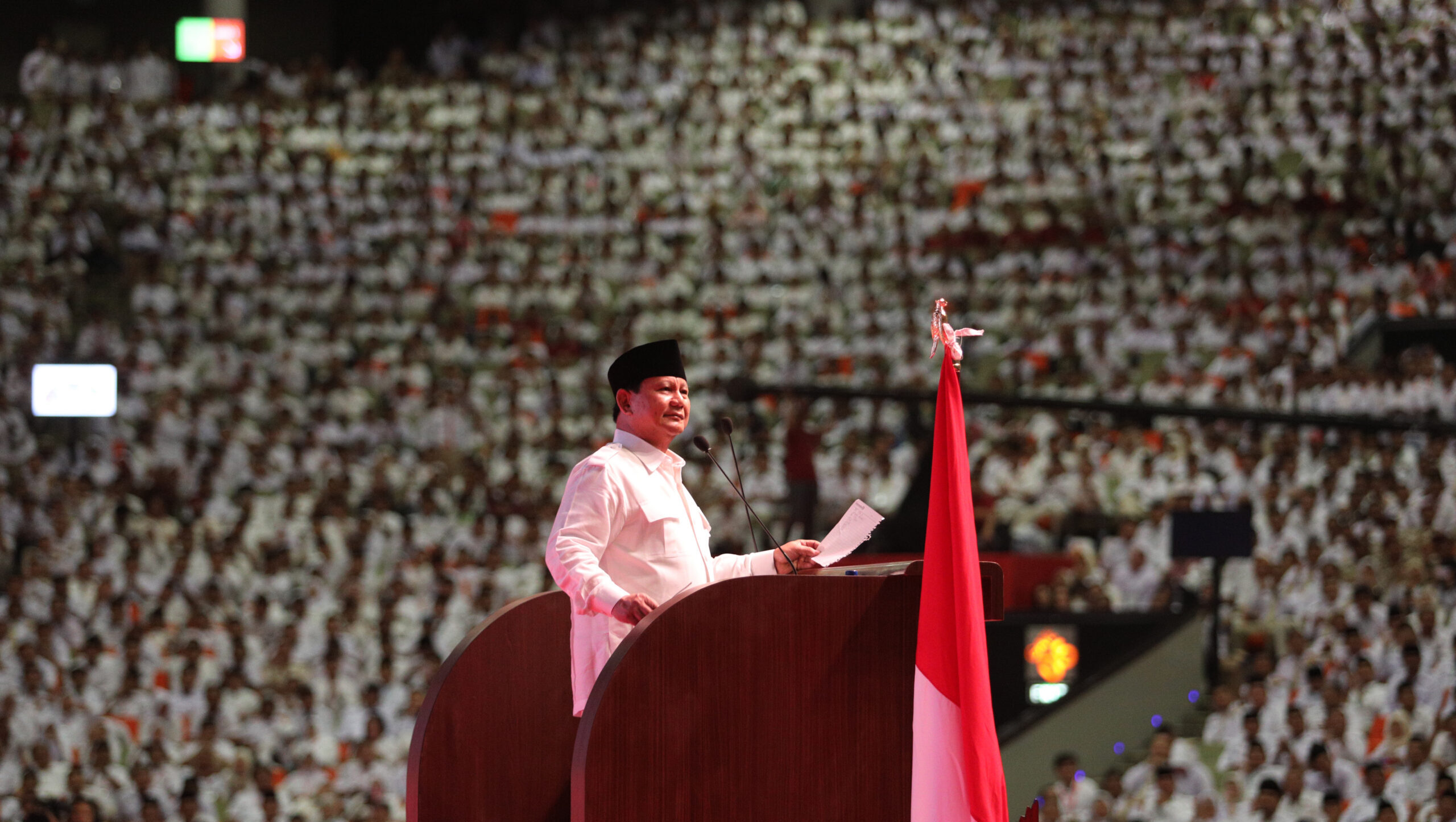
In September, Indonesian President Prabowo Subianto mocked critical experts with the phrase saking pintarnya jadi goblok—“so clever that they had become stupid”. In July, he had invoked londo ireng, a colonial-era term for Indonesians seen as serving foreign interests, while referring to journalists, commentators and civil society organisations. Across the Timor Sea, Pauline Hanson faced renewed condemnation when a podcast recording in which she disparaged First Nations Australians resurfaced in September. She expressed regret for causing hurt but continued to defend the concerns she said she had intended to raise.
Neither episode stands alone. During the 2023 election campaign, Prabowo dismissed a rival’s question about ethics with ndasmu etik, a Javanese retort roughly meaning “ethics? your head.” As president, he has also invoked antek asing — “foreign lackeys”, to suggest that unnamed domestic actors serve outside interests. His September jab at critical experts continued the pattern. Hanson has spent decades courting controversy over Australian identity and, that same September week, also drew criticism for remarks about Prime Minister Anthony Albanese’s late mother. The words and their targets differ, but the provocations keep returning.
Prabowo and Hanson are separated by office, political history and the people they target. Yet both draw on a style of politics seen well beyond Indonesia and Australia: breaking conventions of public speech to present oneself as more candid than one’s critics. The comparison is not about whether they share an ideology or produce the same political consequences. It is about what an insult allows a politician to do when challenged. It shows how a similar rhetorical style can operate in very different political settings.
The Repetition of Insult
Populism divides politics between a virtuous people and a corrupt elite. Demagoguery can draw on that division and redirect debate towards blaming an out-group. An insult makes the target easy to recognise. It can also make the speaker appear willing to say what others supposedly will not.
Repetition can strengthen that performance. An insult that once caused surprise may start to sound familiar, even expected. Breaking conventions of political speech can help a politician appear closer to ordinary people. When journalists or opponents object, their disapproval may be presented as evidence that the politician has spoken plainly. This does not mean every provocation wins support. The argument over an insult can still keep the politician’s preferred political division in public view.
The issues surrounding these remarks deserve serious debate. In Australia, housing and migration raise difficult questions about public services, opportunity and who bears the costs of policy choices. In Indonesia, sovereignty and the distribution of economic gains warrant scrutiny. An insult answers none of those questions. It shifts attention from the policy at issue to the people speaking about it.
Power and Provocation
Prabowo speaks as president. His government can be scrutinised on food and energy security, resource management and Indonesia’s exposure to external shocks. Yet londo ireng shifts attention from whether a criticism is sound to whether its author is loyal. Mocking critical experts similarly replaces an answer to their arguments with a judgment about the people making them.
A president’s words carry particular weight in setting the terms of public debate. A harsh speech does not, by itself, prove that critics will be silenced. Repeatedly portraying them as ignorant or aligned with foreign interests can nevertheless make their scrutiny easier to dismiss. It invites listeners to treat disagreement as a question of patriotism.
Prabowo’s political presentation has changed with circumstance. During the 2024 campaign, his earlier stern nationalist image gave way to gemoy — an Indonesian word for “cute” — conveyed through playful dances and cartoon images. From office, a harsher vocabulary has returned. His language adapts, but the claim that he stands with the nation against those who obstruct it remains politically useful.
Hanson speaks from a different position. She is a senator who presents herself as a plain-speaking outsider, even after three decades in politics. In the podcast recording made in 2025, she described First Nations Australians as “the most primitive race on earth”. When the remarks resurfaced, politicians across party lines condemned them. Hanson regretted the hurt caused while continuing to argue that she was drawing attention to conditions in Indigenous communities.
That response illustrates the durability of her political persona. Criticism can be answered with another claim to plain speech. But its electoral effect should not be assumed. One Nation has attracted growing attention, while its polling support has also risen and fallen . Provocation remains part of Hanson’s identity, even when it draws substantial opposition.
Insult and National Identity
In the same week, One Nation proposed net-negative migration over three years and cuts to more than 750,000 temporary visas. Migration levels and their effects warrant debate. But a numerical target alone cannot account for housing supply, labour demand or the uneven distribution of growth. It is easier to identify arrivals as the problem than to explain how those pressures developed.
Hanson’s remarks about First Nations Australians and her migration proposal are distinct. First Nations peoples and migrants occupy profoundly different places in Australia’s history. Nor do visa targets, on their own, amount to an insult. But the proposal sits within Hanson’s longer rhetoric about who belongs in Australia: she once warned of the country being “swamped by Asians”, more recently argued that it must be “monocultural”, and in July linked its migration problems to the end of the White Australia policy. Prabowo’s suspected londo ireng serves a different purpose again, casting doubt on the loyalty of Indonesians who scrutinise power.
Prabowo and Hanson neither share a single ideology nor wield comparable power. Their cases point to a global pattern rather than a shared political movement. Insult is used to turn uncertainty into an argument about who can be trusted, while criticism of that insult becomes part of the performance. The targets and consequences depend on the country and on whether the speaker holds state power. What recurs is the method.
Australia and Indonesia face different pressures in a more uncertain world. Both need policies that protect vulnerable people and room to debate those policies openly. That capacity to disagree matters for political stability, especially when difficult choices must retain public trust over time. Repeated insult erodes it by making contempt sound like honesty and criticism like disloyalty. Political courage lies in confronting difficult problems without making enemies of the people affected by them.
Hangga Fathana is a faculty member in International Relations at Universitas Islam Indonesia. He is also a Senior Research Fellow at the Perth USAsia Centre, based at The University of Western Australia.
This article is published under a Creative Commons License and may be republished with attribution.