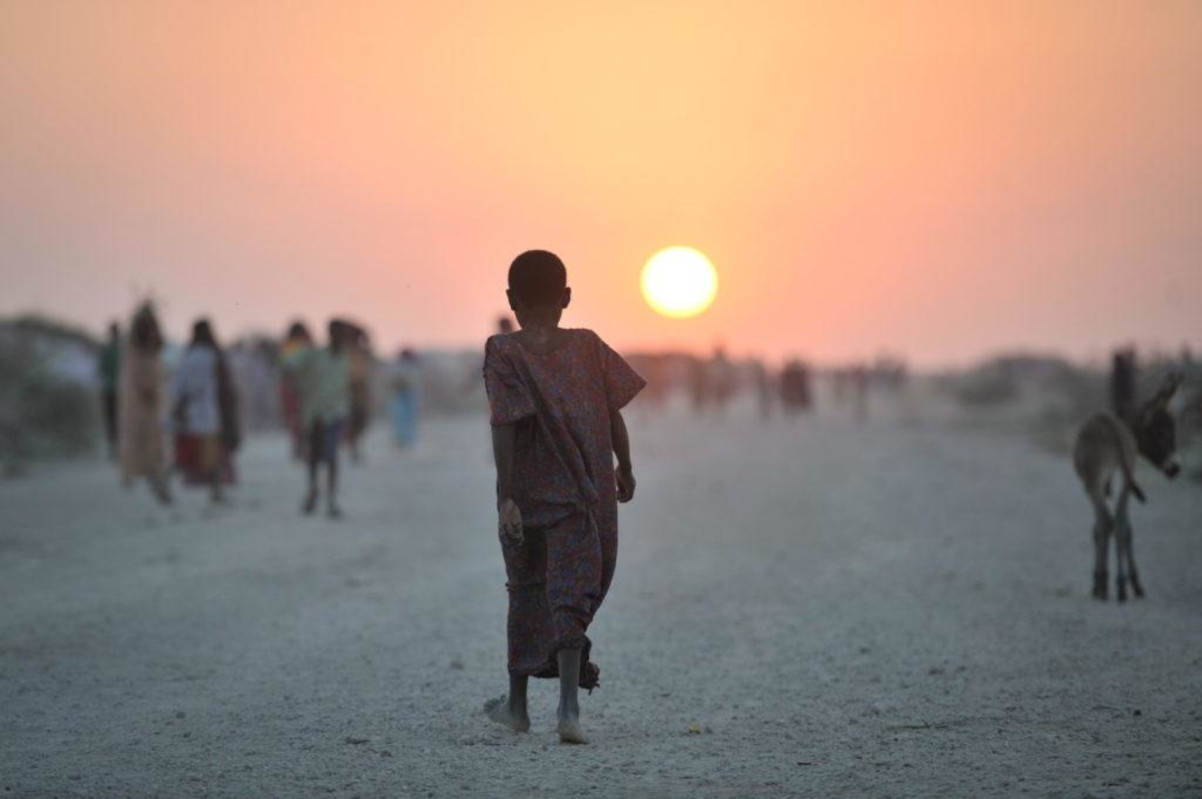
In Sudan’s civil war, Rapid Support Forces (RSF) fighters have reportedly checked the sex of babies, then, if they are boys, proceeded to kill them. Reuters has gathered witness testimony that exposes the rationale as: “If the boy grows up, he will fight us.”
This is not only a war crime, but a breach of the principle of distinction, a cornerstone principle of international humanitarian law that requires parties to an armed conflict to distinguish between civilians and combatants. This blog argues that in Sudan and beyond, the principle of distinction functions not through objective assessment of conduct but through deeply embedded gendered logic that presumes masculine guilt and feminine innocence, creating a clear gendered binary that influences targeting decisions that violate international humanitarian law (IHL).
The Principle of Distinction
IHL requires parties to distinguish civilians from combatants during armed conflicts. The Sudan conflict is a non-international armed conflict (NIAC). In NIACs, it is particularly difficult to determine the application of the principle, as Additional Protocol II to the Geneva Conventions provides no clear definition of “combatant.” Instead, civilians lose protection when they “take a direct part in hostilities.” This leaves room for gendered assumptions that determine guilt and innocence as markers of who is worthy of being targeted, instead of the civilian/combatant binary.
The gendered genealogy of innocence
Historically, the operation of the principle of distinction has been influenced by gendered stereotypes. Helen Kinsella’s work, The Image Before the Weapon, argues that the principle of distinction has been shaped by historical discourses that framed women as innocent because they lacked the agency to participate in war. She points to Augustine and Aquinas, who claimed that women were to be spared from war because of their value as reproducers and as property. This framing persists in modern-day conflicts, such as those in Sudan.
When an RSF fighter posted on social media that the laws of armed conflict entitled his forces to claim women as “war booty,” he was echoing centuries of discourse that collapses women into objects lacking agency. This logic means women are automatically designated as innocent, and therefore civilians, giving rise to the logical inverse assumption that men are guilty as they actively participate in conflict, and thus can be treated as combatants.
Other than being a blatant misreading of IHL (there are no customary IHL rules that allow war booty in NIAC, nor can women be classified as war booty), this rhetoric is merely a replication of the discourse of the historical figures mentioned by Kinsella. Assuming these women qualify as civilians, the principle of distinction has not been applied in good faith, in accordance with its ordinary meaning and consistent with the object and purpose of IHL. It underscores women’s lack of agency as equivalent to property, limiting their status to below that of a citizen.
This presumption of women’s innocence creates a paradox. In Sudan, systematic sexual violence against civilian women by RSF fighters is both a violation of distinction and a consequence of the very gendered logic that supposedly protects them. If women are positioned as the ‘innocent civilians’, this fuels the incentive for fighting, as men have to protect innocent and vulnerable women from the opposition, and the opposition will directly target these women to undermine the masculine power (for more, see Sjoberg).
Moreover, the presumption of female innocence erases women’s actual participation in the conflict, and it fails to account for women’s agency and therefore participation as combatants. For example, it has been reported that several Ethiopian female mercenaries have fought for the Rapid Support Forces and have been arrested. Videos have also emerged of women training for the Sudanese Armed Forces. This highlights that assumptions that women are innocent civilians lacking in agency, rather than active combatants, can prove problematic, as they do not account for the varied roles that women play in conflict. Innocence presumption flows from an underlying denial of women’s agency.
Men as the Guilty Threat and Therefore Valid Target
A UNHCR protection officer confirmed the RSF’s objective “seems to be the elimination of future fighters.”The Interpretive Guidance On The Notion of Direct Participation in Hostilities Under International Humanitarian Law guides the constitutive elements of direct participation in hostilities to determine who is a ‘combatant’ in NIAC. The guidelines require a sufficient threshold of harm, direct causation, and belligerent nexus to establish someone as a valid military target. Babies cannot meet this standard. Neither can men be detained at checkpoints solely based on age or sex. Killing based on assumed guilt based on sex, rather than by establishing actual involvement, is a breach of IHL. It demonstrates how gender informs the innocent/guilty binary as the primary determinant.
In Sudan, targeting decisions appear driven not by assessment of specific hostile acts but by gendered presumptions about who poses an immediate or future threat.Male infants cannot meet any threshold of direct participation. Neither can men detained at checkpoints solely based on age and sex satisfy the Interpretive Guidance’s requirements for losing civilian protection. The gap between legal standard and practice reveals how gender operates as a substitution for combatant status regardless of individualised assessment of conduct.
Men and boys have also been forcibly conscripted under threat of execution. This reflects what scholars call hegemonic masculinity, which is the assumption that men are natural fighters and must protect innocent women, which, in wartime, justifies conscription. Men are assumed to be combatants because of their gender, then forced to become combatants to fulfill that assumption. The practice illustrates how gender operates not as evidence of combatant status but as its determinant.
Consequences of Gendered Targeting
Research shows that men constitute the majority of civilian casualties in armed conflicts globally. Their vulnerability is ignored, partly because “civilian” has become equated with femininity, meaning that the targeting of men fails to register as targeting of civilians even when those men have taken no part in hostilities.
This is not unique to Sudan. In Srebrenica, Bosnian Serb forces systematically executed approximately 8,000 men and boys after separating them as ‘fighting age males’ regardless of whether they had participated in hostilities. The International Criminal Tribunal for the Former Yugoslavia recognised this gendered targeting as genocidal. Yet, the underlying assumption that military-age masculinity equals combatant status continues to inform targeting decisions across conflicts.
What This Means
Historical gender norms continue to constrain women’s agency by positioning them as the presumed ‘innocent’ civilian, while men are associated with guilt. Increasingly, this gendered innocent/guilty binary operates as a replacement for the legal categories of civilian and combatant. This is borne out in Sudan, where women are subjected to sexual violence as an attack on their perceived innocence and an attack on the men who are expected to protect them. In contrast, men are targeted based on their gender and assumed guilt.
IHL breaches are difficult to detect, enforce, and hold accountable. Real change requires confronting how gendered stereotypes formed during peacetime shape the principle of distinction during times of conflict.
Olga Makin holds an LLB (Hons) from the University of Technology Sydney and is currently completing an LLM (Hons) at Utrecht University in the Netherlands. She is passionate about feminist theory in Conflict and Security law.
This article is published under a Creative Commons License and may be republished with attribution.