The Strait of Hormuz crisis shows how quickly turmoil in one theatre sharpens pressure in another. From fuel insecurity in Australia and Japan to a thinner US military presence near Taiwan, the lesson is clear: security cooperation must move from the margins of alliance policy to a practical agenda of resilience, industrial capacity, and joint readiness.
The latest disruption in and around the Strait of Hormuz reinforces a reality Indo-Pacific states can no longer ignore: security theatres do not operate separately. Instability in one region can quickly reshape strategic conditions in another. Energy markets, shipping routes, supply chains and alliance politics link them together. When Hormuz is effectively shut, the consequences are not confined to the Gulf. They reverberate across the Indo-Pacific. What matters for Australia and Japan is what follows from this. If crises now bleed across regions, Canberra and Tokyo can no longer treat their security relationship as a useful add-on to the US alliance system.
For both countries, the first impact of the Hormuz crisis is economic, but the deeper consequence is strategic. Australia remains heavily dependent on imported liquid fuel, with more than 80 per cent of refined fuel consumption sourced from abroad. That exposure was serious enough for Prime Minister Anthony Albanese to make a rare televised address urging calm and encouraging Australians to use public transport where possible. Japan is even more exposed: official Japanese energy material states that about 95 per cent of its crude oil comes from the Middle East. Other regional partners face similar vulnerability. The Philippines, for example, has sought Russian crude to shore up supply.
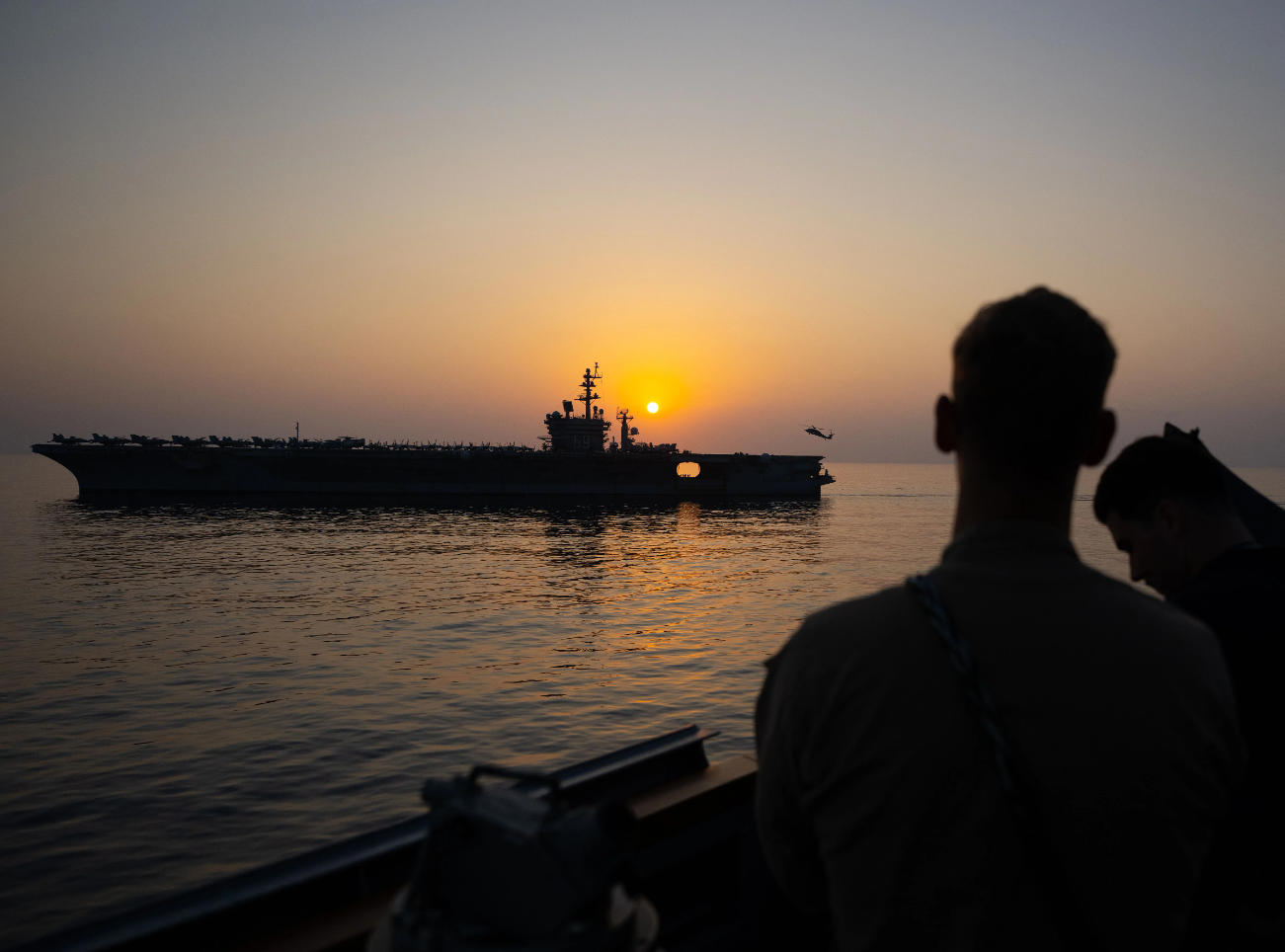
Shocks outside the Indo-Pacific do more than raise prices. They can also pull US military assets away from Asia, as shown by Washington’s shift of a Patriot battalion and parts of a Terminal High Altitude Area Defense (THAAD) from Indo-Pacific Command (INDOPACOM) to Central Command (CENTCOM), and by the USS Nimitz leaving the South China Sea for the Middle East in June. That conflict is reducing US maritime and missile-defence capacity in Asia just as China intensifies pressure around Taiwan.
That should push Taiwan closer to the centre of Australia–Japan strategic thinking as crises do more than disrupt markets. To treat this as a distant or hypothetical problem would be a strategic indulgence. Put bluntly middle powers can no longer assume geography or diplomatic caution will insulate them from a worsening regional balance.
Distant conflicts – like that presently in the Middle East – consume political attention, complicate defence planning, and weaken deterrence just as the regional balance becomes more contested. For US allies and partners in the Indo-Pacific, the danger is not simply that Washington is preoccupied in the Middle East, but that the diversion of attention and military resources can create more strategic space for China in Asia.
A Taiwan contingency would entangle Tokyo immediately. Japan’s southwestern island chain would come under direct pressure, along with the credibility of its defence posture. Canberra would also be implicated through alliance expectations, trade routes, semiconductor disruption, and the broader question of whether coercion can rewrite the regional order. Taiwan is therefore not separate from instability in the Middle East, but part of the same strategic problem confronting Australia and Japan.
Australia’s 2024 National Defence Strategy is explicit that Australia’s security interests are anchored in the Indo-Pacific and that defence engagement with regional partners like Japan is central to preserving a favourable strategic environment. That logic is reinforced by support for Japan’s Free and Open Indo-Pacific vision, now a decade old, which seeks to uphold stability, freedom of navigation, and the rule of law. But rhetoric must now be matched by practical effect: stronger defence industrial cooperation, deeper operational integration, tighter supply-chain coordination and more serious planning for economic and military resilience. Diplomacy remains indispensable, but diplomacy that is not backed by credible capability increasingly risks becoming little more than strategic theatre. In an era of simultaneous shocks, resilience, interoperability and industrial depth are not secondary policy questions; they are the material foundations of deterrence.
Tokyo is already heading this way. Its defence spending is now on track to reach roughly 2 per cent of GDP by 2026, ahead of the original timetable. Canberra is also moving in this direction; Its selection of the upgraded Japanese Mogami-class frigate as the preferred platform for its future general-purpose frigates is significant not just in capability terms, but in strategic terms. Procurement decisions shape interoperability, industrial linkages and political trust for decades. Australia has also begun domestic Guided Multiple Launch Rocket System (GMLRS) missile production, and the Albanese Government has sought proposals for an A$1 billion co-investment vehicle to support Australian firms developing defence and dual-use advanced capabilities. These moves reflect a growing recognition that deterrence depends on the capacity to generate, replenish and sustain combat power.
Japan and Australia are also deepening operational integration through exercises such as Yama Sakura, an increasingly important venue for combined planning and readiness with the United States. Talisman Sabre, Australia’s largest biennial military exercise, is an even more visible expression of that trend: its 2025 iteration brought together more than 40,000 personnel from 19 nations for high-end warfighting scenarios across Australia and Papua New Guinea. At that scale, the exercise does more than signal intent; it demonstrates that strategic convergence is being translated into practical military capability.
If Tokyo-Canberra collaboration stalls here, both countries could end up with the worst kind of partnership: politically close but strategically exposed. In a real crisis, talk of a ‘special strategic partnership’ will not move fuel, replace munitions, protect shipping, or make up for thin stockpiles and weak joint planning. The danger is not just a stronger China. It is that Canberra and Tokyo discover too late that strategic alignment is not the same thing as jointreadiness.
Ultimately, Australia and Japan cannot prevent every disruption. But they can reduce their exposure by focusing cooperation on the specific vulnerabilities these crises reveal: fuel and supply-chain resilience, defence industrial capacity, sustainment, and deeper operational coordination for regional contingencies.
Closer Australia–Japan security cooperation is therefore necessary to make both countries more resilient and better prepared for simultaneous shocks across connected theatres.
Dr Reuben Steff is Assistant Professor at Mendel University, Brno, Czech Republic. He teaches courses on Geopolitics, International Relations and International Security. His research spans the the dynamics of great-power competition between the United States and China, implications of artificial intelligence for the global balance of power, the interaction between nuclear deterrence theory and ballistic missile defence within the security dilemma, and New Zealand, Australia and United States foreign policy.
He is the author of five books, including New Zealand’s Geopolitics and the US-China Competition (Palgrave Macmillan, 2025), Emerging Technologies and International Security: Machines, the State and War (Routledge 2020) and US Foreign Policy in the Age of Trump: Drivers, Strategy and Tactics (Routledge, 2020). His latest journal articles are: “The Strategic Case for New Zealand to Join AUKUS Pillar 2”, Australian Journal of International Affairs, (2025) and “‘Our region is now a Strategic Theatre”: New Zealand’s Balancing Response to China”, The Pacific Review (2024).
This article is published under a Creative Commons License and may be republished with attribution.