As the fifth anniversary of Australia’s departure from Afghanistan draws near, questions about the conduct of its soldiers still captivate the national debate. The commissioning of the Brereton Report demonstrates a genuine commitment to International Humanitarian Law (IHL). But the failure to explore the role of dehumanisation in alleged breaches of international law is a potentially dangerous oversight.
Australia has long presented itself as a champion of a rules-based international order. From successive foreign policy statements to military doctrine, Canberra has consistently argued that international law is not simply a moral good, but a strategic necessity. Yet the allegations contained in the Brereton Report exposed a disturbing contradiction: a military deployed by a state deeply committed to the laws of war was nonetheless implicated in credible allegations of serious breaches of those same laws.
The challenge for policymakers is not merely how such acts occurred, but how they occurred despite extensive legal training, operational oversight mechanisms, and institutional commitment to IHL. The answer matters because it points to a broader lesson for Australia and its partners: compliance with the laws of war depends on more than doctrine, training, and legal frameworks alone.
Why Brereton Matters
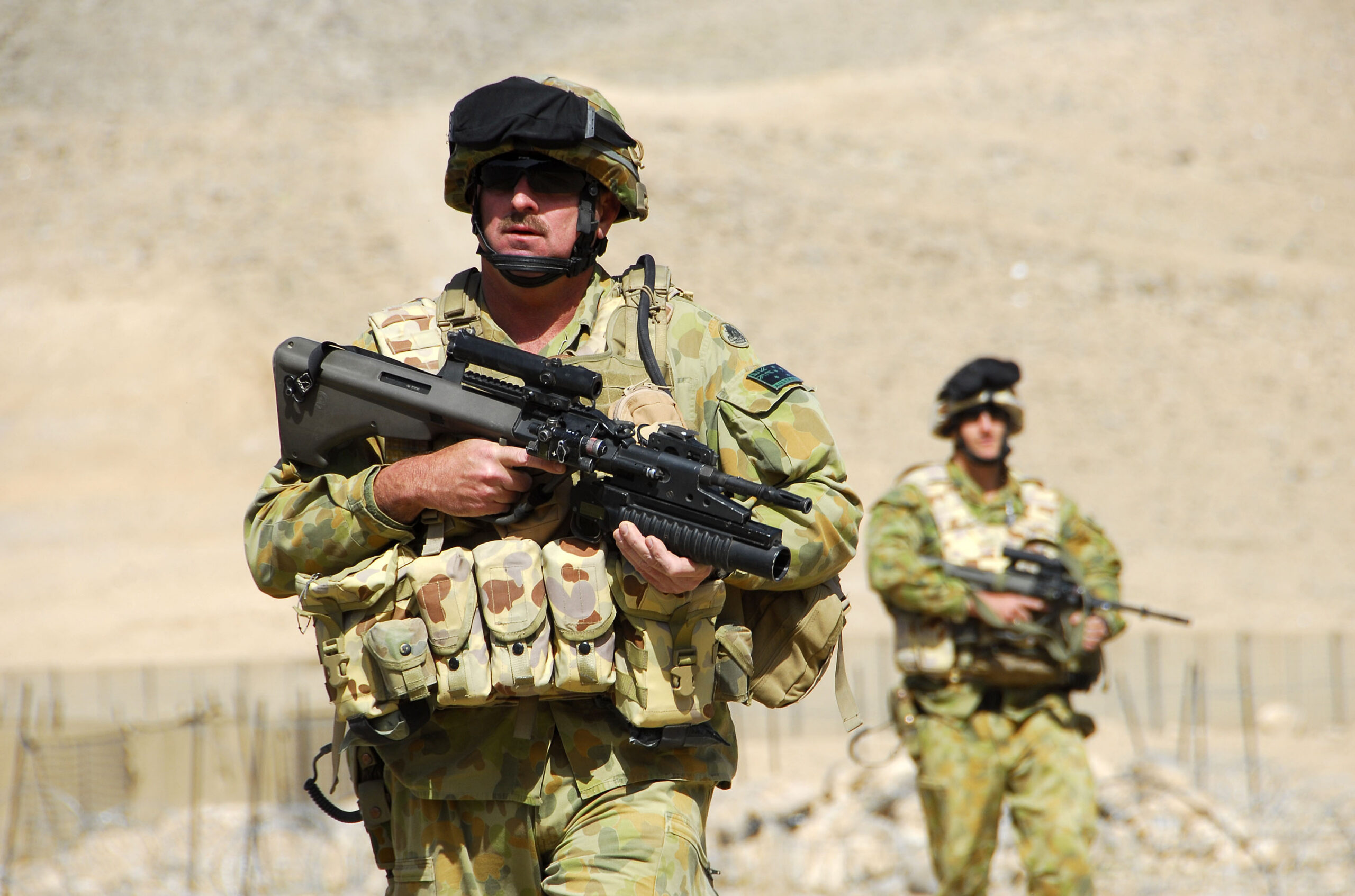
The Brereton Inquiry found credible information relating to 23 incidents in which Afghan civilians or persons under control were allegedly killed unlawfully by Australian special forces personnel. Significantly, the report concluded that these were not cases arising from confusion in combat or split-second decisions made under fire. Rather, it involved many individuals who were clearly protected under the laws of war. It also identified evidence of concealment, fabricated witness reporting, and the practice of “blooding” junior soldiers, whereby new personnel were allegedly encouraged or directed to participate in unlawful killings as a rite of initiation. In response, much of the post-Brereton discussion has focused on operational factors: repeated deployments, weak oversight, insular command cultures, and failures of accountability. These are undoubtedly important. However, they do not fully explain why some personnel came to view certain Afghan civilians as outside the normal boundaries of moral concern. As we argue in our recently published Australian Journal of International Relations paper, a more complete explanation requires attention to the role of dehumanisation.
Research on conflict consistently demonstrates that dehumanisation can reduce empathy, weaken moral restraint, and increase the likelihood of unlawful violence. In Afghanistan, evidence highlighted both in the Brereton Report and subsequent scholarship suggests that some Afghan civilians were increasingly interpreted through assumptions of inherent threat. Categories such as “spotters” and “squirters” could transform suspicion into justification for lethal force, while complaints from Afghan community leaders were frequently dismissed as insurgent propaganda rather than treated as credible testimony.
Afghanistan, Australia & the Anglosphere
What emerges is a pattern in which Afghan voices were regularly discounted, while assumptions about danger were readily accepted. Such attitudes make it easier to overlook the humanity of those caught within a conflict zone and, in turn, make violations of the laws of war more likely.
Importantly, these attitudes did not develop in isolation.
The Afghanistan war unfolded within a broader post-9/11 environment across the so-called ‘Anglosphere’, in which Muslim and Middle Eastern populations were frequently framed through the lens of security threats. Popular culture, media narratives, online communities, and social media networks all contributed to simplified and often negative representations of people associated with conflict zones. Evidence from Australia during the period covered by the Brereton Inquiry shows instances of racist language directed at Afghans, extremist symbolism, and online communities in which demeaning stereotypes circulated among some military personnel.
This matters because modern military personnel do not operate solely within the professional culture of their armed forces. They are also embedded within wider transnational networks of communication. The beliefs and assumptions formed in these spaces can challenge or undermine the values that military organisations seek to promote.
Preventive & Accountability Measures
For Australia and other liberal democracies, the policy implications are significant.
First, preventing future violations requires more than improving command structures and legal oversight. It also requires recognising dehumanisation as a strategic risk. Military education should treat dehumanising language and stereotypes not merely as disciplinary issues, but as factors that can directly undermine operational effectiveness and compliance with international law.
Second, defence organisations need to take seriously the influence of online communities and broader information environments. Extremist narratives, racialised stereotypes, and hostile forms of identity politics no longer remain at society’s margins. They circulate through digital networks capable of reaching military personnel wherever they are deployed. Understanding these influences should become part of force preparation and professional military education. Australia has already taken some steps towards mitigating these risks by strengthening vetting procedures to prevent extremists from joining the ranks of its defence forces. The question about whether these policies go far enough remains open.
Third, the Australian experience highlights the importance of accountability in the promotion of the rules-based order. The establishment of investigative mechanisms following the Brereton Report reflects an understanding that credibility depends on a willingness to scrutinise one’s own conduct. Australia’s response was shaped not only by domestic considerations, but also by the reality that international institutions increasingly expect states to investigate and prosecute serious allegations themselves – for example through the International Criminal Court’s ‘complementarity’ principle.
For like-minded liberal states, the broader lesson is clear. Commitment to international law at the policy level does not automatically ensure compliance on the battlefield. Strategic interests, legal obligations, and professional military values can all support the laws of war, yet still prove insufficient when dehumanising narratives take hold. If liberal democracies are serious about upholding international law, they must pay as much attention to the narratives that shape perceptions of the enemy as they do to the legal rules governing combat itself.
Dr Matt Killingsworth is a senior lecturer in International Relations at the University of Tasmania. He is co-editor of Violence and the State (Manchester University Press, 2015) and the forthcoming Civility, Barbarism and the Evolution of International Humanitarian Law: Who Do the Laws of War Protect? (Cambridge University Press). His current research focuses on the evolution of the modern laws of war and the International Criminal Court. He is the chair of the Tasmanian Red Cross International Humanitarian Law Committee and a regular contributor to local and national media.
Dr Joseph Haddon is a Lecturer at the University of Tasmania whose research focuses on international institutions and political order. His recent work examines how transnational networks function in an area of contested global governance. He is a member of the International Studies Association and contributes to public discussions of international affairs through media, community engagement, and policy-focused research.
This article is published under a Creative Commons License and may be republished with attribution.