A name is never just a name. As Nauru moves to become Naoero, what does the Pacific’s growing embrace of indigenous names reveal about the unfinished politics of decolonisation?
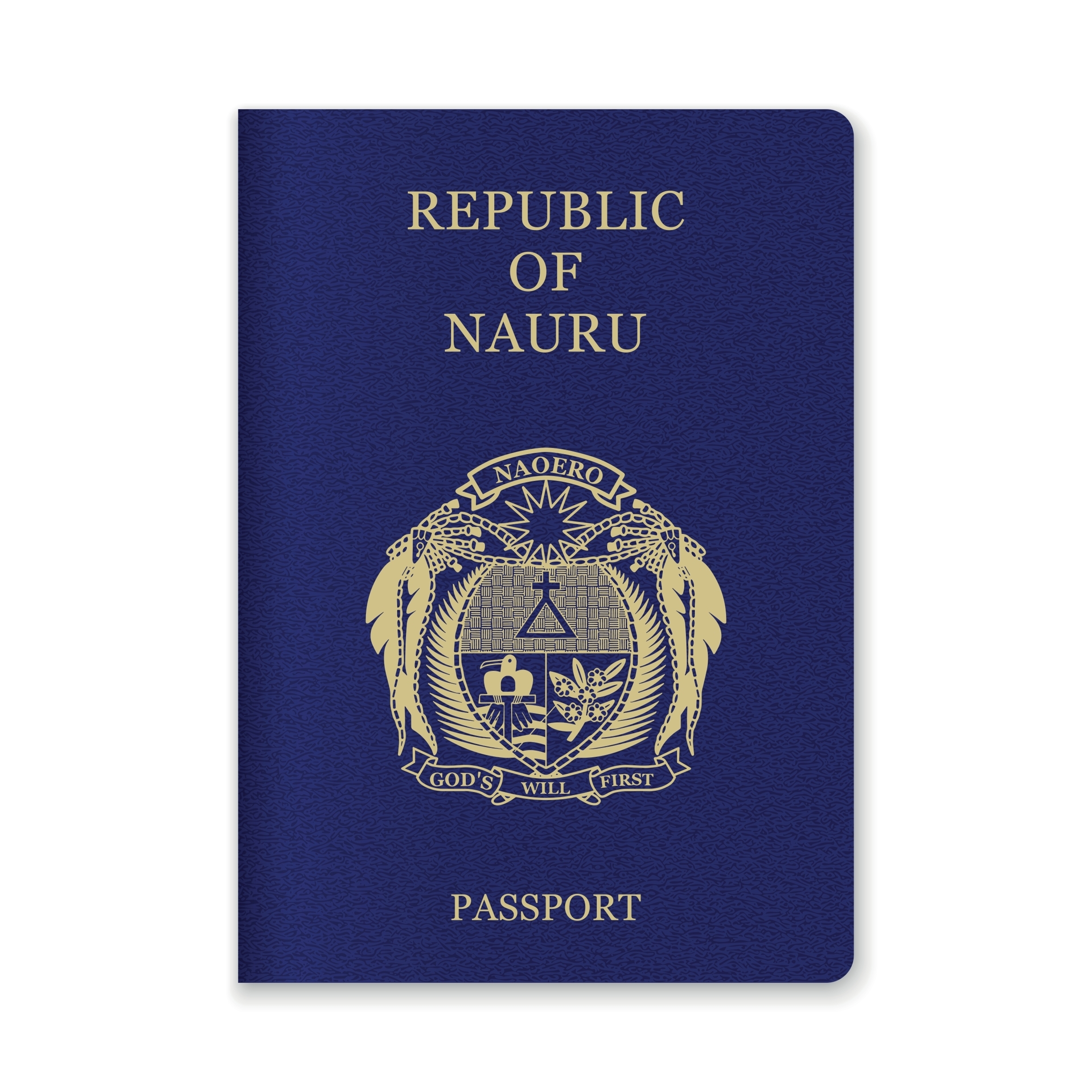
Soon, the name Nauru may disappear from official use, as the country moves toward adopting Naoero as its official name. In May, the Nauruan parliament approved the constitutional amendment for renaming Naoero as their country’s official name.
When President David Adeang submitted this bill, the government explained that replacing ‘Nauru’ with ‘Naoero’ was simply a correction of a name that was made for the convenience of foreign tongues. President Adeang went on to describe the proposal as an effort to faithfully uphold the country’s identity, heritage and language, echoing recent renaming efforts elsewhere, including Eswatini in 2018 and Türkiye in 2022. Throughout the history of Nauru, colonialism profoundly shaped the island’s modern history, as Germany, the United Kingdom, New Zealand and Australia have colonised the Micronesian island state. The name Nauru can be viewed as the legacy of colonialism, and unfortunately, this is not the only case in the Pacific region.
Self-Naming and Decolonisation Across the Pacific
In fact, most of the sovereign states in the south Pacific region have experienced varying forms of colonial rule and external control by the Western and regional powers, and with many of their names still reflecting these colonial legacies. The Cook Islands, for instance, were named after Captain James Cook following his voyages through the Pacific in 1773, and they failed to change their name following the failed referendum in 1994. In 2019, the local traditional leaders led another attempt to better reflect Polynesian culture and heritage under government support, but it was opposed by parts of the Cook Islands diaspora overseas.
As the associated state with the Cook Islands, the name of New Zealand was also invented during the colonial period by the Dutch as Nieuw Zeeland and adapted in English form until now. In recent times, the name Aotearoa from Maori language has increasingly appeared in both official and international settings, such as marked as Te Kāwanatanga o Aotearoa on the official governmental website in New Zealand, and labelled as “Aotearoa (New Zealand)” to introduce the situation of Indigenous people in New Zealand by the International Work Group for Indigenous Affairs (IWGIA). However, the name Aotearoa itself is still criticised for excluding the South Island since the origin of Aotearoa only refers to the North Island. In 2022, Te Pāti Māori, the Maori Party, submitted a petition with over 70,000 signatures to the Parliament for the sake of changing the official name to Aotearoa, although public opinion polls suggested that many New Zealanders remained hesitant about formally changing the country’s name. More broadly, the coexistence of “Aotearoa” and “New Zealand” demonstrates how naming in postcolonial societies often becomes an ongoing negotiation between indigenous resurgence, colonial legacies and state recognition.
Among all these attempts to self-name, there are still some positive cases in the Pacific islands, Kiribati and Tuvalu. Both Kiribati and Tuvalu were formerly part of the British Gilbert and Ellice Islands colony, established in 1892. The colonial names themselves originated from British figures: the Gilbert Islands were named after sea captain Thomas Gilbert, while the Ellice Islands were named after British politician and shipowner Edward Ellice. The colony was formed partly to secure British strategic and economic interests in the Pacific, including phosphate resources and imperial competition with other colonial powers. However, the cultural and ethnological difference, and even the gap of population, between Gilbertese and Ellice Islanders slowly fuelled the tension among the colony, leading to the separation and even independence of Ellice Islands from the rest of the colony under the decolonisation in the post-World War period. After the approved referendum in 1974, Ellice Islands gained independence in 1978 and decided to change their name to Tuvalu, which means ‘eight standing together’ in the local language. For the Gilbert Islands, they achieved independence one year later under the new name Kiribati, which is the Gilbertese transliteration from the English name “Gilberts”. By adopting indigenous-language names rather than retaining the colonial designation of the Gilbert and Ellice Islands, both Tuvalu and Kiribati sought to establish political communities rooted in local culture and history. Renaming therefore became part of a broader effort to redefine national identity and belonging during decolonisation.
What’s in a Name? The Politics of Naming
Drawing on Imagined Communities, national identity can be understood as socially constructed through shared language, history, symbols, and collective memory, allowing individuals to imagine themselves as part of a wider community despite never meeting one another. Across the Pacific, debates over names are not simply about terminology, but about who has the authority to define identity, history, and belonging. As nationalist and indigenous movements seek to resist “outside naming” imposed by colonial powers, self-naming becomes part of a broader struggle for political and cultural recognition. In this sense, names become more than geographical labels; they shape how communities imagine themselves, how outsiders perceive them, and how legitimacy is expressed politically and diplomatically.
Renaming in the Pacific is deeply connected to the region’s ongoing struggles over colonial history, sovereignty and indigenous identity. The name “New Caledonia” itself originated from James Cook, who named the territory after the Latin term for Scotland in 1774. Following French annexation in 1853, the colonial name remained embedded within the territory’s political system and international identity. Since the rise of the Kanak independence movement in the 1980s, however, the term “Kanaky” has increasingly been used as an alternative name for New Caledonia. More than a geographical label, “Kanaky” represents an indigenous political identity tied to sovereignty and decolonisation. Alongside the Kanaky flag and the Provisional Government of Kanaky, the name became part of a broader effort to construct an alternative national identity beyond the French colonial framework. Although France has gradually expanded New Caledonia’s autonomy over the past four decades, the question of sovereignty — and the future recognition of “Kanaky” — remains unresolved.
In the Pacific context, indigenous communities have increasingly sought to reclaim identities rooted in local heritage, language, and tradition in order to resist colonial frameworks imposed upon them. Whether the debate is taking place in Naoero, Aotearoa, Tuvalu, Kiribati, or Kanaky, renaming efforts reflect attempts to reconnect national identity with indigenous language, cultural heritage, and historical memory. These debates demonstrate that naming is not merely symbolic, but deeply connected to questions of sovereignty, representation, and postcolonial identity in the contemporary Pacific.
As the Nauruan President mentioned, changing national names is not an uncommon occurence, we have seen this with Türkiye and Eswatini. Even if it is just one alphabet different, people may prefer Sāmoa and Hawaiʻi over Samoa and Hawaii because this is the correct pronunciation with respect, showcasing their ways of life and identity. For a sovereign state after their independence in the last century, the colonial legacies have become embedded in their political system and even as their national symbols. Across the Pacific, colonialism did not only reshape borders and political systems, but also the very names through which islands are recognised by the world. From Naoero to Kanaky, debates over names reveal that decolonisation in the Pacific is neither a completed chapter of history nor a wholly new process, but an ongoing negotiation over identity, language, sovereignty, and political belonging.
Stephen, Hiu-fung, Kei is a Hong Kong-born researcher and communications practitioner based in Sydney, with academic backgrounds in international relations and Asia-Pacific affairs from The University of Queensland and National Sun Yat-sen University. His research focuses on Pacific diplomacy, decolonisation, identity politics, and Taiwan–Pacific relations. He currently works in governance research and has written on Pacific naming politics, climate diplomacy, and regional sovereignty.
This article is published under a Creative Commons license and may be republished with attribution.