As competition for Africa’s critical minerals intensifies, the United States risks fighting the wrong battle by trying to match China’s investment power. Its strongest strategic asset may instead be credibility; offering transparent, responsible mining practices that distinguish it from Beijing’s resource-driven approach.
Due to its broad resource endowment, Africa has emerged as one of the major arenas for the race for critical minerals among global powers. The continent’s mineral profile, according to the Brookings Institute and the U.S Chamber of Commerce, projects roughly 30 percent of the global critical minerals reserves, like cobalt, lithium, graphite, manganese, and rare earth elements, essential for electric vehicles, semiconductors, renewable energy technologies, and advanced defence systems. As the United States seeks to reduce its dependence on Chinese-controlled supply chains and weaponisation, much of the conversation has centered on ‘catching up’ in terms of financial investments in more mines. But evidence of China’s critical minerals investment in Africa suggests this is the wrong battlefield for the United States because it is unlikely to match or outspend China in the short term. Trying to outbid China on its own terms would not only strain U.S. resources but also likely draw Washington into an expensive competition it is unlikely to win.
Environmental, Social and Governance Standards
Instead, I argue that the U.S should play to its strength and rekindle its promotion of Environmental, Social, and Governance (ESG) standards. In a world that is increasingly concerned with environmental degradation, forced labor, and opaque sourcing, America’s insistence on traceability and robust ESG standards may prove to be its most powerful geopolitical asset. For instance, the Biden administration designed the Minerals Investment Network for Vital Energy Security and Transition (MINVEST) framework to facilitate investment in responsible and strategic critical minerals projects that adhered to high ESG standards. The first Trump administration, in partnership with other members of the G7, launched the Blue Dot Network in 2019, aimed at promoting “quality infrastructure investment that is open and inclusive, transparent, economically viable, financially, environmentally and socially sustainable, and compliant with international standards, laws, and regulations”. Similarly, the U.S.-led Minerals Security Partnership (MSP) framework aims to promote “responsible stewardship of the natural environment; consultative and participatory process regarding land access and acquisition; commitment to meaningful consultations with communities; ensuring safe, fair, inclusive and ethical conditions in the community and workplace; provision of economic benefits for workers and local communities; and ensuring transparent and ethical business operations”.
For years, ESG has been treated primarily as a corporate compliance exercise, which critics dismissed as bureaucratic overreach. Due to changes in the geopolitical landscape, ESGs are viewed differently: they are considered corporate responsibility but are becoming a strategic instrument of economic statecraft.
Amid the critical mineral commodity boom, conventional wisdom has focused on how most resource-endowed countries, particularly in Africa, can attract the requisite investments and strategic partnerships. So far, Chinese firms have responded positively by rolling out resource extraction infrastructure and financing that most Western investors are struggling to match. However, I concur with the observation that amidst the scramble for Africa’s critical minerals, ESG standards must not be abandoned. African governments confronted with the consequences of poorly governed resource extraction, manifested through environmental destruction that has polluted water, degraded forest reserves, coupled unsafe labor conditions and the displacement of host communities, and the widespread debates about the resource curse, are increasingly asking the tough questions of how these minerals are sourced and not just who can extract them. For example, a 2025 report from the Council on Foreign Relations shows that DR Congo has intentionally tried to diversify its critical minerals partnerships by attracting additional Western investors, mainly to counter China’s dominant influence and ongoing environmental controversies.
The Struggle for Africa
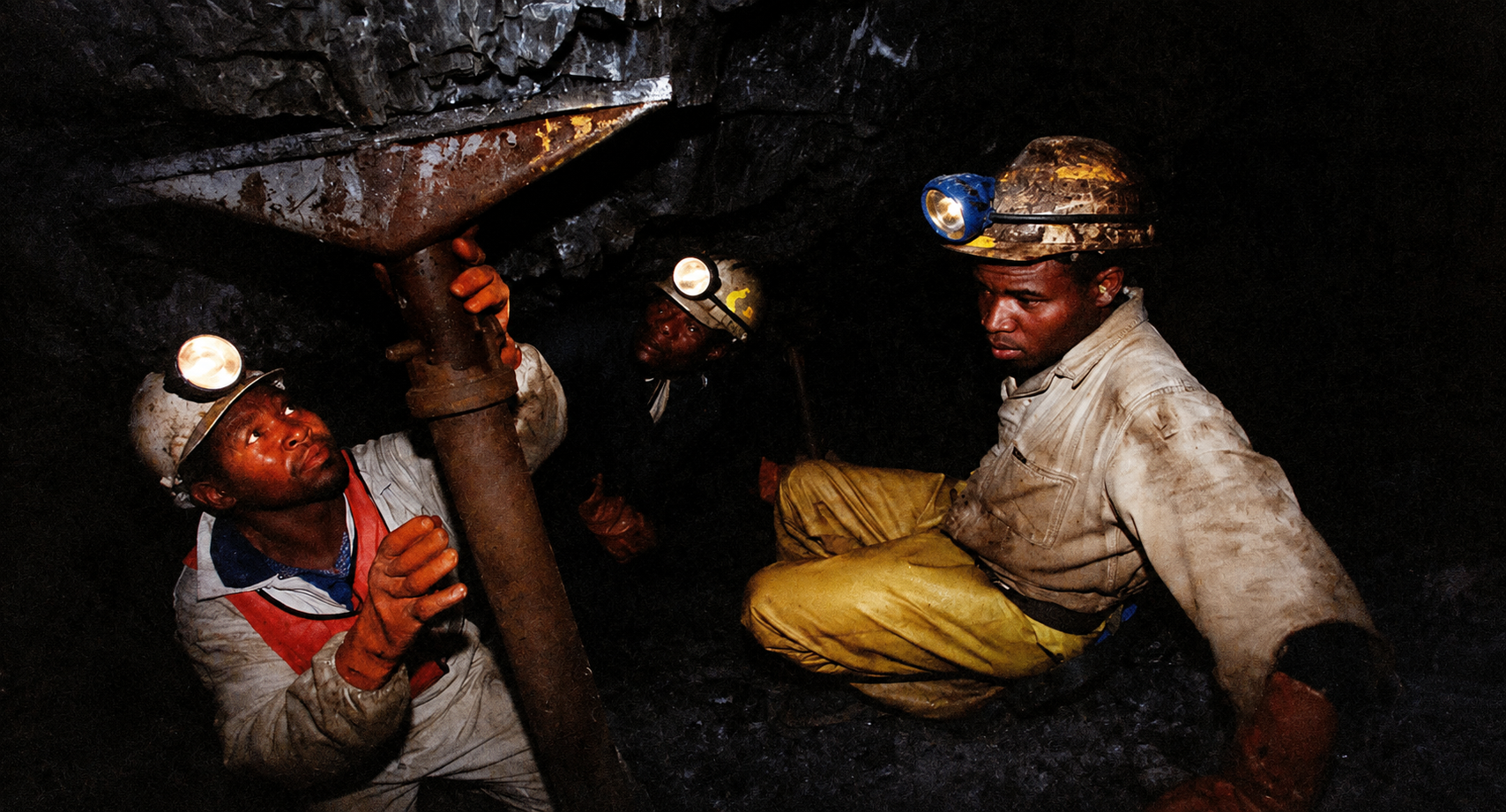
Although most Chinese firms dominate mineral ore extraction in Africa, their extraction processes are mostly found in breach of ESG standards. A 2025 report by the Atlantic Council and the Keough School of Global Affairs at Notre Dame, for instance, documents that “Chinese miners’ consistent flouting of environmental standards and safety measures has severely damaged forest reserves, farmlands, and water resources” in Africa (page. 2). For instance the documented devastating toxic spill of the tail dams– used to store up by-product from copper mining process and is highly concentrated with arsenic, mercury and lead– into the Kafue river in Zambia in February 2025 by a Chinese mining company in attests to these claims. In November 2025, the Democratic Republic of Congo suspended the operations of Congo Dongfang International Mining (CDM), another Chinese mining company that mainly sources copper and cobalt from the country, after the company’s dam collapsed and contaminated the water bodies around Lumumbashi, the country’s second largest city.
Despite the environmental concerns, there is also documented evidence and discussions that children and forced labor are exploited by some Chinese firms in their critical mineral extraction chain. A 2016 report by Amnesty International, for instance, documents how the CDM- a wholly owned subsidiary of the Chinese mineral group Zhejiang Huayou Cobalt Ltd sourced cobalt from areas in the DRC where child labor is rife. The report further documents how the majority of the mine workers mostly worked without basic protective equipment like gloves and facemasks to protect them from long-term effects. Similarly, a 2025 VOA report details how the government of Zimbabwe temporarily suspended operations at the Sino Africa Huijin mine on the grounds of alleged corrupt deals and severe environmental destruction in the Mutasa District of Manicaland.
Prioritising ESG
These developments have considerably altered the calculus for many African leaders and policymakers. Increasingly, governments are not only exploring financing and investment options but also seeking partnerships that prioritises ESG standards to contain social unrest and environmental degradation, creating an avenue for the United States to position itself as a more credible and reliable partner in the critical minerals race in Africa.
While the current Trump administration has de-emphasized ESG as a guiding framework and has rolled back several domestic policies concerning energy minerals, the country’s social safeguards related to ESG abroad remain intact through agency policies and financing agreements. For instance, the operational guidelines of the U.S. International Development Finance Corporation. It continues to mandate that financed mining projects adhere to ESG standards in accordance with its Environmental and Social Policy and Procedures (ESSP). As a pre- and post-investment environmental and social requirement and transparency measure, the DFC requires environmental and social impact assessment reports. Again, Section 4 of the U.S. ‘Critical Minerals Partnership Act of 2025’, currently under review in Congress, aims to establish recommended best practices to safeguard labor rights, protect the natural environment and ecosystems near critical minerals industrial sites, and ensure community safety around these activities. These frameworks make a strong case for promoting ESG standards and minerals governance in general.
As governments and communities become more attentive to ESG and the long-term consequences of resource extraction, traceability has become a strategic asset and a crucial component of economic statecraft. Rather than the U.S. attempting to replicate China’s financing model in the search for critical minerals, it can play to its strengths by reigniting its promotion of ESG standards and reassuring African governments and policymakers that it is a reliable partner for responsible mining. The geopolitics of the search for critical minerals in the decades ahead may not be about capital alone but will also require credibility. The simple reality is that many African countries are not simply looking for another patron but for reliable partners capable of fostering mutually beneficial strategic partnerships. If America cannot outspend China in Africa, it can make major inroads with the social currency of trust.
Baffour Agyeman Prempeh Boakye is a PhD student in the Department of Political Science and International Relations at the University of Delaware. His research interests include broad topics related to Democracy, US-Africa relations, and the politics of Critical Minerals. He can be reached at baffour@udel.edu.