ASEAN has long signalled its intent to respond to disasters “outside the region.” The Pacific offers more than an opportunity for ASEAN to demonstrate that ambition—it offers a chance to build interregional cooperation by connecting two regions with analogous disaster management architectures.
Shared Risks, Shared Opportunity
Although the Southeast Asian and Pacific Regions are often treated as distinct regional theatres, they confront a very similar threat landscape—more frequent and intense climate hazards, rising sea levels, and disruptions brought about by geopolitical crises. The disasters that affect the two regions may differ in impact, scale, and/or context, but both regions have adapted in distinct but at the same time similar ways. At the institutional level, both regions developed regional coordination centres, logistics and stockpile arrangements, and coordination mechanisms for cross-border assistance. Such parallels provide an institutional basis for an interregional partnership in disaster response, one that builds on the Association of Southeast Asian Nations’ (ASEAN) long-communicated vision of responding collectively both within and beyond its region under the declaration on “One ASEAN, One Response” while honouring Pacific leadership and priorities.
The prospects for an ASEAN-Pacific partnership on disaster cooperation are not entirely new. Previous research has argued that beyond shared vulnerabilities, converging policy direction, priorities, and institutional development make interregional partnership a distinct possibility. This assessment is reinforced by the Memorandum of Understanding between ASEAN and the Pacific Islands Forum (PIF) signed in 2023, that details disaster risk reduction and humanitarian assistance and disaster relief (HADR) as priority areas for cooperation. This provides a more formal political foundation for closer cooperation. The same research also cautioned against sovereignty considerations. Any future ASEAN disaster response in the Pacific should therefore take shape as a Pacific‑led partnership and not a mere projection of ASEAN capacity. Building on that foundation, the more important question is no longer whether interregional cooperation is possible, but how it can be operationalised through the analogous mechanisms that exist in both regions.
The starting point is to identify which ASEAN and Pacific disaster response mechanisms should be able to “talk to each other” as practical entry points. To move from analogy to action, it draws on experiences from ASEAN’s 2023 Türkiye-Syria earthquake response that could inform cooperation with the Pacific’s existing disaster response mechanisms. Should the opportunity for ASEAN to respond collectively outside its region arise in the Pacific, the challenge will be translating those lessons into practical interoperability between the two regions’ existing institutional arrangements.
Lessons from the 2023 Türkiye-Syria Earthquakes
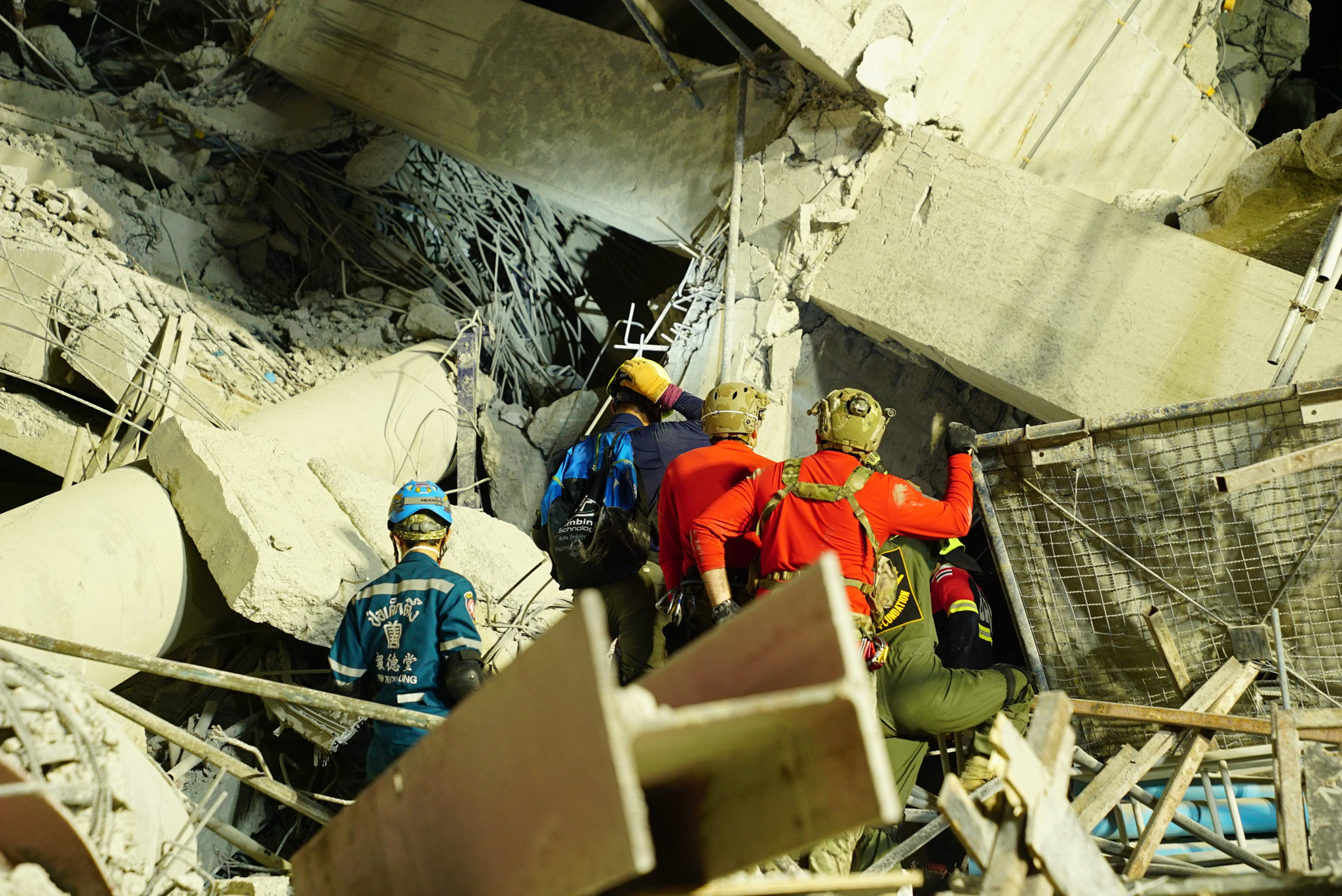
In 2023, an earthquake struck Türkiye and Syria that resulted in catastrophic damages estimated at upwards of USD 34 billion. The disaster prompted an unprecedented international response with over 100 nations pledging assistance including from some ASEAN member states. While not a regionally coordinated effort, this Türkiye-Syria experience proved to be an important milestone for ASEAN’s extraregional ambitions as it demonstrated that capabilities already exist within the region to contribute to major international disasters. Subsequent discussions of the response experience also helped clarify the barriers that ASEAN would need to overcome to realise its long-articulated vision of responding collectively outside the region. Four areas emerged as particularly important: (1) building familiarity, (2) standardising regional expertise, (3) consolidating assets and resources, and (4) strengthening coordination and communication. The significance of these lessons goes beyond ASEAN itself. These matters are not entirely new to both the ASEAN and Pacific disaster management spaces. If familiarity, standards, logistics and resources, and coordination mechanisms are what ASEAN must strengthen to respond collectively beyond Southeast Asia, then it is only logical to connect these with their analogous mechanisms in the Pacific while adapting them for response operations beyond the region.
Bridging the Analogous Mechanisms
On familiarity, cooperation should begin at a strategic level, dedicated to building proactive communication channels between regional defence architectures. The ASEAN Defence Ministers’ Meeting-Plus (ADMM-Plus) and the South Pacific Defence Ministers’ Meeting (SPDMM) provide natural entry points for dialogue and knowledge sharing when envisioning a Pacific-led response supported by ASEAN. The current linkages already provide a strong foundation: Australia and New Zealand are part of the ADMM-Plus, while the ADMM-Plus Military Medicine and HADR Exercise (AMHEx) and the SPDMM’s Exercise LONGREACH, both seek to improve interoperability and foster civil-military coordination for HADR.
On standardisation of expertise, the International Search and Rescue Advisory Group (INSARAG), an established United Nations network, presents the most logical entry point. The Türkiye-Syria response underscored the importance of internationally recognised standards for urban search and rescue (USAR) and emergency medical teams during large-scale international operations. While the number of INSARAG-classified Heavy and Medium USAR teams, deployable for international assistance, remain limited in Southeast Asia (Heavy: Malaysia and Singapore; Medium: Indonesia and Thailand), Pacific Island countries (Fiji, the Cook Islands, Solomon Islands, Tonga, and Vanuatu) have increasingly engaged with the INSARAG network through a capacity-building pathway that is more appropriate for the regional context—the establishment of an INSARAG Pacific Sub-Regional Group. This momentum by the Pacific Island countries coupled with the ASEAN experience in the Türkiye-Syria response presents a compelling opportunity to work towards achieving common standards while recognising different regional contexts and operational needs.
On logistics and surge capabilities, ASEAN’s Disaster Emergency Logistics System for ASEAN (DELSA) – a regional emergency logistics and stockpiling network – and the Pacific’s Blackrock Camp – a regional hub for HADR operations and peacekeeping training and a humanitarian relief depot – could be viewed as analogous regional relief assets. Rather than consolidating the resources as identified in the Türkiye-Syria response, as both DELSA and Blackrock depend on donor support, reciprocal arrangements could be the smarter and more practical option. Reciprocal arrangements for pre-positioned disaster relief would strengthen surge capacity without duplicating investments. At the operational level, cooperation could also be explored between the ASEAN Militaries Ready Group (AMRG) and the relatively newer Pacific Response Group (PRG) (established in 2024). Both the AMRG and PRG perform the function of coordinating military support to civilian-led disaster response and therefore offer a practical avenue for strengthening interregional deployment arrangements.
Finally, on coordination and information-sharing, the AHA Centre’s Emergency Operations Centre (EOC) could connect with comparable counterparts in the Pacific such as Fiji’s Maritime Essential Services Centre or New Zealand’s National Emergency Management Agency. Allowing these centres to “talk to each other” through routine information exchanges and agreed communication protocols lays the groundwork should ASEAN ever support a Pacific-led humanitarian response.
The groundwork is solid. Disaster response cooperation offers a practical avenue to transform ASEAN-PIF partnership into tangible outcomes. The future of the interregional disaster response cooperation lies not in creating new mechanisms, but in enabling existing ones to “talk to each other.”
Keith Paolo Landicho is a member of the 2026 Indo-Pacific Cooperation Network. He is currently a Research Associate on the Humanitarian Assistance and Disaster Relief (HADR) Programme at the Institute of Defence and Strategic Studies, S. Rajaratnam School of International Studies, Nanyang Technological University, Singapore. He obtained a Bachelor of Science (Geography) from the University of the Philippines and was a Disaster Monitoring and Analysis Officer at the AHA Centre from 2020 to 2023. He is currently a member of the ASEAN Emergency Response and Assessment Team and was deployed to Myanmar in 2023 for the Cyclone MOCHA response operations and consultation workshops to operationalise the ASEAN 5-Point Consensus.
This article is published under a Creative Commons License and may be republished with attribution.