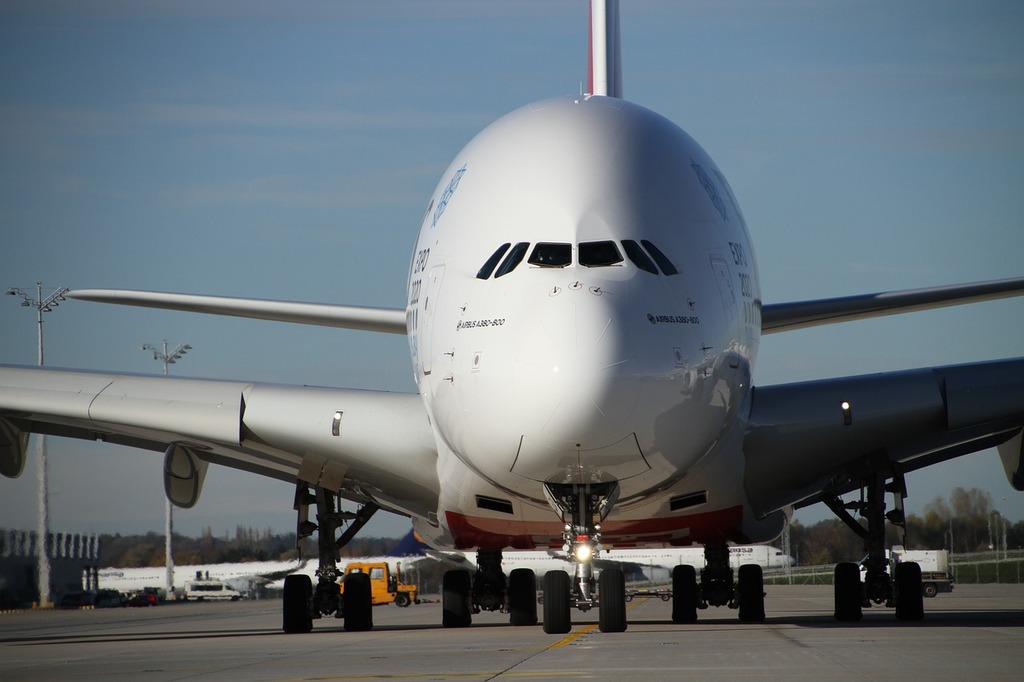
The 2026 war in the Middle East has once again revealed the challenges to commercial aviation vis-à-vis geopolitical instability. Over the past few months, the industry has suffered major shocks across operational and economic domains.
The Impacts of the Conflict: An Industry Under Pressure
The most immediate impact was operational, which comprised airspace closure followed by route restrictions over the conflict-prone region. This led to flight rerouting, cancellations and delays, severely impacting air traffic in one of the most important East-West aviation routes. Subsequently, flight tracking showed that airlines operating between Europe and Asia were forced into taking much longer northern or southern routes. This not only led to increased flight time, but also additional pressure on aircraft utilisation, fuel consumption, slot reliability, maintenance cycles, and crew duty.
The security aspect was even more pronounced. The use of drones, missiles, air defence systems, and GNSS radio frequency interference also posed serious safety concerns to civil aviation. In the same context, the exchange of attacks on airports between the two Iran and the US added another layer of complexity. As a result, airlines had to reassess route safety, suspend selected operations, and adopt longer alternative flight paths to reduce exposure to military activity.
Beyond the direct impacts, the most systemic and consequential setback came from the blockade of Hormuz. The disruption triggered a severe jet fuel crisis, which reached nearly USD 180 per barrel. This trend became an existential pressure point, following output cuts by refineries and tightened supply chains, particularly on airlines dependent on Gulf-sourced supply. As a result, airlines sourced fuel from alternate sources, thereby raising fares, cutting schedules or doing both in some cases.
It is evident that the post-war aviation landscape is unlikely to return to the pre-war status quo. The recovery is likely to be protracted vis-à-vis financial and structural adjustments, along with mounting cost pressures.
Post-War Status Quo
In the short term, the rise of alternative aviation hubs is already visible and may have a stronger role in the global route network. During peak airspace closures, transit hubs such as Istanbul, Singapore, Beijing and Central Asian nodes gained more use as air traffic shifted away from the traditional hubs. In the future, while traditional Gulf hubs are expected to recover owing to geographic centrality and quality passenger services, their dominance might become more contested and conditional owing to perceived security dynamics. This shift is also likely to be reinforced by aviation insurance, as routes in vulnerable regions would face high war-risk premiums. In addition, airports in conflict-prone regions would be compelled to invest billions in infrastructure upgrades vis-à-vis security perimeters for quicker restoration.
The aviation market is also expected to witness intense polarisation. Legacy and well-established carriers with strong hedging capacity and diversified networks are better positioned to absorb the fuel shocks and operational disruption. In contrast, low-budget and ultra-low-cost carriers will have a more pronounced impact and may experience downsizing, route withdrawals or potentially exit from the market as seen in the case of Spirit Airlines which lead to termination of operations , and Wizz air, which witnessed massive revenue. This trend might accelerate industry concentration in the case of prolonged or frequent disruption. In addition, the jet fuel price volatility is set to push for fleet modernisation and boost demand for efficient aircraft, capable of longer flights with lower consumption. In this context, airlines are also anticipated to maintain ultra-long-haul direct flights to avoid vulnerable regions.
Towards Diversification & Recovery
The conflict has also revived the discussion around the use of sustainable aviation fuel (SAF). While the discourse regarding SAF has largely revolved around decarbonisation, the conflict has highlighted its relevance with regards to fuel diversification and energy security by reducing reliance on chokepoints such as the Hormuz. However, it is important to note that SAF is relatively expensive and its access is limited. As per International Air Transport Association, SAF production in 2025 represents only 0.6 per cent of total jet fuel consumption, increasing to 0.8 per cent the following year. While it may not be the immediate solution, it may comprise a major component in the long-term resilience, which may require government subsidies, increased production and regulatory frameworks.
In the long-term, it is foreseen that the conflict will trigger an additional regulatory reset in the industry. This will prompt the need for an adaptive framework that can ensure close coordination between all concerned stakeholders for risk assessment and contingency planning in the future.
The impact and subsequent recovery trajectories will differ significantly across regions. Taking the primary air traffic and infrastructural toll, the Middle East faces the most pressing challenge, with a 50 per cent decline as compared to the pre-war situation. In regards to Europe and Asia, both suffered from rerouting, fuel spikes and operational disruptions. In parallel, some Asian carriers benefitted from traffic redirection. Hence, recovery is likely to be gradual, yet manageable. US carriers remain relatively less impacted owing to alternative routes and a strong domestic market. However, they also cannot escape the rising insurance costs and surging fuel prices, which suggest a strong secondary impact irrespective of geography.
The most important post-war shift is likely to be a re-ordering of aviation priorities from pure cost efficiency toward resilience, security, and operational flexibility. The conflict in the Middle East has not merely disrupted the operational capability of the industry, it has also shown some of the vulnerabilities in contemporary times. These vulnerabilities include the sector’s dependence on stable fuel supplies, predictable airspace access, secure navigation systems, and tightly optimised supply chains. The key lesson is that models built around cost-effectiveness can be vulnerable in an era marked by recurring risks of instability. Hence, the post-war future of aviation is likely to witness a re-ordering of priorities. A reset is expected, where strategic advantage will depend on the capability to balance efficiency with resilience, which will ultimately be the core metric of competitiveness.
Shaza Arif is a Senior Research Associate at the Centre for Aerospace & Security Studies, Islamabad.
This article is published under a Creative Commons license and may be republished with attribution.