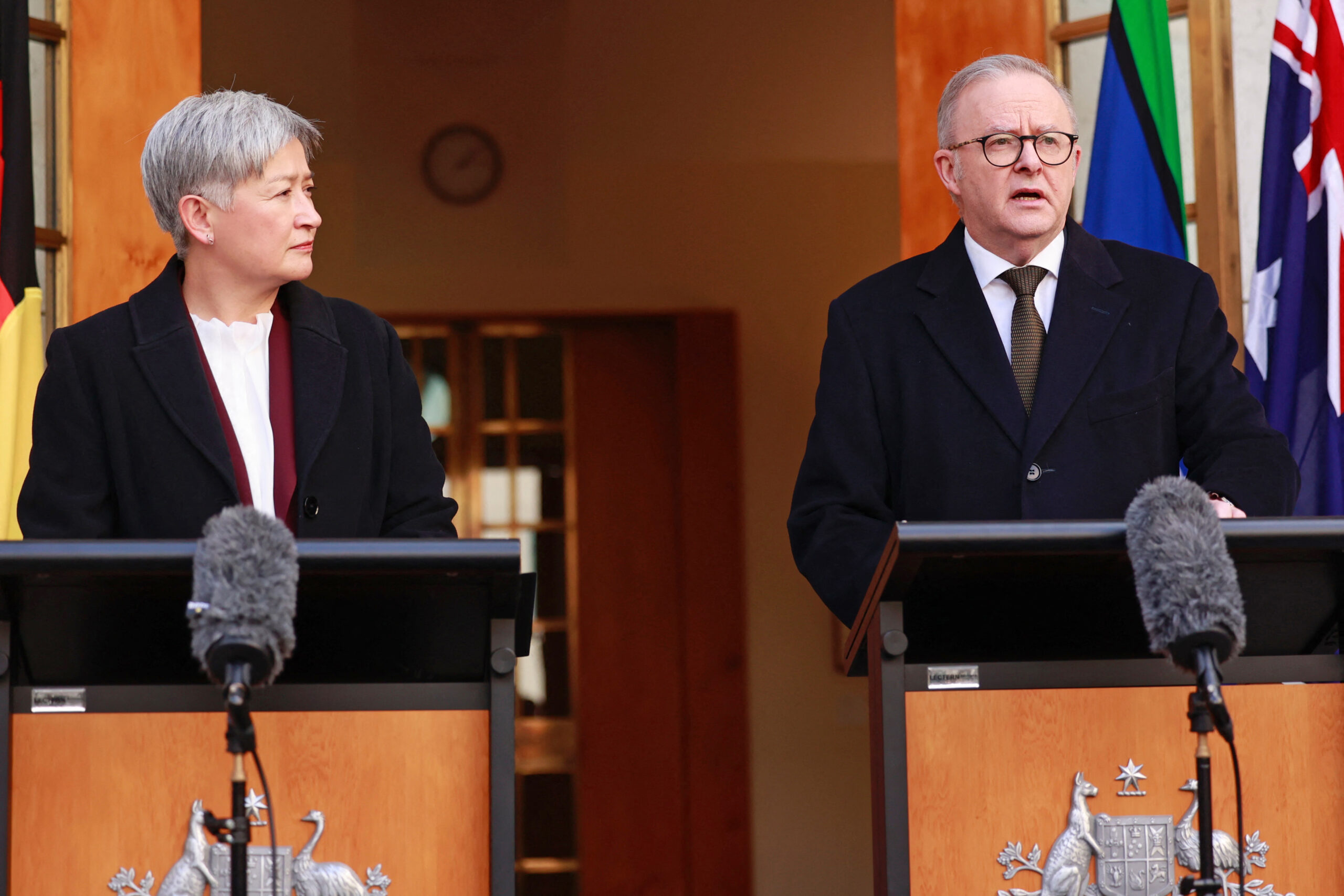
Israeli Prime Minister Benjamin Netanyahu’s “weak” jibe at Anthony Albanese set the tone for one of the sharpest clashes in Australia–Israeli relations in decades. The trigger was Canberra’s 2025 recognition of Palestinian statehood, framed as a principled step consistent with international law and Australian values. History and structure, however, suggest ties will bend rather than break. Australia and Israel have a habit of quarrelling loudly, then resuming practical cooperation in trade, science, security, and people‑to‑people links.
Flashpoints That Shaped the Present
This pattern is not new. In 2010, Israeli operatives forged Australian passports for use in a Dubai assassination, prompting Canberra to expel a diplomat; following the episode, relations normalised within a year. In 2018, the Morrison Government recognised West Jerusalem as Israel’s capital; Labor reversed the decision in 2022, citing international law. Each episode brought intense but temporary friction followed by recalibration — a rhythm that contextualises today’s dispute.
What Changed in 2025—and Why It Matters
Two features make 2025 different. First, Australia’s language and alignments on settlements and humanitarian law placed it closer to Europe (and peers like Canada and New Zealand) than to Washington’s day‑to‑day framing. That doesn’t sever the U.S. anchor, but it signals a values‑forward tilt that matters in multilateral forums and public diplomacy. Second, Netanyahu’s personal swipe elevated an otherwise technical recognition decision into a domestic political event. The Albanese government defended the step as grounded in international law and squarely in Australia’s national interest—consistent with a two-state outcome, alliance management, and regional credibility.
Even so, ballast remains. Two-way trade exceeds $1.4 billion (AUD), and cooperation in intelligence, cyber, counterterrorism, and defence technology is deeply institutionalised. These are “sticky” relationships: hard to build, and rarely undone by political turbulence. Businesses, universities, and agencies that work together year‑on‑year tend to maintain momentum even when leaders trade barbs.
Domestic Drivers Inside Australia
Recognition also reflected Australia’s domestic calculus. Large demonstrations in Sydney and Melbourne demanded a more assertive stance, while Jewish Australians raised serious concerns about antisemitism. The government’s method has been to act on principle and then mitigate the fallout: frame recognition as support for lawful peace parameters and civilian protection, rather than a rejection of Israel; intensify community engagement; and reinforce social cohesion. This balancing act acknowledges electoral realities while striving to maintain a coherent and predictable foreign policy.
Comparative and Regional Implications
Internationally, Australia now reads more like Canada and New Zealand: supportive of Israel’s security yet closer to Europe on recognition and humanitarian‑law language. Both peers endured backlash but ultimately saw relations stabilise. Regionally, the decision boosts Canberra’s credibility in Indonesia and Malaysia, where public sentiment strongly favours Palestinian statehood. In the Gulf, partners such as the UAE and Qatar are investing in food security and supply‑chain resilience — areas where Australian know‑how and export capacity are directly relevant. None of this undermines the alliance with Washington; rather, it reflects the latitude the U.S. has historically allowed close allies on the recognition question so long as security cooperation continues.
Food Security: From Symbolism to Substance
Food insecurity is a driver of instability in the Palestinian territories. Agriculture accounts for roughly six per cent of GDP in the West Bank and Gaza, with the broader agri-food economy being materially higher pre-war. Australia’s comparative advantage — dryland farming, water stewardship, and climate‑smart agronomy — can convert symbolism into tangible dividends. Through its development program, Canberra has supported access to clean water and sanitation and backed partners working on resilient water systems. Scaling water-saving technologies, climate-resilient cropping, improved storage and cold chains, and market access for smallholders would demonstrate that recognition is a means to practical improvements in daily life, not merely a statement of principle.
What Canberra should do next:
- Clarify principles and red lines: restate support for Israel’s security, civilian protection, and a negotiated two‑state outcome; oppose settlement expansion and collective punishment.
- Convert values into programs: expand water, sanitation and hygiene and climate‑smart agriculture initiatives; prioritise projects that measurably raise farm incomes and household water reliability; support women‑ and youth‑led agribusinesses.
- Coordinate with like‑minded partners: co‑fund delivery with the EU, Canada, and New Zealand; align metrics and communications to maximise visibility and trust.
- Leverage Gulf partnerships: link Emirati and Qatari investment in food systems to Palestinian livelihoods and regional resilience, with Australian technical leadership.
- Invest in social cohesion at home: sustain dialogue with Jewish and Palestinian‑Australian communities; support campus and community initiatives that lower temperatures and counter hate.
- Measure and report: publish simple indicators (hectares under efficient irrigation, households with reliable water, smallholder margins) and report quarterly.
Three Futures—Probabilities and Triggers
Australia’s recognition creates three plausible trajectories:
- Rapid Normalisation (medium probability): Allied coordination — especially with the U.S. — lowers the temperature. Canberra reiterates Israel’s security as non‑negotiable; rhetoric cools; trade and defence cooperation re‑dominate headlines.
- Managed Adjustment (high probability): Australia resembles Canada and New Zealand — closer to Europe on norms, while operational ties with Israel continue. Friction is cyclical but contained; cooperation persists below the political surface.
- Structural Reorientation (low probability): A threshold event — a major Gaza escalation, punitive Israeli measures, or a deep diplomatic freeze — pushes Australia toward a longer‑term pivot to Southeast Asia and the Gulf, with Israel relations becoming primarily transactional.
Given history, commerce, alliances, and intelligence cooperation, managed adjustment is the baseline.
Conclusion: Managed Adjustment with a Strategic Dividend
Australia–Israel ties bend but rarely break. Recognition has raised tensions but lacks the structural force to sever a relationship underpinned by trade, intelligence, and defence cooperation. Over the next two years, the most likely outcome is a managed adjustment, characterised by recurrent disputes, steady operational ties, and a discernible tilt toward Europe’s values-driven diplomacy. The strategic opportunity lies in making it count — utilising agriculture and water expertise to deliver tangible benefits for Palestinians, reinforcing Australia’s credibility with Southeast Asian and Gulf partners, and demonstrating that principled decisions can yield practical results. This is how middle powers build lasting influence — by backing principle with practical action.
Dr Hamed Zakikhani is an agronomist and researcher based in Queensland. He holds a PhD in Agronomy and has published widely on agriculture, food security, and strategy. His current focus is on the intersection of policy, international relations, and Australia’s role as a middle power in the Indo-Pacific.
This article is published under Creative Commons License and may be republished with attribution.