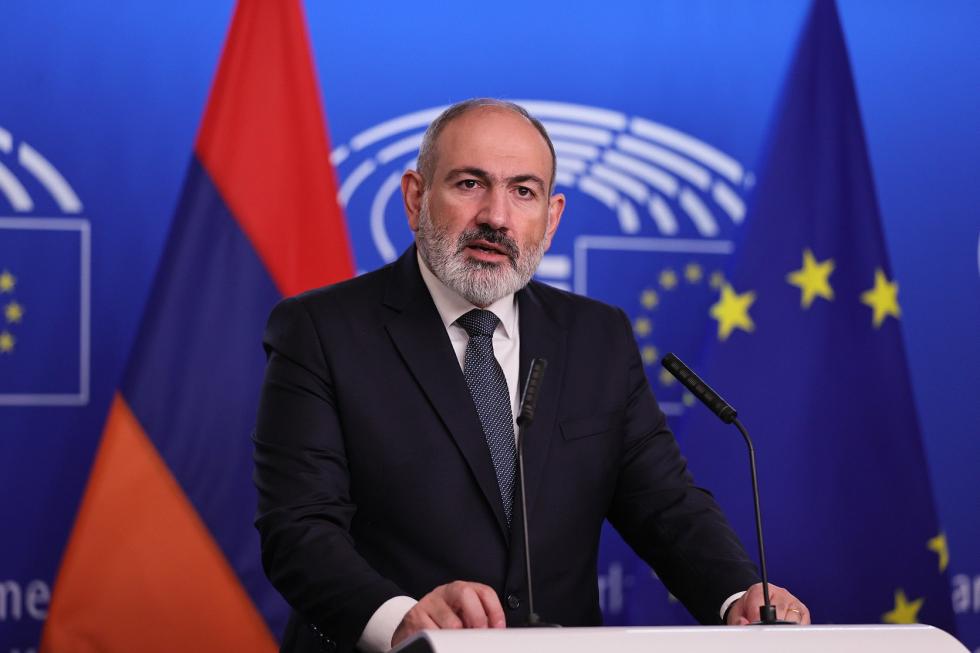
Earlier this month the pro-EU Prime Minister Nikol Pashinyan and his Civil Contract party won a landslide election victory in Armenia. The result was a significant setback for Vladimir Putin since Armenia, a formerly close Russian ally, has been reducing its economic and strategic reliance on Russia under Pashinyan’s stewardship, while looking towards Europe.
This has occurred in the context of increasing difficulties for Russia, including Ukraine’s increasingly effective mid and long-range strike ability and the loss of Russia’s most important ally in the EU with the election rout of Victor Orbán in Hungary.
To compound Russia’s woes, the EU has launched the formal opening of accession negotiations with both Ukraine and Moldova as a result of the new Hungarian government’s removal of a longstanding veto.
While Russia maintains strong structural advantages in the conflict over Ukraine, recent events suggest that it is struggling to impose its will on the battlefield in Ukraine while Europe as a whole is becoming more adept at containing evolving Russian hybrid threats.
Armenia’s Pro-EU Election Victory
Since coming to power in 2018 Pashinyan has slowly shifted the focus of his government and country from Russia to Europe. This process accelerated after a lack of Russian support contributed to the 2023 loss of Nagorno-Karabakh in a military conflict with Azerbaijan.
To counter this westward drift Russia undertook a significant disinformation campaign in the recent elections and imposed trade restrictions on a range of key exports, including Armenian brandy.
Russia backed the pro-Russia opposition candidates, but Civil Contract ended up with almost half the vote and well over half the seats, although it fell short of the two thirds majority required to change the Constitution.
Following pro-EU election wins in Moldova and Hungary the election demonstrated the limits of Russia’s electoral influence when faced with concerted efforts to counter disinformation.
Hungary’s Outsized Influence On Ukraine
Russia lost its most potent European ally when Victor Orbán was removed from power in April.
As a member of the EU, Hungary had been able to weaken support for Ukraine and limit sanctions on Russia by upsetting the unanimity required for key EU decisions.
The new pro-EU government of Péter Magyar worked quickly to remove Hungary’s veto of a 90 billion euro loan for Ukraine, which will help fund a significant portion of Ukraine’s military and financial requirements over the next two years.
The new government also removed its veto on Ukraine and Moldova joining the EU, allowing the EU to launch “the first cluster”, focused on rule of law and democracy, with those countries last week, the first step towards EU membership.
The new Hungarian parliament also voted to reverse the decision by the Orbán government to leave the International Criminal Court.
With the ICC having an outstanding arrest warrant for Vladimir Putin this was a poke in the eye for the Russian leader.
Battlefield Challenges For Russia In Ukraine
These political developments are occurring in the context of significant battlefield challenges for Russia in the conflict with Ukraine.
Ukraine’s long-range strike campaign against Russian energy infrastructure has caused petrol shortages across the country, hindering Russia’s crude oil production and refinement.
This campaign resulted in multiple embarrassing attacks on a naval yard, oil terminal and other targets near St Petersburg as Putin attended his flagship St Petersburg Economic Forum earlier this month.
While Russia has continued significant oil and gas exports due to the sanctions waiver provided by the US during the war with Iran, the US allowed the waiver to expire on 17 June, the same day Trump signed a memorandum of understanding with Iran.
Russia’s offensive in Ukraine itself has lost momentum, with negligible gains across the frontline in Ukraine over the Spring offensive, despite enormous troop losses.
Meanwhile, Ukraine’s mid-range drone strike capability has become a major problem for Russia in occupied Ukraine, with the campaign targeting Russian military convoys and fuel trucks supplying troops on the frontline or traveling to or from Crimea.
In addition to the long-range strike campaign on Russia’s oil infrastructure this localised campaign is resulting in severe petrol shortages for civilians and military alike in occupied Ukraine.
The Road Ahead
Despite these positive developments for Ukraine and Europe more broadly there are many potential impediments that could stymie progress.
In Europe, populist far right parties are seeing record support and could join or lead governments in various European counties in the near future. In France, in particular, they may win the presidential election in April next year, resulting in a warming of relations with Russia and cooling support for Ukraine.
In Bulgaria, a new government has pledged to end military support for Ukraine and seek better relations with Moscow, including importing more Russian oil and gas.
While significant extra EU assistance for Ukraine has emerged as a result of the fall of the Orbán government, there is no guarantee that these propitious circumstances will last.
Europe should reinforce all areas of support for Ukraine while it has the opportunity if it wants the European project focused on peace and democracy to endure.
Dr Adam Simpson is a Senior Lecturer in International Studies within the School of Society and Culture at Adelaide University. He researches authoritarianism, democratisation and civil conflict.
This article is published under a Creative Commons License and may be republished with attribution.