Anwar Ibrahim’s remarks on Taiwan did not alter Malaysia’s One-China policy. But by framing Taiwan through secession and territorial integrity, he made the use of force appear more defensible within his argument than the policy itself required, turning diplomatic restraint into rhetorical overreach.
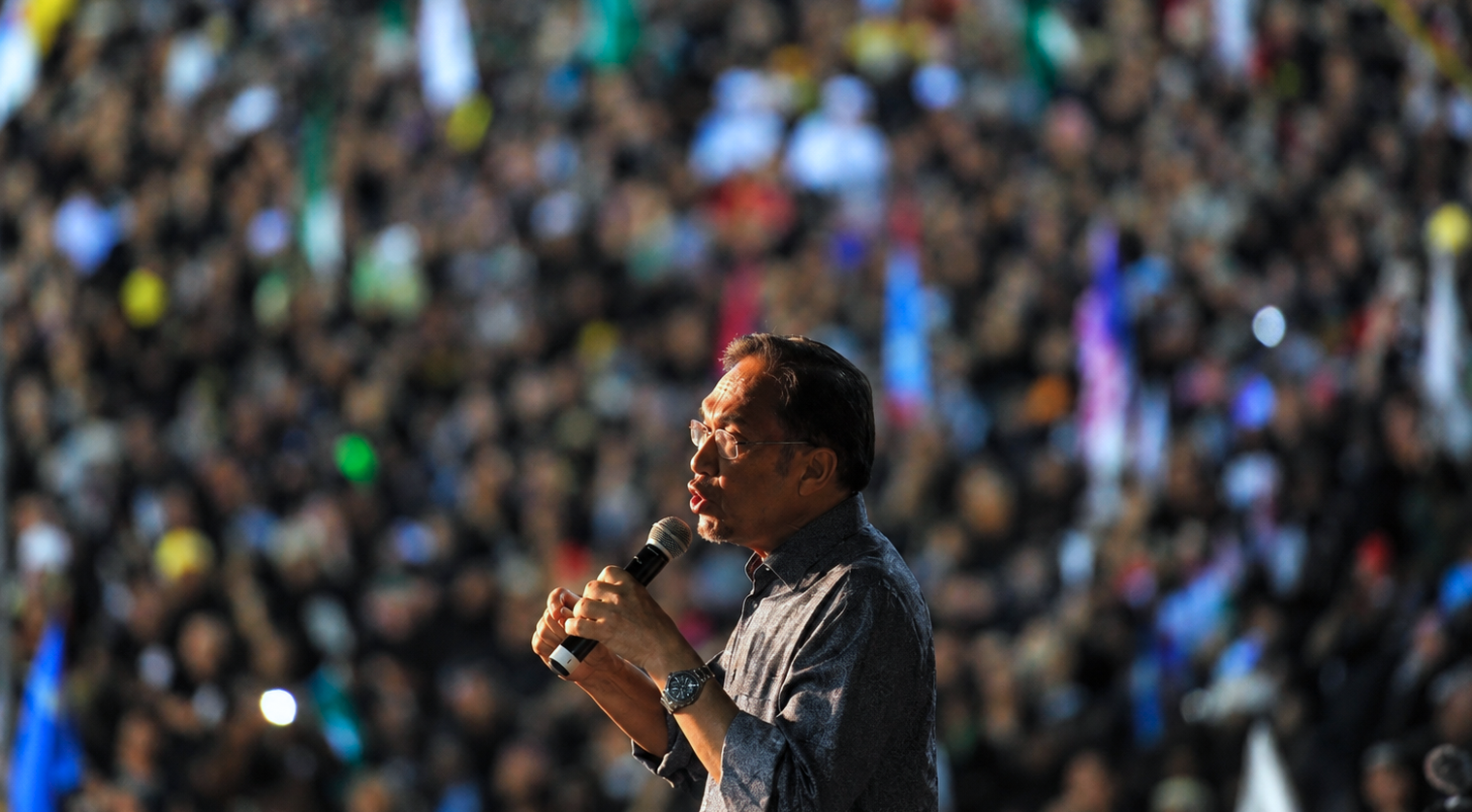
Malaysian Prime Minister Anwar Ibrahim’s Al Jazeera interview drew controversy after he stated that “Taiwan is part of China, period” and compared Taiwan with a Malaysian state seeking to break away. Asked whether he would use force to protect national unity, Anwar answered yes.
The episode raises two questions. Did Anwar change Malaysia’s Taiwan policy? If not, why did his rhetoric go further than the policy required?
Malaysia’s Policy and Interests
Malaysia describes its foreign policy as “fiercely independent, proactive and non-aligned”. Towards China, successive governments have generally preferred dialogue and careful management of differences over open confrontation. China is a powerful neighbour and major economic partner, and public confrontation may carry costs. Anwar has largely continued this approach.
As such, Malaysia’s Taiwan policy also fits within this approach. The 2025 China-Malaysia joint statement describes Taiwan as “an inalienable territory of the People’s Republic of China” and states that Malaysia will not support Taiwanese independence. A 2024 Malaysia-Australia leaders’ statement also stressed “peace and stability across the Taiwan Strait”. Anwar’s statement that Taiwan is part of China therefore did not represent a policy shift, but rather a continuity.
Where the Overreach Occurred
Policy continuity, however, does not mean that every part of Anwar’s answer was unproblematic. The problem came when Jain asked whether Malaysia would condemn Beijing if peaceful reunification failed and China used force. Instead of returning to Malaysia’s preference for a peaceful settlement, Anwar used the secession analogy to explain why force could be justified in defence of national unity.
That is where the rhetorical overreach lies. Anwar did not need to take a position on the mode of any eventual settlement. Malaysia can maintain its One-China policy while insisting that cross-Strait differences be resolved peacefully. Supporting One China is not the same as accepting or explaining away the use of force. He later clarified that peaceful means still remain the best approach, bringing his position back closer to Malaysia’s preference for peace across the Strait.
The harder question is how Anwar moved from resisting criticism of China to the secession analogy.
Why Did Anwar Resist Criticising China?
We cannot know exactly why Anwar ultimately chose the secession analogy. Part of the answer may lie in a recurring pattern in his rhetoric: strong criticism of Western hypocrisy and double standards, together with resistance to what he sees as exaggerated claims about a China threat.
At the July 2026 Asia-Pacific Roundtable, Anwar warned of a “dangerous trend of double standards” among those claiming to uphold the rule of law. This does not mean an anti-Western foreign policy; Malaysia still values ties with the United States and the West.
The same contrast was visible in the Al Jazeera interview. On Gaza and Iran, Anwar questioned why international law and condemnation of aggression appeared to be applied more strongly to some states. Jain then turned to China, raising Chinese military activity and South China Sea tensions. Anwar stressed engagement and negotiation and pushed back against what he portrayed as a Western “phobia” about Chinese aggression.
Jain’s questioning seemed to test whether Anwar would apply the same critical tone to China. He appeared to resist that framing. This was consistent with Malaysia’s reluctance to confront Beijing publicly and Anwar’s efforts to strengthen Malaysia-China ties. But it does not explain why he went further and reached for the secession analogy.
How Did Anwar Frame Taiwan?
Jain framed Taiwan through democracy and the wishes of Taiwanese people. He asked whether Anwar had empathy for people who did not want to be ruled by Beijing. Anwar did not answer mainly in those terms. Instead, he returned to One China, referred to historical and colonial circumstances, invoked the US Seventh Fleet, and rejected the idea that empathy should mean accepting the break-up of what he regarded as a legitimate country.
These were not simply different talking points. In Jain’s framing, Taiwan is a political community whose people have preferences that deserve consideration. Force therefore looks mainly like coercion against people whose political wishes are being overridden. In Anwar’s framing, Taiwan becomes mainly a question of historical separation, external intervention, sovereignty and territorial integrity. Force can then be presented as the defence of national unity against secession.
This did not make Anwar’s answer inevitable. Many governments accept One China without endorsing force. But his framing changed what force could mean within his argument. Once Taiwan was treated mainly as a separated part of a legitimate state, force could be presented as defending national unity rather than as aggression against Taiwan. That is where diplomatic restraint became rhetorical overreach.
Why the Rhetoric Matters
Malaysia does not need to speak about China and the West in identical terms. Different relationships involve different interests, and restraint towards China can be compatible with hedging and non-alignment. The concern is how far this difference in tone has gone. Analysts have questioned whether Anwar’s warmer rhetoric towards China and sharper criticism of the West give the impression that Malaysia is leaning towards Beijing, even though its broader strategy remains one of hedging.
The question is whether this serves Malaysia’s interests. Malaysia may have good reason to avoid unnecessary confrontation with Beijing. But restraint does not require language that can be read as accepting force against Taiwan. A cross-Strait conflict could disrupt regional shipping and supply chains, destabilise Southeast Asia, and damage Malaysia’s economic ties with Taiwan.
Strategic autonomy does not require the same language towards every major power. It requires Malaysia to retain its own judgement. Malaysia can maintain its One-China policy, close relations with Beijing and unofficial ties with Taiwan while insisting on peace across the Strait. That helps preserve non-alignment.
Sow Yi Wen is a PhD candidate at the S. Rajaratnam School of International Studies (RSIS), Nanyang Technological University, Singapore. His research interests include Malaysian politics, Malaysian Chinese politics, China–Taiwan relations, and Southeast Asian foreign policy.
This article is published under a Creative Commons License and may be republished with attribution.