This week in Australian foreign affairs: Australia called on Myanmar to comply with an International Court of Justice ruling, strengthened cooperation with Singapore on artificial intelligence and regional security, and signed a new treaty with Solomon Islands, entered into force Vuvale Union and Veitacini Treaty with Fiji, and more.
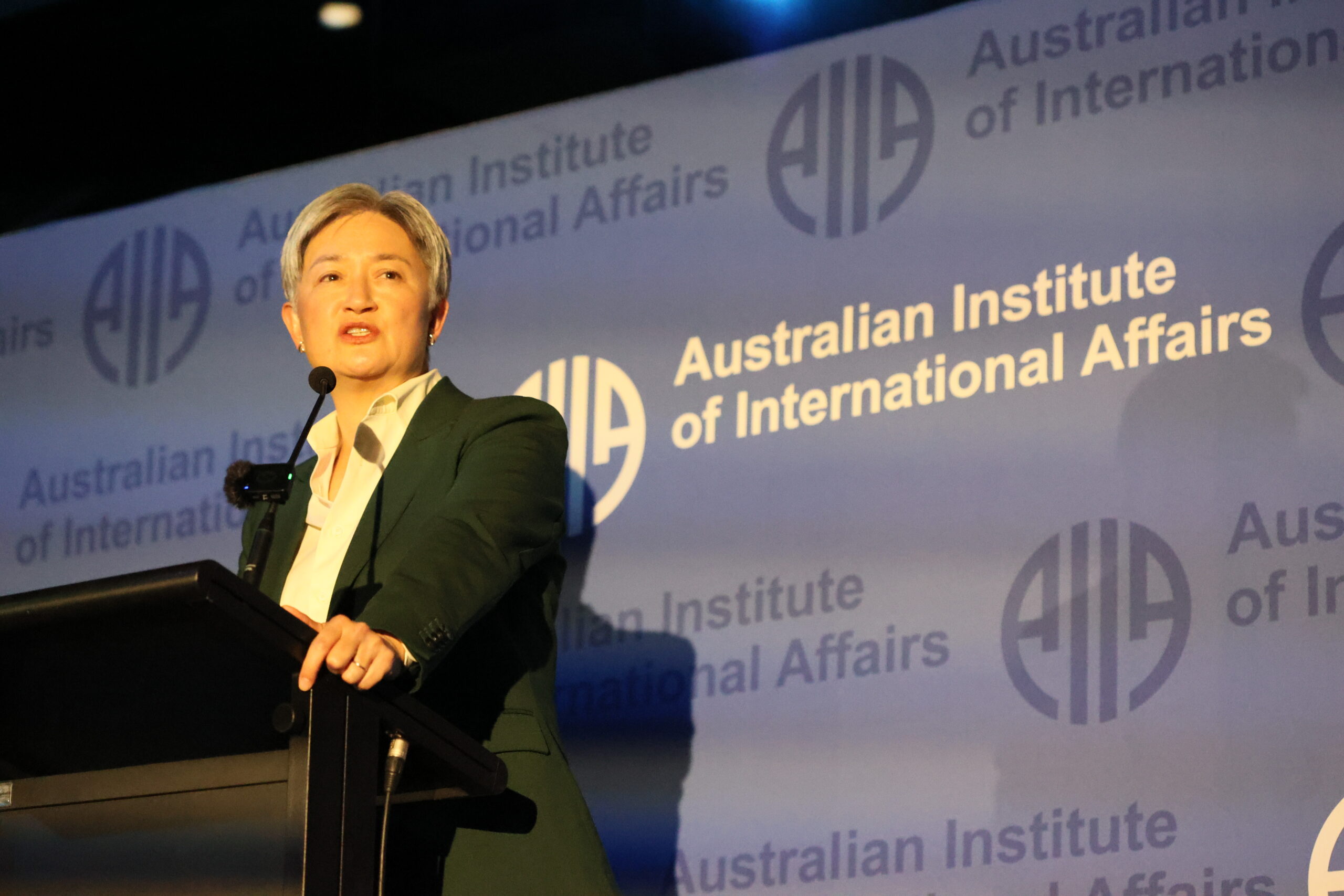
On 23 November, Foreign Minister Penny Wong joined 13 other countries in a statement welcoming the International Court of Justice’s ruling that Myanmar had violated its obligations under the Genocide Convention. The case, brought by The Gambia, concerned Myanmar’s treatment of the Rohingya population, hundreds of thousands of whom have fled persecution and violence. The joint statement called on Myanmar to comply with the binding judgment and ensure accountability for human rights abuses, while emphasising the importance of creating conditions for the safe and voluntary return of Rohingya refugees.
The following day, Prime Minister Anthony Albanese and Singaporean Prime Minister Lawrence Wong held the 11th Australia–Singapore Annual Leaders’ Meeting in Canberra. The leaders reaffirmed their commitment to strengthening defence cooperation, economic resilience and supply chain security under the Comprehensive Strategic Partnership 2.0. They welcomed a new agreement on the cross-border transportation of carbon dioxide for offshore storage and announced closer cooperation on artificial intelligence, including AI safety, governance, research and workforce development. Both countries also agreed to explore opportunities to support Pacific-led AI capabilities.
On 25 November, Albanese and Solomon Islands Prime Minister Matthew Wale signed the Australia–Solomon Islands Treaty in Canberra, establishing a new framework for cooperation on security, economic development and people-to-people relations. The treaty recognises Australia as Solomon Islands’ primary security partner and commits both countries to closer cooperation on policing and border security. Australia also agreed to increase support for education, infrastructure and labour mobility, alongside improved visa arrangements for Solomon Islanders. The agreement affirms Solomon Islands’ sovereign decision not to host foreign military or security bases and to protect sensitive infrastructure from foreign interference.
Following this signing, Australia and Fiji brought into force the two treaties Prime Ministers Albanese and Rabuka signed in Suva in July, the Vuvale Union and the Ocean of Peace Alliance (Veitacini Treaty). The Vuvale Union is a treaty-level framework for deeper integration of the two countries’ security, economies and people. It is backed by more than $1 billion over a decade and overseen by a ministerial Vuvale Forum and an officials-level Vuvale Bukmak. The Veitacini Treaty is a mutual defence pact: each country commits to act to meet the common danger if either is attacked in the Pacific. It is Fiji’s first alliance and makes Fiji Australia’s fourth formal ally, after the United States, New Zealand and Papua New Guinea. Both prime ministers confirm other Pacific nations may join the treaty with the agreement of the existing parties.
At the end of the week, the government imposed counter-terrorism financing sanctions on Zohair Hassib and Kazem Hamad, the two men responsible for the 2024 antisemitic arson attacks on Lewis’ Continental Kitchen in Sydney and the Adass Israel Synagogue in Melbourne. ASIO’s Annual Threat Assessment had outlined the pair’s activities on behalf of Iran’s Islamic Revolutionary Guard Corps (IRGC) in June, but this is the first time they have been publicly named. Australia’s counter-terrorism financing sanctions now cover 102 individuals and entities, 30 terrorist organisations and one state sponsor of terrorism (the IRGC).
This article is published under a Creative Commons Licence and may be republished with attribution.